
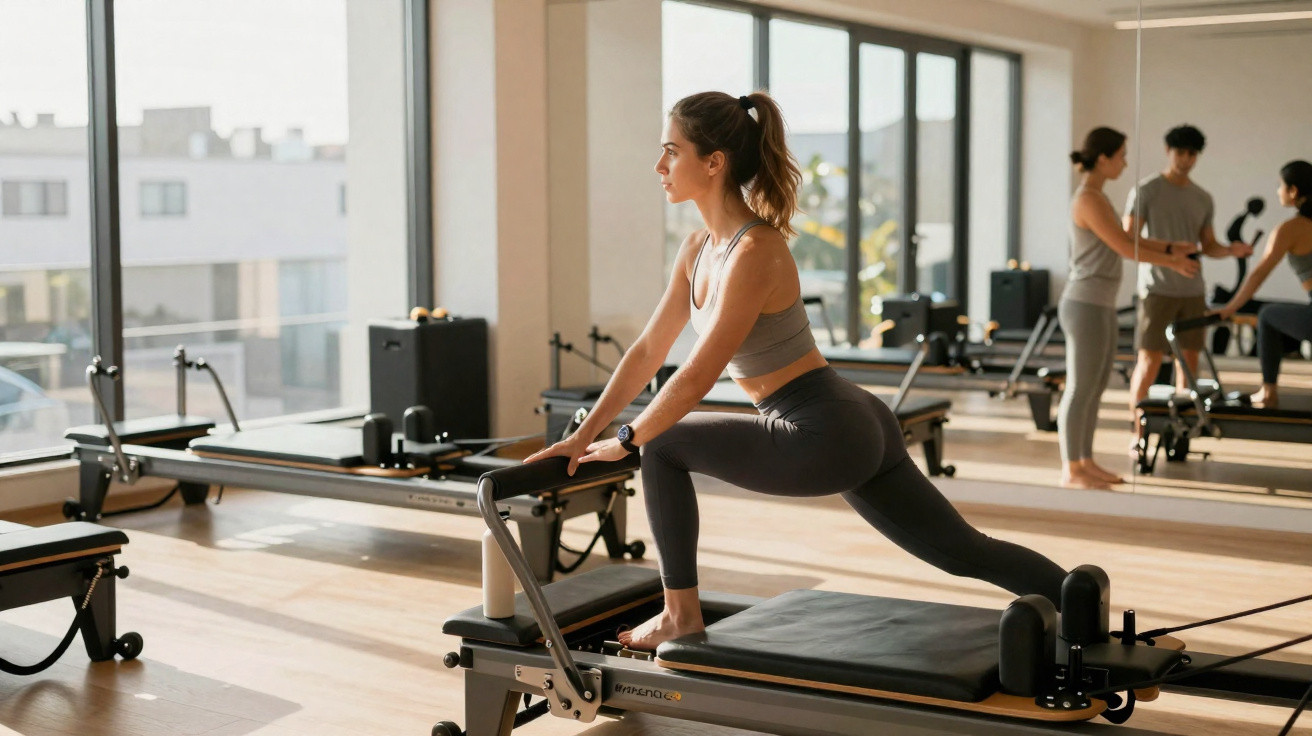
Anyone who has previously relied on Pilates, jogging or Nordic walking now has some competition: a training method built around a futuristic-looking machine promises to shape the body in record time. The concept pairs slow, controlled movements with brutally effective muscle work, focusing entirely on deep muscle activation and toning rather than simply building bulk.
What is behind the Megaformer training hype
At the centre of this trend is a piece of equipment that looks more at home in a rehabilitation lab than in a conventional gym: the Megaformer. A long platform, a moving carriage, handles, straps and powerful springs are all it takes to challenge the entire body.
Unlike classes driven by loud music and fast pacing, sessions on this machine are surprisingly calm. Participants move slowly, almost deliberately, yet still end up dripping with sweat. Each exercise lasts only a few seconds, but can feel like a small eternity.
“The Megaformer combines controlled slow-motion movements with high muscle tension – and that is what makes the method so radically efficient.”
The springs create consistent resistance that the body has to work against continuously. There is no momentum, no cutting corners and no rest within the movement itself. Whether pushing the platform backwards or holding a plank position, you immediately feel every individual muscle fibre.
Why Megaformer training is much tougher than Pilates
Visually, the Megaformer bears some resemblance to the traditional Reformer used in Pilates. In practice, however, the two methods are worlds apart. Pilates often concentrates on gentle, flowing movement and body awareness, while this newer trend deliberately pushes boundaries.
The rules are brutally simple:
- Four seconds for the outward movement
- Four seconds for the return movement
- No momentum and no jerky motions
- Continuous muscle tension from start to finish
This extreme slowness extends what is known as “time under tension” – the period during which a muscle remains under strain. Hardly any oxygen reaches the working areas of the body, the muscles burn, the heart rate rises and energy expenditure increases.
“Rather than aiming for bulky muscles, Megaformer training is designed to create a leaner, more defined silhouette – and that is exactly what makes it so appealing to many people.”
The creators of the method promise that 20 minutes on the machine can match a conventional hour at the gym in terms of exertion. Although the intensity is high, the movements are kind to the joints because they involve no jumping or impact.
A flatter stomach without endless crunches
For many people, the most exciting aspect is that this workout is considered a genuine secret weapon for the core. Rather than completing hundreds of crunches, the core muscles work constantly throughout the entire class – including during leg and arm exercises.
The unstable platform forces the body to stabilise itself at all times. Deep muscle layers that receive little attention in day-to-day life must remain engaged continuously. This particularly includes the transverse abdominal muscle, which acts like an internal corset.
The results:
- The waist appears narrower
- The stomach becomes flatter and firmer
- The spine receives greater support
- Back pain may improve over the long term
Newcomers commonly experience the so-called “Lagree Shake”: arms or legs begin trembling after only a few repetitions. While it may look dramatic, it is generally a good sign. The muscles are working at the limit of their capacity, which is precisely where the training effect begins.
Calorie burn and cardio benefits included
Even though everything feels slow, the cardiovascular system quickly gets going. Constant resistance, numerous holding positions and extended periods of tension raise the heart rate rapidly, without any need to run or jump.
Many studios claim that a session can burn significantly more calories than an easy run or a Nordic walking outing. There is also the so-called “afterburn effect”: for hours after training, the body continues working at a high rate to supply the muscles and replenish its stores.
| Activity | Typical duration | Focus | Impact on joints |
|---|---|---|---|
| Mat Pilates | 45–60 minutes | Posture, mobility, gentle strengthening | Very low |
| Jogging | 30–60 minutes | Endurance, calorie burn | Moderate to high, especially on the knees |
| Nordic walking | 45–90 minutes | Basic endurance, moderate fat loss | Low |
| Megaformer workout | 20–40 minutes | Deep muscles, body toning, cardio | Low, as there is no impact from jumping |
Who this new trend workout suits
The method is aimed at anyone who wants to change their body noticeably without spending hours training. It is particularly appealing to people who:
- Want to tone their figure rather than “bulk up”
- Have little time for exercise
- Experience joint problems with high-impact sports
- Are looking for an alternative to treadmills and dumbbells
That said, it is not entirely beginner-friendly. The exercises are technically demanding, the muscular effort is intense and breaks are short. A good coach is therefore essential, especially for the first few classes. Anyone who has not exercised for a long time or has health restrictions should first check with a doctor how intensely they can begin.
Mental effect: meditation in an extreme state
Many participants say the sessions transform not only their bodies but also their minds. Anyone spending 40 seconds in a burning static hold learns to deal with discomfort differently. Walking away is not an option; persevering becomes the only one.
“The training builds resilience: anyone who learns to cope with stress and exertion on the machine benefits noticeably in everyday life.”
Attention is focused entirely on breathing, tension and bodily awareness. Phones, to-do lists and everyday worries all fade into the background. Many compare the sessions to an extremely intense form of “meditation in motion”: the body works at its limit, while the mind becomes remarkably empty at the same time.
Pilates, strength training and Megaformer: how to combine them effectively
This new trend does not replace established methods; it can complement them effectively. Pilates remains valuable for posture, body awareness and gentle rehabilitation work. Conventional weight-based strength training is still suitable for targeted muscle building or sports that demand considerable strength.
A possible weekly plan could look like this:
- One or two Megaformer sessions for full-body toning
- One day of gentle cardio, such as brisk walking or cycling
- Optionally, a Pilates or yoga class for mobility and relaxation
This approach benefits the muscles, cardiovascular system and joints at the same time, without overloading individual areas. Those just starting out should begin with one session a week and increase gradually.
Risks, limits and who should take care
Although the trend appears effective, it is not completely harmless. High intensity combined with incorrect technique can quickly cause overuse problems in the shoulders, lower back or knees. People with acute disc problems, severe joint conditions or cardiovascular disease need clear approval from a doctor.
One common mistake is being too ambitious at the start. Many people underestimate the demands because the movements look slow, then take too few breaks or use resistance that is too high. It makes more sense to first work on correct technique, body tension and breathing rhythm.
Why the trend is reaching Europe now
After years in which many people turned to home workouts and online classes, there is renewed demand for guided, intensive studio-based concepts. The desire for quick, visible results remains strong, while awareness of joint protection and sustainable fitness is also growing.
This is exactly where Megaformer training comes in: short sessions, a strong effect and little impact loading. Anyone prepared to embrace the unfamiliar combination of slowness and extreme exertion could find a form of training that noticeably changes their figure, posture and even stress levels.




Comments
No comments yet. Be the first to comment!
Leave a Comment