
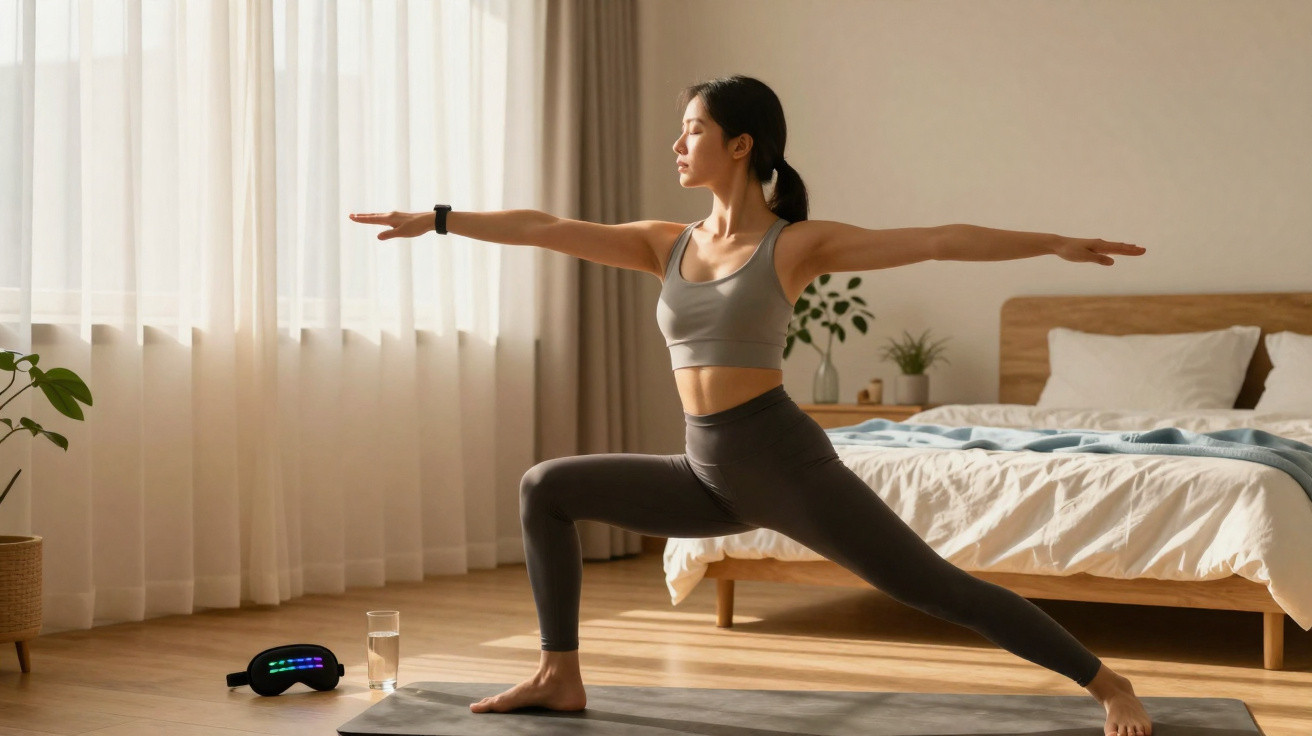
Unrolling a yoga mat and moving in time with your breathing may be among the most effective forms of exercise for improving sleep over the longer term, recent research suggests.
High-intensity yoga and sleep quality
A meta-analysis covering 30 randomised controlled trials found that practising high-intensity yoga regularly had a stronger link with better sleep than walking, resistance training, combined exercise, aerobic exercise, or traditional Chinese practices such as qi gong and tai chi.
The trials examined in the analysis were conducted in more than a dozen countries and included over 2,500 people of all ages experiencing sleep disturbances.
Watch the clip below for an overview of the research:
Researchers at Harbin Sport University in China analysed the data and concluded that high-intensity yoga sessions lasting under 30 minutes, performed twice weekly, offered the most effective exercise-based remedy for poor sleep.
Walking ranked as the second most beneficial physical activity, with resistance exercise next. Benefits appeared within as little as eight to 10 weeks.
The 2025 findings differ somewhat from those of a 2023 meta-analysis, which concluded that aerobic or moderate-intensity exercise undertaken three times weekly was the most effective approach to improving sleep quality among people with sleep disturbances.
However, one study included in that earlier review found that yoga produced greater improvements in sleep outcomes than other forms of exercise.
Yoga is also not straightforward to classify as aerobic or anaerobic exercise, while its intensity may differ substantially according to the method being practised.
These variations between yoga practices may help account for the differing results seen across trials.
Why yoga could support better sleep
Although the latest meta-analysis does not establish why yoga may be especially helpful for sleep, there are several potential explanations.
Yoga can elevate the heart rate and challenge the muscles, while also helping to control breathing. Studies suggest that breath regulation may activate the parasympathetic nervous system, which is associated with ‘rest and digestion’.
Other research has indicated that yoga may influence brainwave activity patterns, potentially encouraging deeper sleep.
Even so, while substantial evidence shows that exercise generally benefits sleep, there is a shortage of studies comparing particular exercise types and their longer-term effects.
"Caution should be exercised when interpreting findings from studies on sleep disturbances, given the limited number of studies included and the unique characteristics of the sleep disturbances population," explain the researchers at Harbin Sport University.
"Further, high-quality research is needed to confirm these findings."
Bodies and brains vary from person to person, so there is no universally guaranteed answer to insomnia or other sleep disturbances.
Working up a sweat on a yoga mat is only one possible exercise choice, yet these encouraging results suggest it may produce notable benefits.
"This research encompassed a comprehensive analysis of 30 studies that systematically evaluated the impact of various exercise regimens on enhancing the sleep quality of individuals experiencing sleep disturbances using network meta-analysis techniques," the researchers concluded.
"The findings suggest that a yoga exercise prescription, conducted twice weekly for 8–10 weeks, lasting ≤ 30 min per session, and of high intensity, is the most effective approach for improving the sleep quality of individuals with sleep disturbances."
Whether this routine is the most suitable option for you can only be determined by trying it.
Tai chi as a long-term sleep option
A separate study published in 2025 found that tai chi could also improve sleep, with effects comparable to cognitive behavioural therapy for insomnia (CBT-I).
At the end of the experiment, participants who received CBT-I reported a larger reduction in insomnia symptoms than those in the tai chi group. The changes were measured using the Insomnia Severity Index, a widely used seven-question screening tool.
Yet when participants were assessed again 15 months later, the tai chi group had ‘caught up’, recording improvements in sleep quality and duration, quality of life, mental health, and physical activity levels comparable with those of the CBT-I group.
This indicates that tai chi’s accessibility and ease of fitting into everyday life may support its long-term effectiveness.
As with yoga, the findings suggest that enrolling in tai chi classes may help people achieve a better night’s sleep, particularly over the long term and as an addition to existing therapies.
The yoga study was published in Sleep and Biological Rhythms.
An earlier version of this article was published in August 2025.
Comments
No comments yet. Be the first to comment!
Leave a Comment