
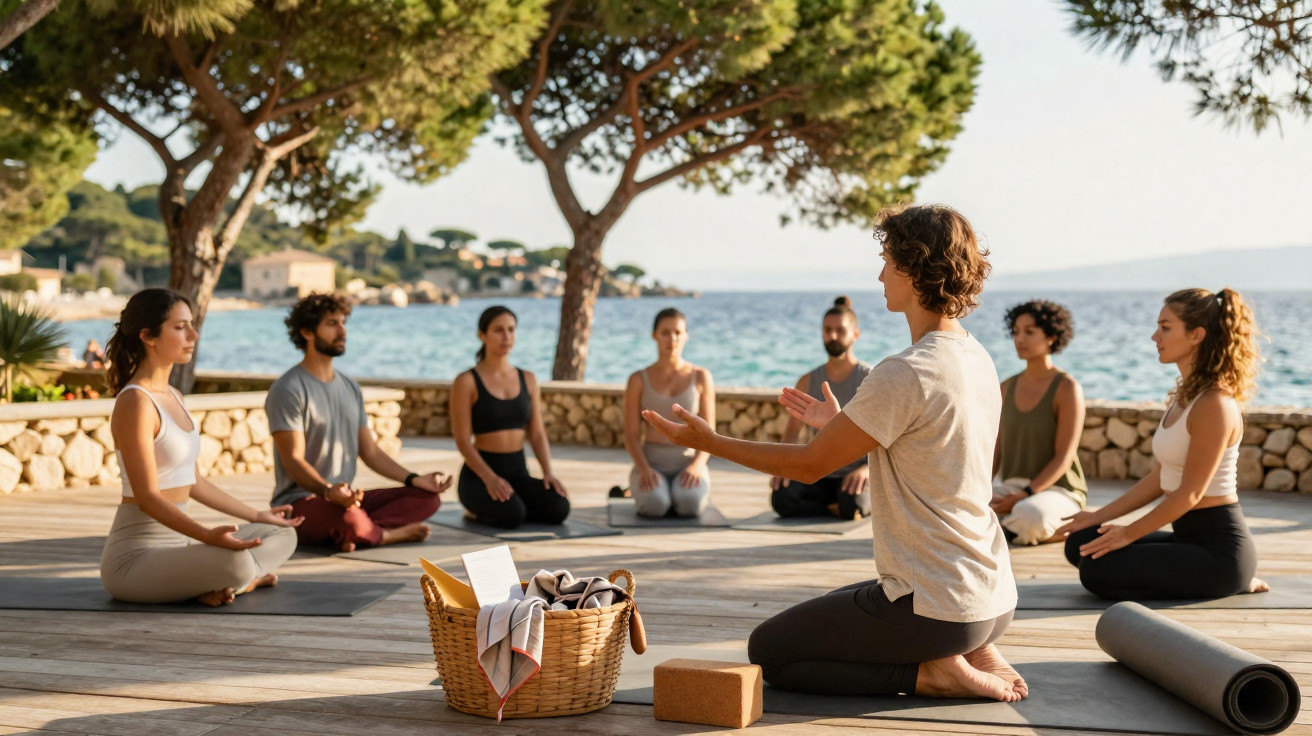
What teaching Yoga in Corsica taught me about my teaching style and self-practice
I have only been home for a week, yet it still seems surreal that Lara and I actually made our epic adventure happen. It began with a conversation on a beach in Nice, and just over a year later, we still cannot quite believe we did it.
After spending countless hours co-creating, marketing, researching, positioning and strategising our Corsican adventure, I can finally pause, breathe deeply and make space to reflect on what I have learnt about myself.
Lara and I both agree that anything really is possible. It comes down to the hard work, commitment, team effort and back bone needed to bring things to life. Thankfully, I could not have wished for a better co-pilot throughout the entire process.
My husband often laughs and says he has never known anyone who throws themselves into projects or goals quite as his wife does. Then there is the nervous energy and stress that strike me like a ton of bricks about a month before everything becomes real!
Teaching Yoga in Porto Vecchio
I was incredibly nervous when I taught my first yoga class in Porto Vecchio. It was a bitterly cold evening, with wind that chilled me to the bone. All I could think was, how am I going to teach barefoot? My little toes are going to freeze! Unlike South Africans, who are fortunate enough to enjoy good weather, Europeans are far more resilient when facing the elements. I stumbled through that first class; my voice seemed quiet, and against such extraordinary scenery, I felt rather insignificant.
After that, every class felt a little easier. My voice settled, my regular breathing returned and I slowed the practice down. This had always been part of the feedback during my teacher training course with YogaLondon: Slow down, stay in the asana, don’t rush.
Language, breath and adaptability
A further recurring obstacle was language. I am embarrassed to say that I do not speak any French; even my name sounds different when French people say it. So, how could I teach with very little dialogue? What needed to be emphasised at the start of a class? Which postures should I avoid?
Lara would translate as I introduced myself and asked whether anyone had injuries, high blood pressure or was pregnant-the usual questions * (I know! Totally spoilt right!). I decided it was essential to introduce *Ujjayi** breath, showed everyone Balasana (child’s pose) in case they became tired during class, and gave a quick demonstration of Savasana (corpse pose) for the end of the session. If, by some miracle, a few people spoke some English or had practised Yoga before, I asked them to stand at the front or somewhere others could easily see them.
Because of the language barrier, I avoided more technical postures. Yet this somehow created an opportunity to refine the foundation postures and allow time to find yourself in that particular moment. Teaching balancing sequences and arm balances on beach sand brought an added challenge for every one of us. Fortunately, laughter goes a long way and is a language in its own right!
Thank you to YogaLondon for teaching me to speak and demonstrate at the same time. It is a distinctive kind of fitness that I think can only be developed during a 200hr intensive programme.
Whether I taught on the beach, beside the poolside at the villa, on the terrace, in someone’s home, on a windy day, in a light drizzle or beneath the full sun, I always returned to my breath. I quickly understood that if I reacted with irritation to the wind, worried about whether rain would fall, that feeling would pass to my students. If I became frustrated by being unable to rely on dialogue or verbal language, I would take something from their practice and experience. The more relaxed I became, and the more aware I was of how fortunate we all were to have a daily yoga practice in such a spectacular setting, the more insignificant those other ‘barriers’ seemed.
One morning beach class was especially windy. When it was time for Savasana, I thought, what now! In that instant, I wondered why we could not do Savasana lying on our stomachs, protected from sand blowing across our faces. Adaptability, playfulness and creativity saved the day every time!
Perhaps it was the amount of French I heard, the fresh air and the tranquil oceans, but I feel that I returned home with a different tone in my ‘teachers voice’. It is softer and gentler; what once felt like awkward silences when I began teaching now feels like time my students are entitled to have. They attend their regular practice to connect with themselves, while I am there to guide and facilitate.
Kindness from Yoga students
It made no difference whether I was teaching a Pilates instructor, a fitness or food blogger or other fitness trainers; I was always received with such kindness and warmth. Most of the people I had the chance to teach who did speak English had attended Yoga classes in Switzerland, Japan, Los Angeles and Paris. Hearing their positive feedback after every class was both encouraging and humbling.
My own Yoga practice
When it comes to my own practice, I am constantly reminded to enjoy the journey. It is truly going to be a long one! We all have strengths and weaknesses, along with areas of comfort and familiarity. What matters is how we manage ourselves through periods of change. Yoga will remain a place where I can discover balance, calm and inner gratitude.
Namaste

Comments
No comments yet. Be the first to comment!
Leave a Comment