
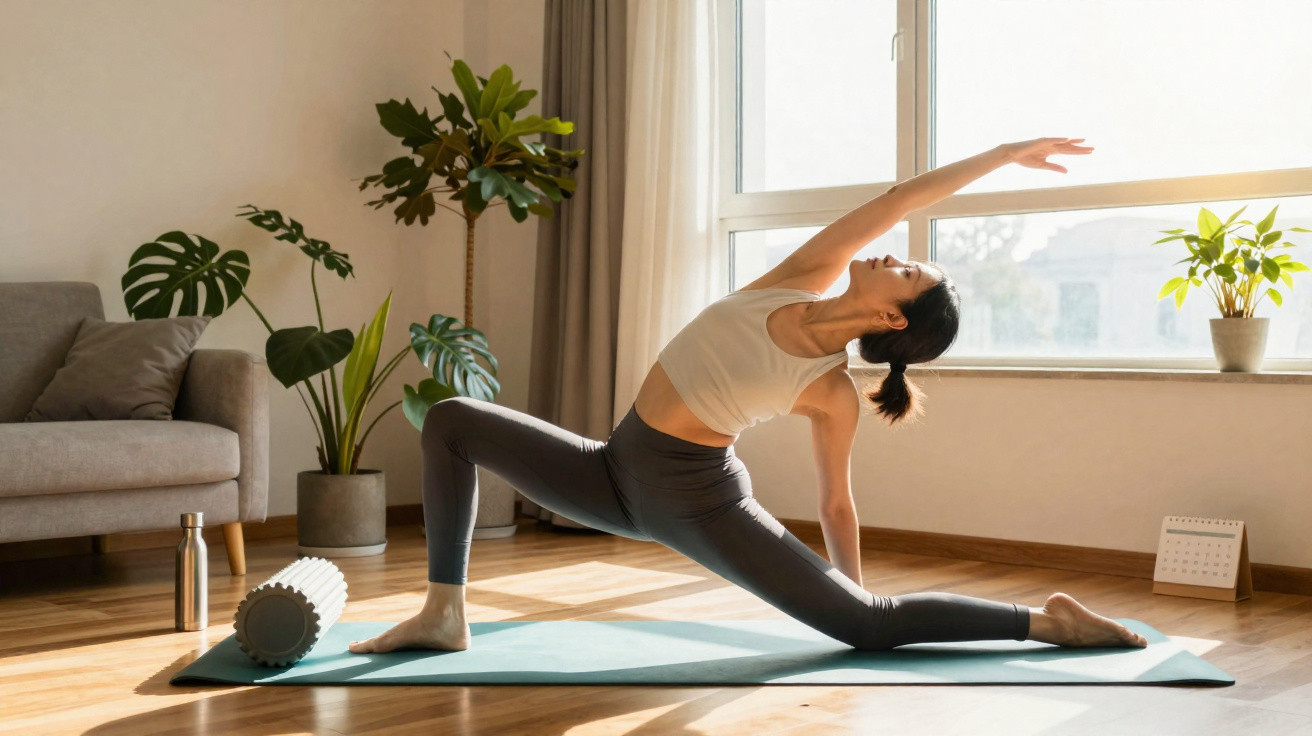
Many people notice as soon as they get out of bed that their bodies no longer get going as easily as they once did. Their hips feel tight, their lower back is stiff and those first few steps seem heavy. A sports coach and physiotherapist recommends a surprisingly straightforward solution: one highly comprehensive stretch, repeated every day, that mobilises several areas of the body at once.
Why one stretch can make such a difference
As we get older, muscles lose strength, tendons and ligaments become less flexible, and joints stiffen. The hips, lumbar spine and shoulders are often affected first - precisely the areas needed for climbing stairs, carrying shopping, gardening or simply walking for longer periods.
Losing this mobility has an everyday cost. Every movement requires more energy, minor tension can develop into persistent pain, and concern about making the wrong move grows. Many people then become less active, which worsens the stiffness still further: a classic vicious circle.
“Targeted yet simple stretching can act like daily maintenance for joints, muscles and fascia - much like oil in an engine.”
The sequence recommended by the coach is based on a well-known fitness movement: the so-called “World’s Greatest Stretch”. This complete full-body stretch activates the hips, spine, backs of the legs, shoulders and core through one flowing pattern.
What the “World’s Greatest Stretch” actually involves
Originating in functional training, this movement draws on yoga postures. It combines a deep lunge with torso rotation and a focused stretch for the muscles along the back of the legs. As a result, the body works in three dimensions rather than in only one plane.
At its heart, the stretch targets three areas that tend to shorten considerably during prolonged sitting:
- Hip flexors and psoas: Long periods seated can make them stiff, placing strain on the lower back.
- Lumbar and thoracic spine: These often remain in a rounded-back posture for hours at a time.
- Hamstrings: Lack of movement can shorten these muscles, causing them to pull on the pelvis.
The stretch moves these exact areas through their full range of motion while also challenging the core. The deep, controlled position additionally develops balance and body tension.
Step-by-step guide: how to perform the stretch correctly
Starting position: a stable high plank
Begin on the floor in a high plank position:
- Place your hands directly beneath your shoulders, with fingers spread wide.
- Keep your body in one straight line from head to heels.
- Gently engage your abdominal muscles and do not allow your hips to sag.
Move into a deep lunge
Now begin the movement itself:
- Step your right foot forwards, placing it outside your right hand.
- Position the right knee above, rather than ahead of, the right ankle.
- Keep the back leg straight or slightly bent, with the heel reaching backwards.
You are now in a wide lunge position. You should clearly feel the left hip and groin working, but without any sharp pain.
Rotation for the spine and chest
Next comes the rotational element:
- Keep your left hand firmly supported on the floor.
- Slowly raise your right arm towards the ceiling.
- Open your chest and let your gaze follow your right hand.
- Breathe calmly in and out, holding the position for several seconds.
You should now feel a gentle rotation through the spine and a stretch across the chest. Then lower the right arm again, placing your hand on the inside beside your right foot.
Stretch the backs of the legs
The focus now shifts to the posterior chain:
- Gently move your pelvis backwards.
- Straighten your right leg as far as feels comfortable.
- Lightly pull the toes of your right foot upwards.
- Keep the upper back as long as possible, without rounding it heavily.
In this position, you should clearly feel the stretch at the back of your thigh. Continue breathing steadily for around ten seconds.
Then move forwards into the lunge again, step the right foot back into plank and repeat the same sequence on the left side.
How often and for how long? Making the World’s Greatest Stretch part of daily life
The coach recommends around five to ten repetitions per leg. On average, one complete round on both sides takes only a few minutes. This makes it easy to fit the routine into your day:
- In the morning: Immediately after getting up, to “switch on” the body.
- After a day at the desk: As a counterbalance to extended sitting.
- Before training: As a dynamic warm-up, particularly before running or strength training.
“Just a few minutes each day can be enough to make getting up from a chair or sofa noticeably easier.”
If you are just starting out, you can place the back knee on the floor during the lunge and reduce the range of movement slightly. The important thing is to move in a slow, controlled manner rather than bouncing quickly.
Why this routine can have a positive effect on ageing
From a medical perspective, several aspects support the benefits of this stretching ritual:
- Joints are regularly moved through a wide range of motion, helping to prevent stiffness.
- Joint cartilage receives a better supply of nutrients as synovial fluid is distributed.
- The core must work to stabilise the body, which can improve posture over time.
- Hip flexors and hamstrings remain flexible for longer, reducing strain on the lower back.
People who retain their ability to walk and rise from a seated position as they age generally remain independent for longer. This is exactly what the stretch addresses: it practises movements essential for confidently managing everyday life - the lunge, forward bend and rotation.
When to take care
Anyone already experiencing more serious back or hip problems should ease into the exercise gradually. Stop immediately if you feel sharp pain. If you have a recent injury, artificial joints or severe osteoarthritis, it is worth consulting an orthopaedic specialist or physiotherapist.
Many people will initially be able to perform the stretch only with a much smaller range of movement - and that is perfectly fine. Consistency matters more than perfection. The body adapts over time, provided you do not ignore pain signals.
Practical additions for greater mobility
To enhance the effect, you can combine the stretch with a few other brief habits:
- Stand up every 60 minutes and walk a few steps.
- Use the stairs instead of the lift.
- In the evening, spend two to three minutes gently circling your shoulders and mobilising your neck.
Simple tools such as a foam roller can also be useful for loosening tight thighs or calves beforehand. This can make it easier to move into the stretching position.
Why now is the right time to begin
Many people wait until pain becomes severe before taking action. Full-body stretches such as this one are instead ideal for taking early preventive steps. You do not need a gym, equipment or much time - only a mat or carpet and the willingness to give your body a few minutes of attention each day.
Once you have learned the sequence, you can do it almost anywhere: in the bedroom, living room or office after work. With a little patience, it can become a small ritual that delivers more in the long term than the next short-lived fitness challenge.
Comments
No comments yet. Be the first to comment!
Leave a Comment