
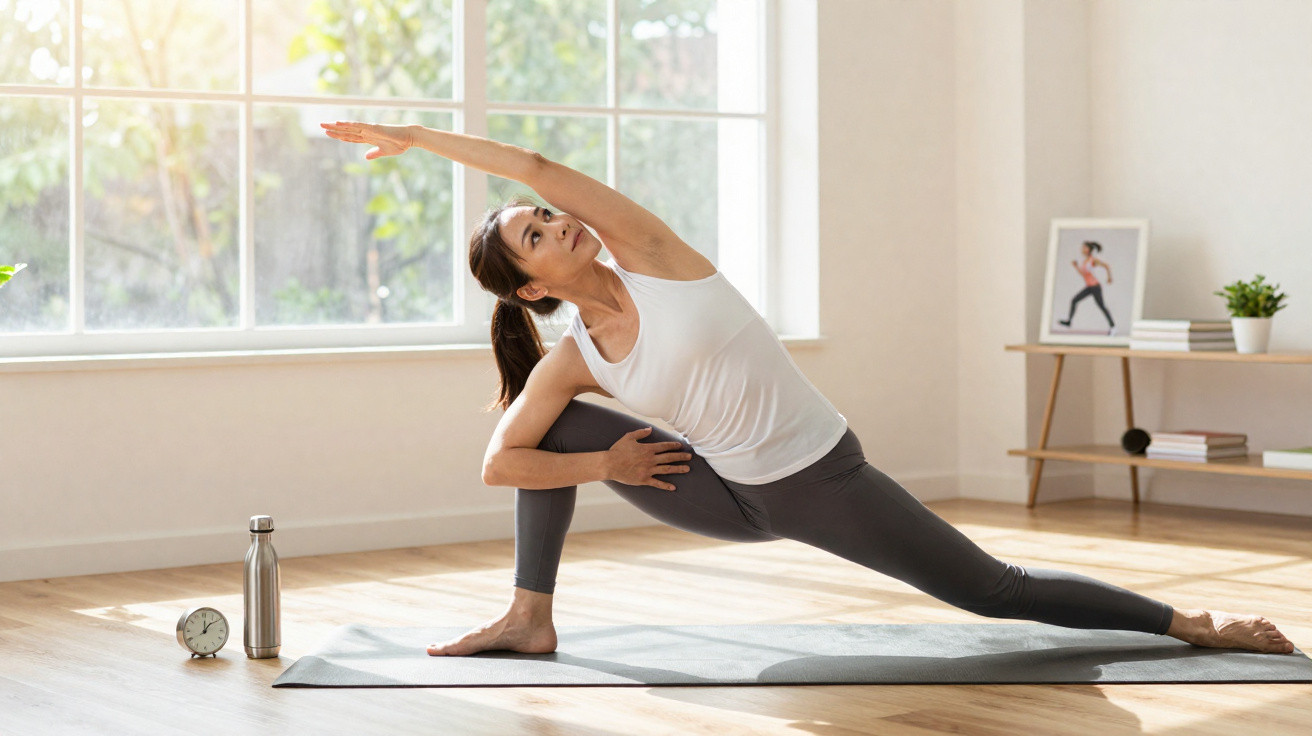
This simple stretch ritual turns that assumption on its head.
If, at 40, 50 or 60, you feel as though you have just completed a marathon despite only walking from your bed to the coffee machine, you are far from alone. A well-known coach and physiotherapist now demonstrates a stretching exercise designed specifically to counter that morning stiffness – and to support mobility, independence and less pain over the long term.
Why mobility is so closely linked to life expectancy
As the years pass, muscles lose strength, joints become less supple and range of movement decreases. The hips and spine in particular gradually begin to “rust up”. Accepting this can quickly create a vicious circle: less movement, more pain, then even less movement.
Good joint mobility is now regarded as an important factor in how independently people remain in later life – and how long they live.
When bending down becomes difficult, everyday life suffers. Tying shoelaces, picking something up from the floor or carrying shopping all require more effort. This often leads to compensatory movements that place extra strain on the back. This is precisely where the stretch recommended by the coach comes in: it is intended to mobilise several major joints at once, giving the body a full movement session like an “express service”.
The ‘World’s Greatest Stretch’: what is behind the hype
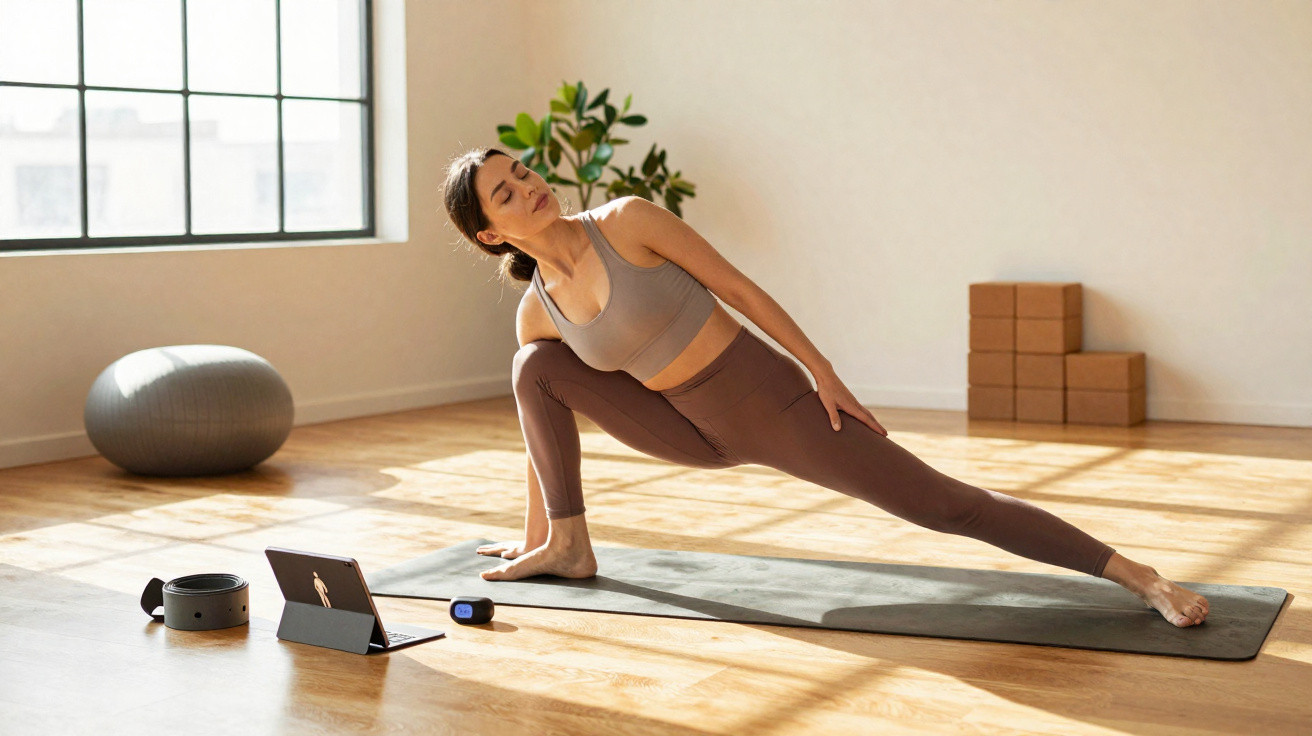
The ‘World’s Greatest Stretch’ has long been a fitness classic. It is a movement reminiscent of a yoga fold with a twist: a deep lunge paired with an upper-body rotation and a focused leg stretch.
Its benefit is that a single sequence targets several areas at the same time:
- hip flexors and the groin, which can shorten considerably through constant sitting
- the lower back and pelvis, which are vital for standing and walking upright
- the thoracic spine, which supports rotation and good posture
- the shoulders and chest, which desk work often pulls forwards
- the core muscles responsible for balance and stability
- the back of the front leg, including the hamstrings and upper calf area
Rather than holding rigid stretching positions, this stretch guides the body through a dynamic yet controlled movement. That makes it suitable both as a quick morning mobility routine and as part of a warm-up before exercise.
How to perform the World’s Greatest Stretch safely, step by step
Anyone who has never worked with their own body weight should begin slowly. The basic version needs no equipment and can be done on a mat.
Begin in a stable high-plank position
First, move into a high plank:
- Place your hands directly beneath your shoulders.
- Keep your body in a straight line from heels to head.
- Lightly engage your abdominal muscles to prevent your back from sagging.
Even in this starting position, your core, shoulders and legs are working, preparing the muscles for the stretch itself.
Move into a deep lunge
Next, transition into the stretching position:
- Step your right foot forwards, placing it on the outside of your right hand.
- Position your right knee above the ankle, rather than in front of it.
- Keep the rear leg straight at first, with the heel hovering above the floor.
You are now in a deep lunge that strongly opens the hip. People with particularly tight muscles may already feel a distinct stretch here.
Rotate the upper body to wake up the back
From the lunge, add the rotational movement:
- Raise your right arm towards the ceiling.
- Open your chest and let your gaze follow your hand.
- Keep your left hand firmly on the floor.
This rotation activates the thoracic spine and may ease tension in the upper back. After a few breaths, bring the hand back to the floor – ideally to the inside of your right foot.
Stretch the back of the leg
The attention now moves to the rear of the front leg:
- Gently shift your pelvis backwards.
- Straighten your right leg until you feel the stretch along its back.
- You can lightly flex your toes upwards, while keeping your back as long as possible.
Hold this position for around 10 seconds and breathe steadily. The aim is not to reach the point of pain, but to feel a comfortable pull. Then return to the lunge, step your right foot back into a plank and repeat on the left side.
How often and for how long? Building the stretch into daily life
The good news is that just a few minutes each day can produce an effect. The coach recommends around 5 to 10 repetitions per side, within a comfortable range of movement.
| Training level | Recommendation per side | Total time |
|---|---|---|
| Beginner | 3–5 repetitions | approx. 3–5 minutes |
| Intermediate | 5–8 repetitions | approx. 5–8 minutes |
| Very active | 8–10 repetitions | up to 10 minutes |
Many people use the stretch as soon as they get up to shake off “morning rustiness”, or after a long day at the desk. The sequence also works very well as mobility work before jogging, cycling or strength training.
Five minutes a day are enough to move the hips, back and shoulders with purpose – a manageable commitment with a potentially substantial effect.
What to keep in mind – and who the stretch may not suit
Despite its benefits, there are a few points worth considering:
- If you have knee discomfort, place the rear foot slightly wider or lower the rear knee to the floor.
- If you have lower-back issues, maintain firm core engagement and avoid dropping into an excessive arch.
- If you have shoulder problems, reduce the range of rotation and raise your arm only as high as feels comfortable.
- If you experience severe pain or have a diagnosed joint condition, speak to a doctor or physiotherapist beforehand.
The stretch should be challenging, never overwhelming. If you feel sharp pain while doing it, it is better to stop and have the movement assessed by a professional.
Why hip flexors and the core influence your ‘biological age’
While sitting, the hip flexors remain constantly shortened. Many people spend eight, nine or more hours a day in this position: at work, in the car or on the sofa. The result can be tight groins, a pelvis tilted forwards and increased pressure on the lower back.
This stretching ritual addresses that area directly, gently encouraging the hip back into extension. At the same time, the core muscles are active: they stabilise the spine and stop the body from collapsing into the movement. This stability is one of the factors that determines whether someone can climb stairs safely, avoid falls and move freely in daily life.
Combining the stretch effectively with other daily habits
To get more from the ritual, you can link it with a few simple habits:
- Stand up briefly every hour, walk a few steps and add two repetitions of the stretch on each side.
- After jogging, start with this stretch and then add brief stretches for the calves and gluteal muscles.
- Before bed, use a gentler version with the rear knee resting on the floor to “shake the day out of your hips”.
Anyone who has experienced back pain, limited mobility or long periods of sitting for some time can achieve a surprising amount with one well-structured stretching routine. The ‘World’s Greatest Stretch’ is not a magic trick – but it combines exactly the movements that modern bodies have almost completely unlearned in everyday life.

Comments
No comments yet. Be the first to comment!
Leave a Comment