
The first time I heard someone say they did “seven minutes of yoga” before work, I laughed. Seven minutes is the time you might spend doomscrolling in the bathroom, not changing your life. But over the following months, the same understated admission kept coming from very different people: a graphic designer, a nurse working night shifts and a father of two who insisted he had “zero time for wellness”.
Their accounts followed a similar pattern: a brief YouTube flow, or three uncomplicated poses on the bedroom floor, repeated on most days. It took less time than a playlist of songs, but felt like more than a basic stretch.
The unexpected part was that none of them were focused on flexibility.
Instead, they spoke about stress fading more quickly, digestion “waking up” and focus clicking into place as though a lens had sharpened. Something unusual seemed to be taking place in those seven minutes.
The tiny practice before you unlock your phone
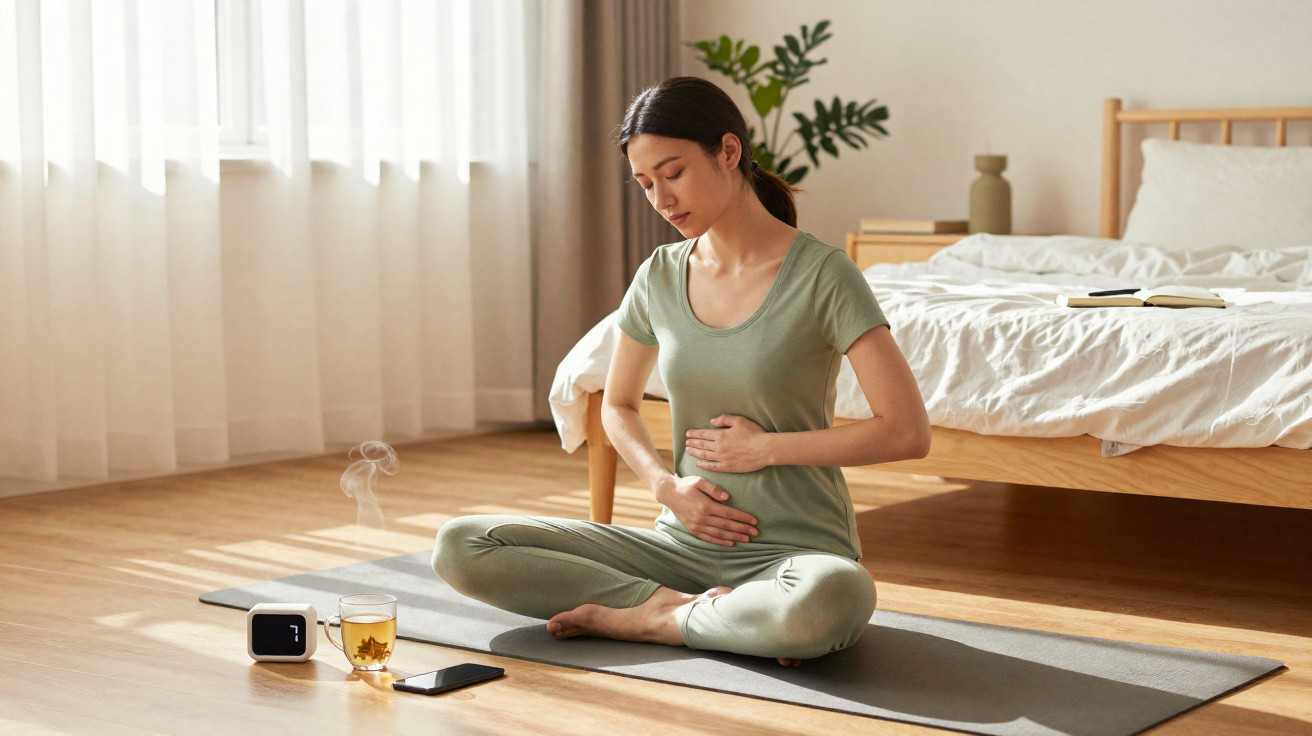
Yoga is often imagined as a 90-minute class with candles, gentle music and expensive leggings. The seven-minute version is nothing like that. It takes place in pyjamas beside an unmade bed, frequently with yesterday’s mug still on the bedside table. There is no music, apart from the early buzz of notifications on a phone that has, for once, been put into aeroplane mode.
The habit itself is stripped right back: a short routine that needs no thought. Three or four poses, a few unhurried breaths and one minute spent simply sitting. Nothing more. It is brief enough that your brain has little room to object.
A 34-year-old project manager I spoke with began her seven-minute routine after a colleague dared her to try it. She set a timer, unrolled her mat in the gap between her bed and wardrobe, and repeated the same micro-sequence each weekday for a month: cat-cow, child’s pose, a gentle twist and a forward fold. There was no search for “the perfect video”, no candles and no grand expectations.
By the third week, she spotted something unexpected. Her heart no longer raced during Monday status calls, and she had stopped clenching her jaw at night. “It’s like my stress threshold moved,” she said. The deadlines remained brutal, but her response to them had changed.
There is straightforward reasoning behind this. Stress, digestion and focus are connected through the same behind-the-scenes system: the nervous system. Slow breathing and mindful movement, even for only a few minutes, can steer the body away from “fight or flight” and towards “rest and digest”.
Blood flow changes direction. Muscles release their tension. The gut, which has its own dense web of nerves, finally receives a green light.
Seven minutes is not about burning calories or perfecting poses. It is about giving your body a clear daily message: you are safe enough to process, absorb and think.
What a 7-minute yoga habit really involves
At its most basic, a seven-minute yoga habit begins like this: put your phone face-down, sit on the floor, even if there are crumbs on the carpet, and observe three breaths moving in and out without attempting to change them. That is the entry point.
Then choose three poses you know well enough to perform without a video. For many people, that means a gentle spinal warm-up on all fours, child’s pose and a seated twist. Let the pace of your exhale guide the movement rather than your thoughts. Finish by lying flat with your eyes closed for one minute, like pressing a reset button for your body.
Those who maintain the practice tend to share one approach: they lower the standard without apology. They are not pursuing perfection. They make room for shaky balance, tight hamstrings and children climbing over them halfway through a pose.
One father of a 3-year-old fits his seven minutes into the hallway while the coffee brews. “My son thinks down dog is a tunnel,” he told me, “so he drives his toy cars under me.” Is it worthy of Instagram? Not remotely. Does he say he has fewer afternoon energy crashes and does less stress-eating at his desk? Absolutely. The practice lasts because it belongs in real life rather than sitting outside it.
To be honest, no one manages this every single day. Days are missed, and some weeks vanish altogether. Then people start to notice their shoulders rising towards their ears again and their sleep becoming unsettled. That is often the moment they come back to the mat.
The benefit is not magic; it comes from repetition. Seven minutes of stretching and breathing will not remove an overloaded schedule, but doing it often enough can alter the way your body holds that burden.
Seven minutes becomes a check-in, not a chore.
Why a seven-minute yoga ritual can support stress, digestion and focus
The surprising comments about digestion usually begin in much the same way: “This is weird, but my bloating is better.” People who spend a few morning minutes doing gentle twists and belly-down poses report less heaviness after meals, fewer unexplained stomach knots and a calmer relationship with their gut.
These shapes gently massage the abdominal organs and stimulate the vagus nerve, an important messenger between the brain and digestive system. Slow movement and regular breathing register as signs of safety to the body, which is when digestion can finally be allowed to do its work.
Stress relief has the same source. If you spend much of the day in mental overdrive, with racing thoughts, rapid emails and shallow breathing, your nervous system remains in a state of alert. A brief but regular yoga ritual turns that switch for just long enough to remind your body that another state is possible.
People put it simply: “My fuse is longer.” “I don’t snap as quickly.” One nurse who started doing her seven-minute flow before night shifts told me she still encounters chaos, “but my body isn’t already panicking before I step onto the ward.” That is not merely a mood; it is physiology settling down.
Focus is the more subtle gain, yet it may be what keeps people returning. Following a tiny sequence - place your hands here, breathe in, breathe out, twist - is effectively attention training in disguise. You learn to spot when the mind has drifted and gently bring it back to the body, without judging yourself.
Do that each day, even for a short time, and your brain becomes more practised at remaining with one thing at once. Emails feel less like a firing squad. A lengthy document is less likely to destroy your patience. You’ve rehearsed presence, so you can access it when it counts.
How to begin - and keep going - with seven minutes of yoga
If you would like to test this, start with an almost absurdly small commitment: “I will put my hands on the floor every weekday morning.” That is all. Hands on the floor, two breaths, finished. Once it feels ordinary, allow it to grow into a seven-minute window.
Choose a cue already built into your day, such as switching on the coffee machine or brushing your teeth at night. Do your yoga immediately after that cue, in the same place and, ideally, with the same three or four poses. At first, do not seek variety. Routine reduces decision fatigue and helps the body settle into the moment more quickly.
The most common mistake people admit to is making seven minutes into a hidden performance. They measure themselves against yoga influencers, fixate on flawless angles or feel guilty when their thoughts race throughout the session. That is how a kind ritual becomes another task they can fail.
Even if your seven-minute session largely consists of thinking about your to-do list while stretching half-heartedly, it still counts. If travel means you miss three days, you are not “back at zero”. You are a person with a life. The aim is not purity; it is returning without shame.
“Seven minutes felt like nothing at first,” said Alex, a freelance developer who started during a burnout spiral. “I kept waiting for some big enlightenment. Instead, my stomach stopped tying itself in knots every afternoon, and my brain didn’t feel like 37 tabs open. That was my proof: something small was finally working for me, not against me.”
- Select 3–4 easy poses that you can recall without looking at a screen.
- Attach them to an existing daily cue, such as coffee or tooth-brushing.
- Use the identical sequence for at least two weeks before altering anything.
- Monitor only how you feel: stress level, digestion, focus and sleep.
- Let it remain imperfect and short - consistency beats intensity here.
The quiet change that reaches into the rest of your life
In time, people who keep this small ritual describe a gentle change that is difficult to photograph but easy to notice. They still feel anxious ahead of presentations, still overeat on stressful days and still lose focus in long meetings. Life does not become a wellness retreat.
What shifts is their baseline. They regain balance more rapidly. Their guts no longer hold every worry like a stone. Their minds do not bounce quite so fiercely between tabs and tasks. There is slightly more room between a trigger and a reaction, between hunger and automatic snacking, and between distraction and choosing to begin again.
It all comes from seven quiet minutes in which nothing glamorous occurs. There are no dramatic poses or sweeping statements about a “new me”. There is simply a body on the floor, breathing a little more slowly than usual.
For some people, it becomes the one part of the day that feels non-negotiable, not because a guru told them it should, but because its absence is so noticeable. That’s the plain truth behind these stories: the habit survives when it feels like relief, not punishment.
The experiment could not be simpler. Unroll a mat, or do not. Place your hands on the floor. Give yourself seven minutes. Then pay honest attention to what begins to change over the following weeks.
| Key point | Detail | Value for the reader |
|---|---|---|
| Small, consistent practice | Seven minutes of straightforward poses attached to an existing daily cue | Easier to begin and sustain than lengthy, irregular workouts |
| Body–mind connection | Gentle movement and slow breathing soothe the nervous system | Reduced stress response, smoother digestion, steadier focus |
| Imperfect is enough | Missed days, racing thoughts and awkward poses are part of the process | Removes guilt, helping the habit remain sustainable and humane |
FAQ:
- Question 1: Do seven minutes of yoga really make a difference, or is it just placebo?
- Question 2: When during the day is the best moment to do this short routine?
- Question 3: I have digestive issues - can these gentle poses replace medical treatment?
- Question 4: What if I get bored doing the same few poses every day?
- Question 5: Can complete beginners with no flexibility start this seven-minute habit safely?





Comments
No comments yet. Be the first to comment!
Leave a Comment