
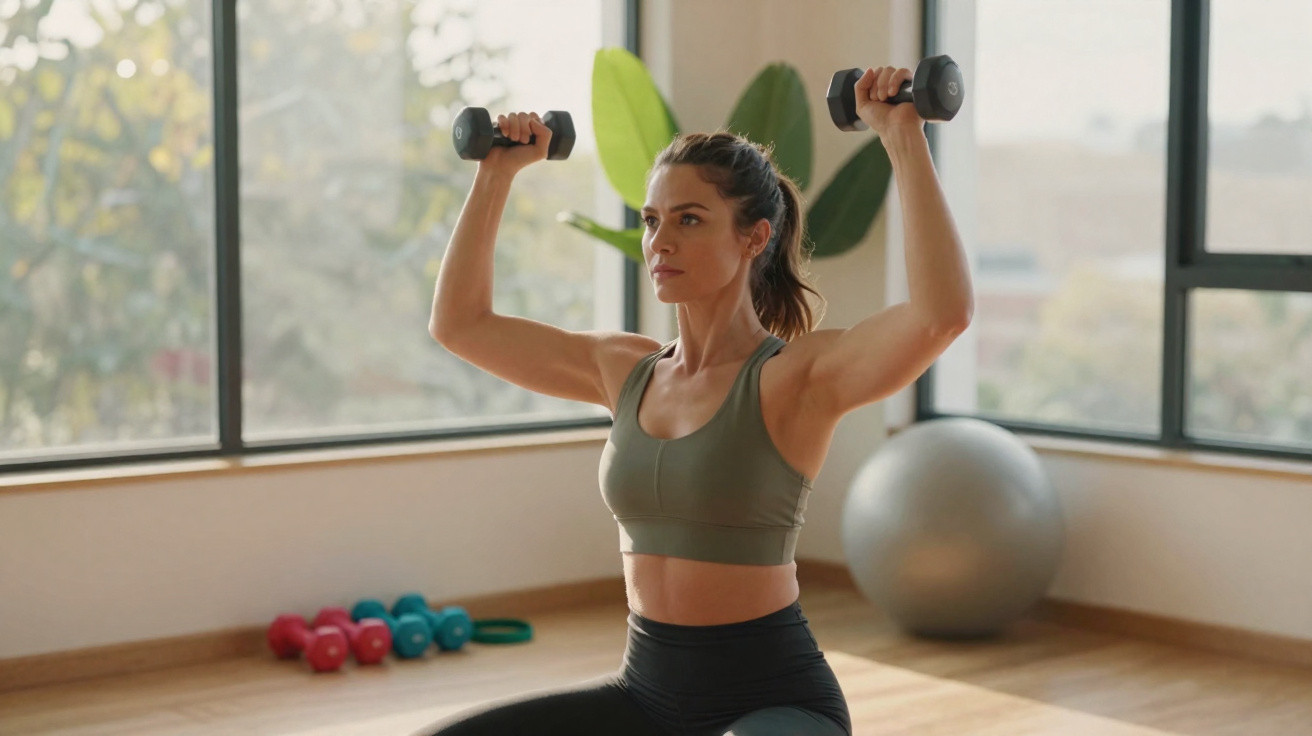
The search for firmer upper arms often leads people to explore a range of approaches to physical activity. Although Pilates benefits body posture, tackling troublesome flaccidity calls for a complementary strategy centred on targeted strength stimuli.
Why does flaccidity affect the back of the arms?
Loose skin tends to gather at the back of the arm because this muscle group is often isolated in everyday life. Since daily tasks place little demand on this area, limited movement undermines the firmness of the musculature and hastens the sagging of the local skin.
While the muscles at the front are regularly used to pull light objects, the rear section needs specific pushing actions to remain active. Understanding this biological mechanism therefore helps with choosing the most suitable physical approaches and highlights the main factors behind tissue loosening:
- Low daily activation: The triceps receive little stimulation in ordinary movements, such as opening doors or carrying shopping bags.
- Loss of mass: Muscle tissue gradually declines over the years, reducing volume in the area.
- Changes in the skin: Natural ageing-related changes decrease elasticity and impair arm tone.
Why might Pilates classes alone not solve the problem?
The Pilates method is highly valuable for building body awareness and improving daily postural alignment. However, it may fall short when the primary aim is to reverse severe muscle looseness, owing to the absence of specific mechanical resistance in the affected area.
For visible changes in this rear section, the tissues need controlled overload and ongoing hypertrophy stimuli. Without progressively heavier loads, muscle fibres remain stagnant, which makes it essential to combine functional exercises with a structured programme of localised strength training.
What is the best exercise for firmer arms?
Weight training and targeted loads provide the right stimuli to fill the area beneath loose skin. Among the available options, specialists identify one classic movement as the most effective choice for isolating and working the rear portion of the upper limbs.
The Triceps Extension
The ideal isolation movement
The triceps extension stands out as the leading technical option because it focuses entirely on elbow extension, requiring the muscle to work in isolation.
When performed consistently, it fills the space beneath loose skin with lean muscle mass, providing aesthetic firmness and considerably improving the arm's functional performance.
This exercise can be performed using various pieces of equipment commonly found in gyms or at home. The key to success lies in complete movement control and the careful choice of the main technical variations recommended by physical education professionals:
- An overhead triceps extension using a dumbbell or resistance band.
- A cable exercise performed while keeping the elbows close to the torso.
- A kickback movement carried out with a light dumbbell or firm resistance band.
How should you plan a safe and effective exercise routine?
Achieving defined arms depends directly on striking the right balance between intense physical stimulus and restorative rest. Training the same area on consecutive days impairs muscle recovery, as soft tissues develop only during the planned rest period between training sessions.
To obtain good results safely, exercisers should follow safety guidance designed to prevent injuries to the shoulder and elbow joints. A well-planned structure works the entire body in balance, and it is advisable to follow these practical recommendations intended to protect muscular health:
- Perform upper-limb strength training on alternate days of the week.
- Combine pulling and pushing movements to maintain muscular balance in the shoulders.
- Increase the workload only once exercise technique is fully stable.
What are the real effects of muscle strengthening on everyday life?
The visual transformation created by improved muscle tone has a profound effect on anyone's wellbeing. These benefits go beyond appearance, creating a resilient physical foundation that makes ordinary daily tasks easier, with complete stability and safety in the upper limbs.
By combining the postural precision of Pilates with the intensity of weight training, the body gains excellent functionality. This healthy integration shields the joints from everyday impacts and ensures that muscular firmness translates into lasting quality of life for the whole body.

Comments
No comments yet. Be the first to comment!
Leave a Comment