
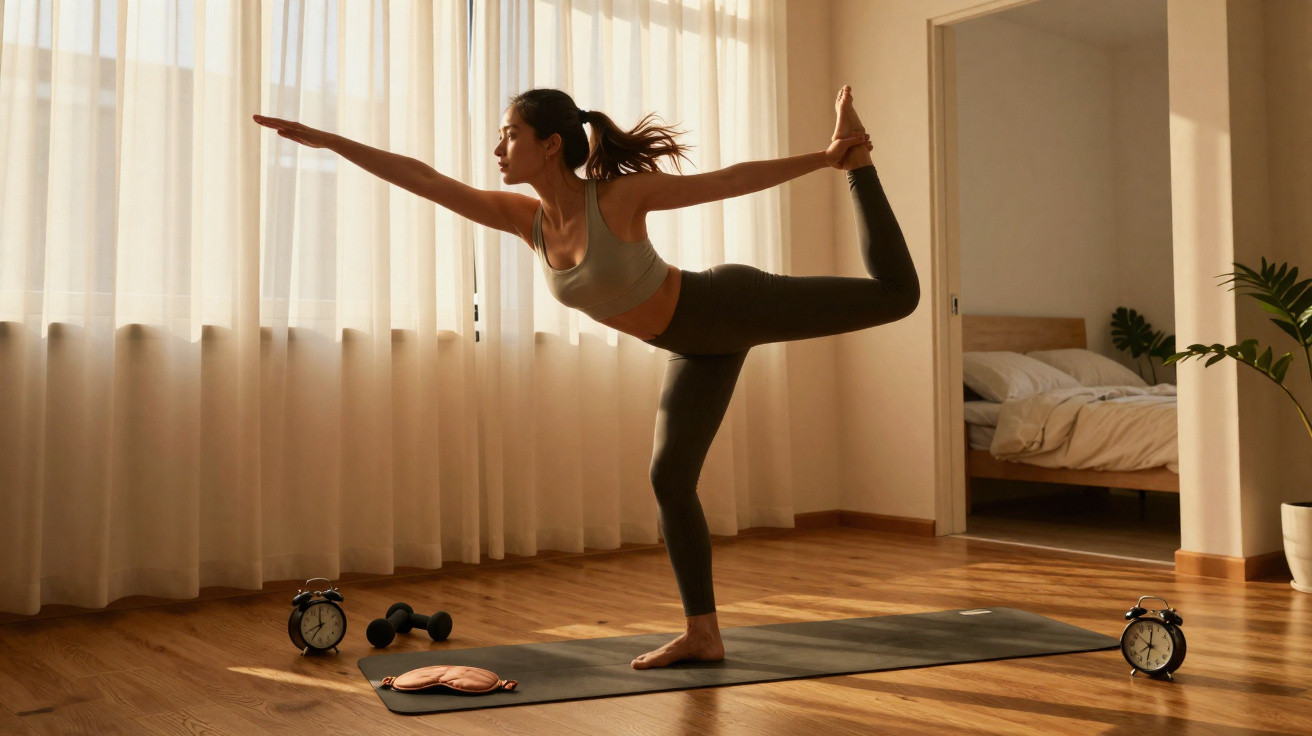
Rolling out a yoga mat and moving in time with your breathing may be among the most effective exercises for improving sleep over the long term.
A meta-analysis of 30 randomised controlled trials found that practising high-intensity yoga regularly has a stronger link with better sleep than walking, resistance training, combined exercise, aerobic exercise, or traditional Chinese practices such as qi gong and tai chi.
The trials assessed in the analysis were conducted in more than a dozen countries and included over 2,500 people of all ages experiencing sleep disturbances.
Watch the clip below for a research summary:
High-intensity yoga and sleep
After analysing the data, researchers at Harbin Sport University in China concluded that high-intensity yoga sessions lasting under 30 minutes, performed twice weekly, were the most effective exercise remedy for poor sleep.
Walking ranked as the next most beneficial type of physical activity, with resistance exercise following behind. Improvements were observed within as little as 8 to 10 weeks.
These results differ somewhat from a 2023 meta-analysis, which concluded that aerobic exercise or moderate-intensity activity undertaken three times a week was the most effective approach for improving sleep quality among people with sleep disturbances.
However, one study included in that earlier review found that yoga produced more substantial improvements in sleep outcomes than other forms of exercise.
Yoga can also be challenging to classify as either aerobic or anaerobic exercise, while its intensity may differ according to the method being practised.
Such variations in yoga practice may help account for why results vary between trials.
Why yoga may improve sleep
The latest meta-analysis cannot determine why yoga could be especially helpful for sleep, although there are several possible explanations.
As well as increasing heart rate and challenging the muscles, yoga can help regulate breathing. Research suggests that controlled breathing may activate the parasympathetic nervous system, which is associated with 'rest and digestion'.
Some research also indicates that yoga may regulate patterns of brainwave activity, potentially supporting deeper sleep.
Limits of the available evidence
Although strong evidence indicates that exercise generally benefits sleep, there is a shortage of research comparing particular exercises and their long-term effects.
"Caution should be exercised when interpreting findings from studies on sleep disturbances, given the limited number of studies included and the unique characteristics of the sleep disturbances population," warn researchers at Harbin Sport University.
"Further, high-quality research is needed to confirm these findings."
Our bodies and brains differ from one another, and there is no universal solution for insomnia or other sleep disturbances.
Working up a sweat on a yoga mat is simply one of many available options.
The study was published in Sleep and Biological Rhythms.
An earlier version of this article was published in August 2025.

Comments
No comments yet. Be the first to comment!
Leave a Comment