
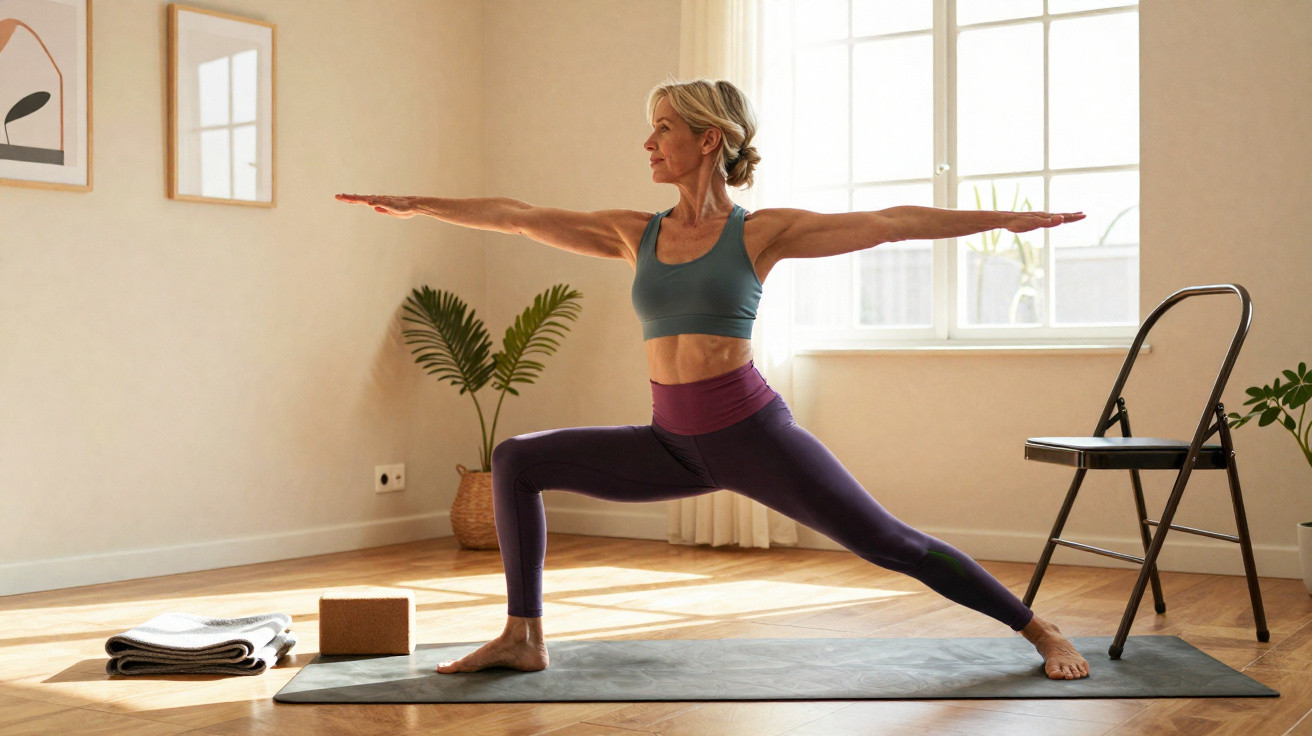
Warrior pose is among yoga’s best-known positions and is also particularly useful for people in their 60s or 70s who want to improve flexibility, balance and strength without impact. It engages the legs, hips, torso and spine at once, while allowing adaptations for different mobility levels, including support from a wall, chair or block.
Why is Warrior pose recommended after the age of 60?
As we get older, reduced hip mobility, greater stiffness in the spine and less steadiness when walking or climbing stairs are common. Warrior pose can help with these changes because it brings stretching, strengthening and balance together in one movement.
It involves no jumping, running or impact on the joints. The position is held with the feet grounded and the muscles engaged. This makes it an appealing practice for older adults, provided it is performed slowly and within each person’s own limits.
How does Warrior pose work the hips and spine?
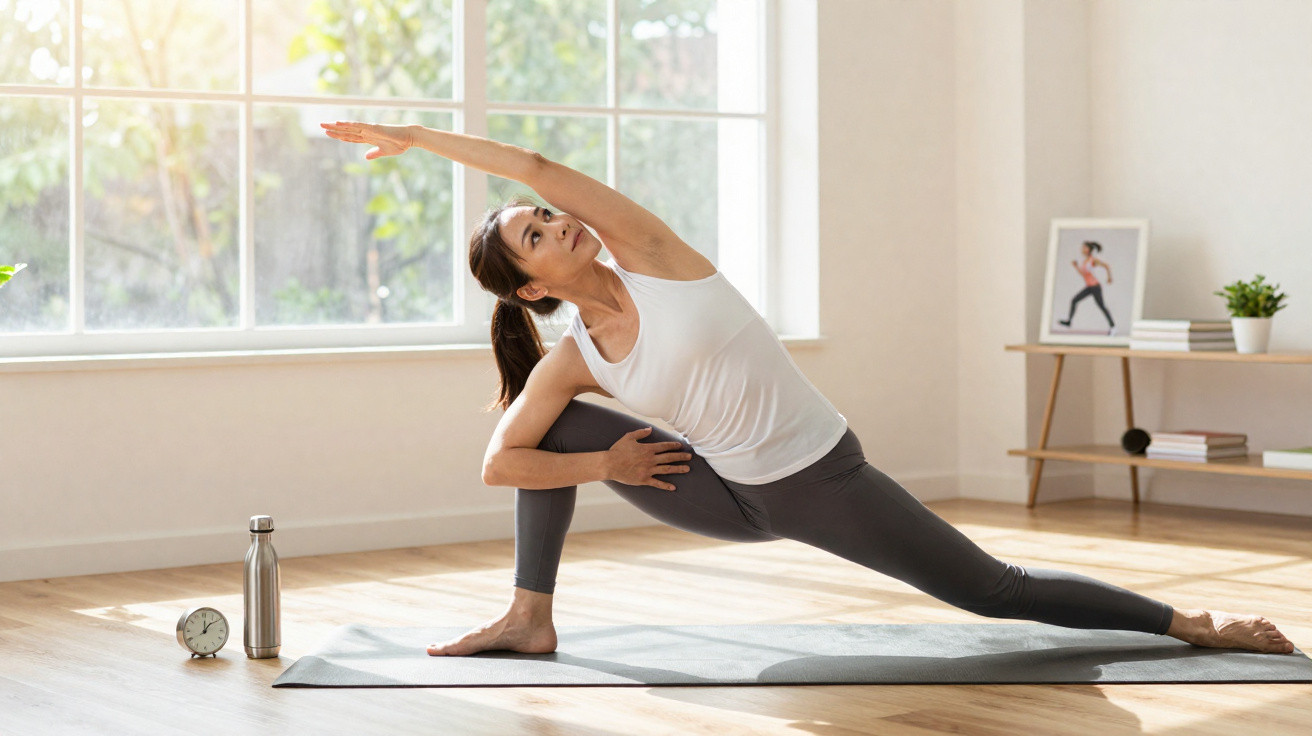
In Warrior pose, one leg is positioned in front while the other extends behind, creating an opening that stretches the hip area. Meanwhile, the torso needs to remain upright, encouraging better posture, alignment and awareness of the spine.
This differs from passive stretching. Rather than simply “standing still and stretching”, the person holds the pose, breathes and activates the muscles in the legs, abdomen and back. Together, these actions can help the body develop mobility with greater control.
How to do Warrior pose at home
To begin, choose a safe area with no loose rugs or nearby furniture. The pose can be practised beside a wall or chair for added confidence, especially during the first few attempts.
- Stand upright with your feet apart.
- Step one leg back.
- Keep the front foot pointing forwards.
- Bend the front knee slightly, without letting it move too far beyond the ankle.
- Keep the back leg firm and the torso upright.
- Open your arms or rest your hands on your hips.
- Breathe for a few seconds, then repeat on the other side.
At first, there is no need to take a wide stance. A smaller step is enough to feel the stretch safely.
How can Warrior pose be adapted for physical limitations?
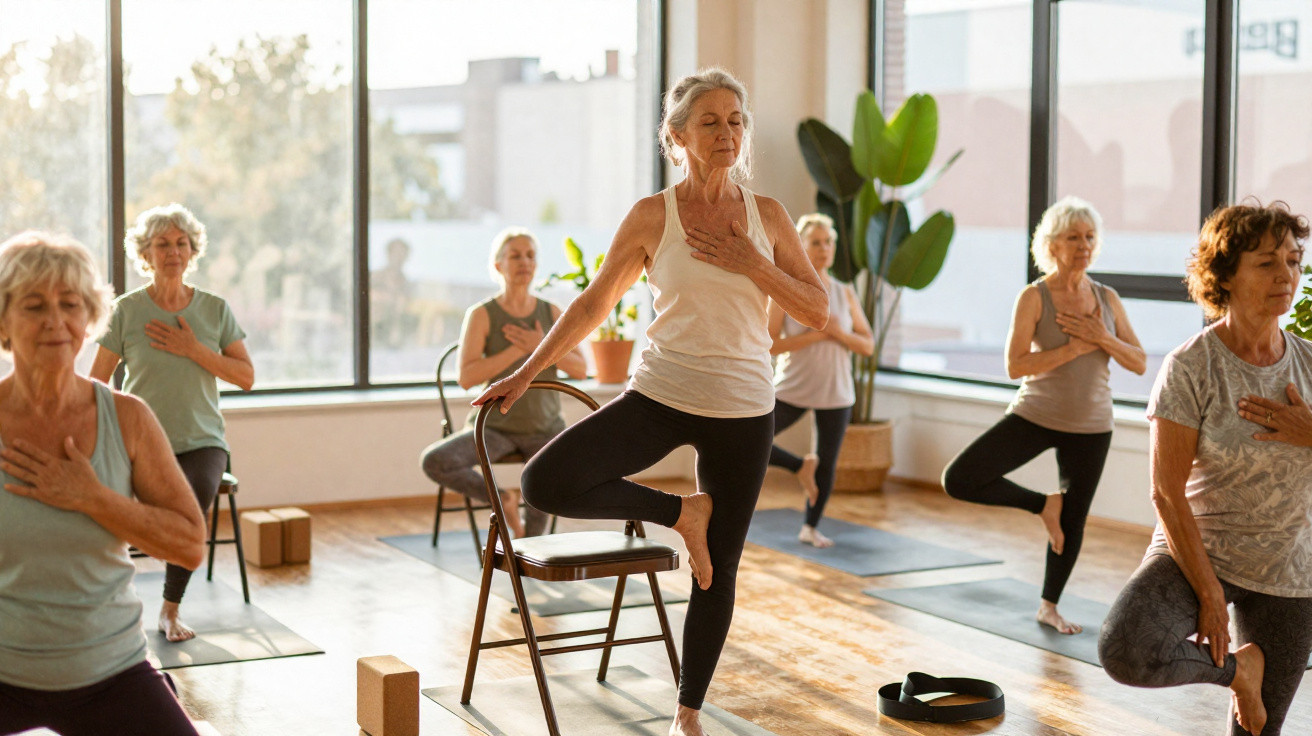
People with knee pain, balance difficulties or limited mobility can use gentler variations. A chair is one of the most helpful supports: it allows the hands to rest securely and can reduce the fear of falling. You can also bring the feet closer together and bend the front knee less deeply.
Another alternative is to perform the pose seated, with one leg facing forwards and the other opened to the side, while keeping the spine lengthened. An adaptation does not lessen the exercise’s value; instead, it makes the practice safer and easier to repeat regularly.
What precautions make the practice safer?
Warrior pose should create a feeling of controlled effort, not pain. If there is strong discomfort in the knee, hip, ankle or lower back, it is best to come out of the pose and adjust the stance. Anyone with joint problems, dizziness, recent surgery or ongoing pain should seek professional guidance before practising alone.
Consistency and adaptation are the key. Warrior pose does not need to be deep to be effective. When it is practised with support, calm breathing and controlled movements, it can improve hip flexibility, lengthen the spine, strengthen the legs and give the body greater confidence after the ages of 60 and 70.

Comments
No comments yet. Be the first to comment!
Leave a Comment