

High blood pressure and a possible third driver
Scientists may have identified a third major driver of high blood pressure, potentially creating new treatment options for the condition, which is also called hypertension.
Doctors generally focus on two systems in cases of high blood pressure: the sympathetic nervous system (SNS), which governs the body's 'fight or flight' response, and the renin-angiotensin-aldosterone system (RAAS), a group of hormones that controls blood volume and circulation.
However, new research published in Communications Biology suggests another system may also play a part: inflammation-resolution pathways, biological processes that signal to the immune system when it should stand down.
Although a connection between the immune system and blood pressure is already established, scientists at institutions in Australia and Singapore have now found that inflammation-resolution pathways could be more significant in hypertension than previously recognised.

The researchers also reported that compound 17b, an experimental drug, lowered blood pressure in mouse models and even repaired harm to blood vessels and organs caused by chronic inflammation.
"This study provides an opportunity to advance understanding of neuro‑immune interactions in hypertension and to inform the development of therapeutic approaches that target both inflammatory and neural pathways in cardiovascular disease," write the researchers in their published paper.
Chronic inflammation occurs when the body's immune system becomes overactive and remains in attack mode indefinitely, eventually damaging the body instead of helping it heal. It is also associated with both the SNS and RAAS systems.
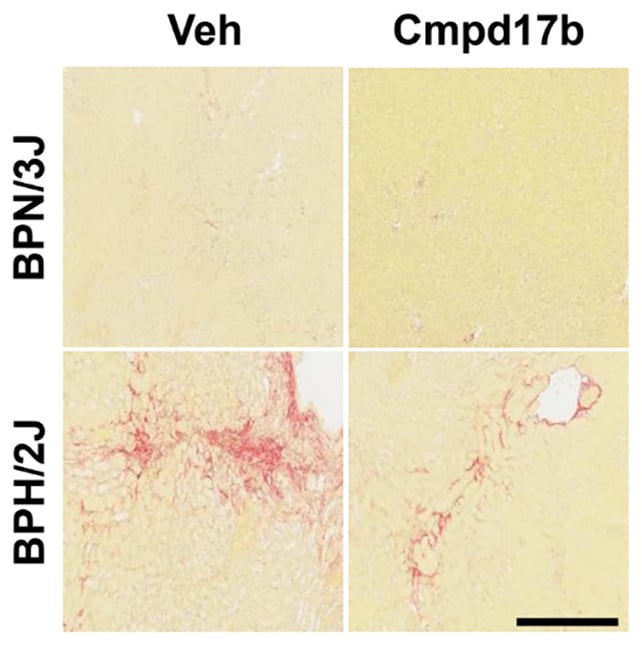
The compound reduced kidney scarring in mice with hypertension (bottom two panels). (Singh et al., Commun. Biol. , 2026)
How compound 17b targets inflammation-resolution pathways
Anti-inflammatory medicines attempt to suppress the immune system broadly, but they can suppress it excessively and may raise blood pressure in the process.
Compound 17b takes a far more targeted approach. Rather than suppressing immunity, it 'wakes up' the natural inflammation-resolution pathways that should stop the immune system overreacting to begin with.
Earlier studies showed that the drug could protect the heart from injury. In the mouse experiments, it was used to target formylpeptide receptors (FPRs): effectively, switches on immune and tissue cells that tell the immune system its work is complete.
In mice with hypertension, the team found that compound 17b produced a modest reduction in blood pressure. It also decreased stiffness in the aorta, the main artery, and limited the build-up of harmful scar tissue, or fibrosis, in the heart and kidneys.
"These findings identify FPR agonism as a promising therapeutic strategy for lowering blood pressure and reversing renovascular fibrosis," write the researchers.
Potential protection for organs in hypertension
Conventional blood pressure medicines usually seek to lower the key readings displayed on a blood pressure monitor, protecting the body's organs and reducing the risk of heart attacks and strokes.
What appears distinctive about this drug is that it addresses organ damage directly, suggesting it may have uses beyond managing symptoms associated with hypertension.
"These protective effects occurred alongside only moderate reductions in blood pressure, further supporting the notion that the beneficial actions of compound 17b extend beyond anti-hypertensive effects," write the researchers.
These tests have, of course, so far been conducted only in mice. More research is therefore required to determine whether the same effects occur in people, though both the drug and its approach show considerable potential.
The researchers do not propose that compound 17b could eventually replace current blood pressure medicines outright. Instead, they suggest it might offer an option for patients unable to take existing treatments, or serve as an additional medicine to help heal inflammation and scarring.
The chronic inflammation-resolution pathway also warrants further study, indicating that targeting the process through which inflammation is effectively 'switched off' could be as useful as targeting inflammation itself.
Related: Just 5 Extra Minutes of Exercise a Day Can Lower Blood Pressure, Study Shows
"Collectively, these findings indicate that [compound 17b] exerts broad cardiorenal and vascular protective effects that are not solely attributable to blood pressure lowering per se, but likely involve direct anti-inflammatory and tissue-reparative mechanisms across the cardiovascular-renal axis," write the researchers.
The study was published in Communications Biology.
This article was fact-checked and edited by Fiona MacDonald. Although we take pride in our process, we are only human. If you notice an error, please let us know.






Comments
No comments yet. Be the first to comment!
Leave a Comment