

Cancer can resemble the villain in a horror film: the hero appears to have finished him off for good, only for him to return and cause terror once more.
Chemotherapy likewise aims to destroy cancer cells, yet some survive treatment by entering a state called cellular senescence.
Rather than becoming inactive, these cells stay metabolically active. They release a cocktail of proteins, fats and other molecules that can alter a tumour and its surroundings by sending signals to neighbouring cells.
New research published in Nature Aging has found that one such signal could be a substance found in kitchen cupboards – and it may be telling cancer cells to spread.
"Our study is among the first to show that a nutrient – in this case, fructose – can act as one of those signals," says Aidan Cole, a molecular biologist at The Wistar Institute in Philadelphia.
Chemotherapy and ovarian cancer recurrence
The researchers investigated ovarian cancers treated with cisplatin, a potent platinum-based chemotherapy drug that often induces cellular senescence.
While most patients respond well at first, recurrence is frequent; tumours can then spread across the abdominal cavity.
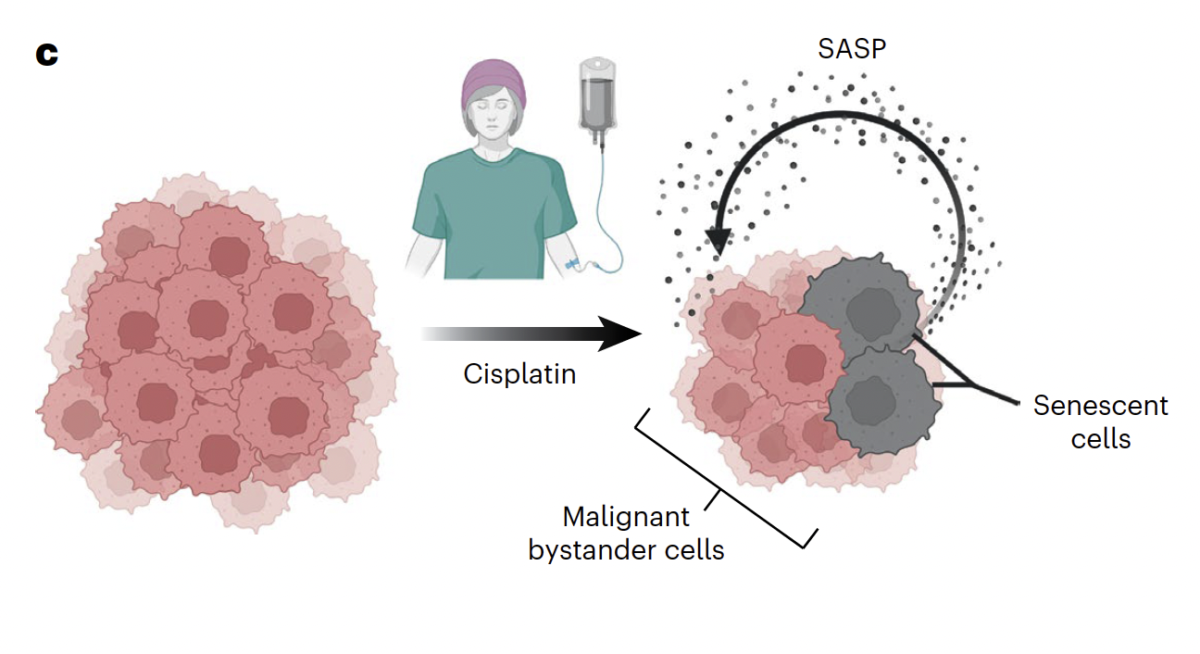
Senescent cancer cells are still metabolically active, releasing a mixture of molecules, collectively known as SASP (senescence-associated secretory phenotype), which affects neighbouring cells. (Cole et al., Nature Aging, 2026)
What makes these cells travel through the body?
Answering that question could offer clues to preventing cancer recurrence, which accounts for the deaths of 90 percent of people who die from the disease.
To identify the cellular process involved, the team first used cisplatin to induce senescence in laboratory-grown ovarian cancer cells. They then collected the growth medium, containing every molecule the cells had released during two days.
When untreated ovarian cancer cells were exposed to this medium, they did not divide more quickly or become more resistant to cell death.
Instead, the team found that the medium made the cells far more prone to releasing their hold on neighbouring cells and separating from three-dimensional tumour-like spheroids. This is the first crucial stage in the distinctive way ovarian cancer spreads.
Fructose drives cancer-cell detachment
The effect remained after the researchers heat-inactivated the medium and filtered out suspected proteins. They could therefore rule out familiar signalling molecules including cytokines and growth factors, both of which are proteins.
The responsible substance had to be a considerably smaller molecule.
Metabolic testing indicated fructose. Senescent cells took up glucose while releasing increased amounts of fructose.
Adding physiological concentrations of fructose to otherwise normal conditioned medium alone replicated the greater cell detachment. Restoring glucose, meanwhile, largely reversed this result.
The researchers next traced the metabolic cascade set off by fructose. It did more than serve as fuel: fructose changed mitochondrial metabolism, ultimately lowering cholesterol production.
This reduction in cholesterol was consequential because cholesterol helps stabilise cell membranes and secures cells to each other and the tissue around them. With less cholesterol in their membranes, cancer cells were less adhesive and more likely to break away.
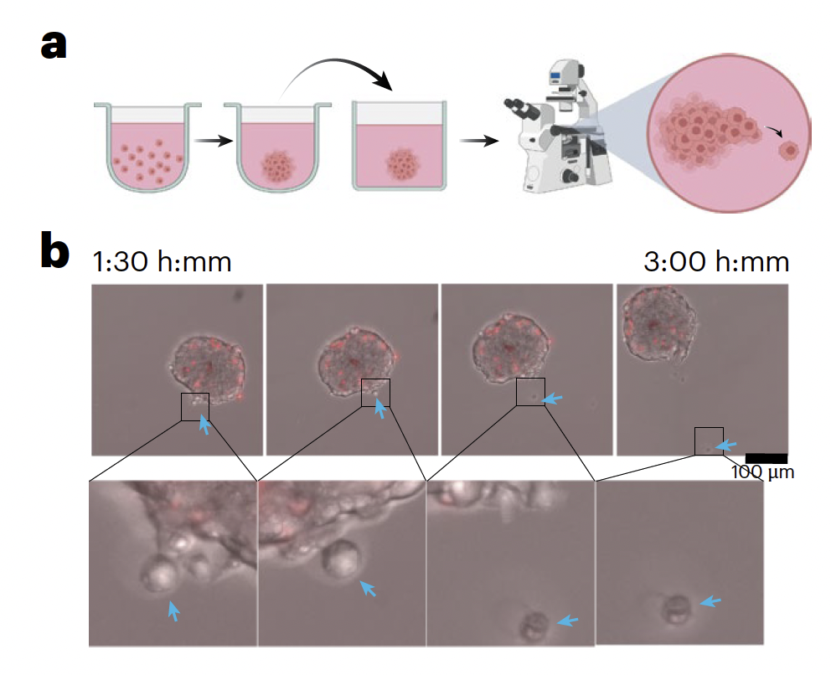
Spheroid cell cultures detached when treated with the secretome of senescent cancer cells. (Cole et al., Nature Aging, 2026)
The team initially observed this separation in cell culture, but also examined the process in mice.
Mice implanted with ovarian cancer cells developed substantially more metastatic tumours after receiving material from senescent cells than after receiving the same material from normal cells, even though cancer-cell proliferation did not increase.
A further significant result was that mice fed a high-fructose diet developed more extensive metastatic disease than animals given glucose.
When the researchers disabled cancer cells' capacity to metabolise fructose, they also saw fewer cancer cells moving around.
This indicates that an animal's diet could affect how its cancer progresses.
"As far as we know, this is the first time anyone has shown, in a preclinical model rather than just a dish, that it's the molecules these cells release – not the cells themselves – that drive the cancer's spread," Cole says.

What the preclinical findings mean
It is important to stress that these are preclinical results, drawn from mouse and cell experiments. They should not be taken to mean that dietary fructose by itself causes ovarian cancer metastasis in people.
Nevertheless, the findings warrant further investigation, given that people consume much more sugar than they once did. In the US, one third of teenagers obtain 15 percent or more of their calories from sugar, particularly high-fructose corn syrup.
Related: Gut Bacteria May Reveal How a Western Diet Fuels Colon Cancer
The study indicates that senescent cells induced by chemotherapy can actively reshape a tumour's metabolic environment in ways that promote the spread of surviving cancer cells.
The researchers propose that future treatments could combine senolytic drugs, which selectively remove senescent cells, with carefully designed dietary interventions. This may help limit this unintended consequence of chemotherapy for ovarian cancer and improve outcomes.
"Fructose may play an underappreciated role in modulating tumor cell behavior," the researchers conclude.
"This raises the possibility that restricting fructose intake could be a promising dietary intervention to assist in treatment response."
The study was published in Nature Aging.
This article was fact-checked by Clare Watson and edited by Clare Watson. Although we take pride in our process, we are only human. If you spot an error, please let us know.






Comments
No comments yet. Be the first to comment!
Leave a Comment