
Why glioma is so difficult to treat
Among cancer's many forms, tumours that develop in the brain can be some of the most challenging to treat.
Glioma is an especially formidable type of tumour. These malignant growths develop from glial cells, or their precursor cells, in the brain or spinal cord. Its most severe form, glioblastoma, has a 5-year survival rate of only 5 to 7 percent.
Gliomas are so insidiously hard to treat partly because they co-opt essential functions of the brain to support their own growth.
Scientists have now identified one mechanism that enables this exploitation, in a new paper published in Nature Neuroscience. They believe that uncovering it may open up fresh treatment possibilities.
How glial cells and NLGN3 support glioma growth
Glial cells are the brain's non-neuronal support cells. They carry out a wide variety of tasks that aid neurons, including insulating, protecting and nourishing them.
Oligodendrocytes are one kind of glial cell. They create the fatty myelin sheath that insulates nerve fibres, and develop from oligodendrocyte precursor cells (OPCs), which respond to neuronal activity.
Many gliomas are believed to originate from OPCs, and these tumours retain part of the precursor cells' responsiveness to neuronal activity. Earlier research showed that active neurons release the protein neuroligin-3 (NLGN3), which encourages glioma cells to proliferate.
Yet precisely how glioma cells sense NLGN3 and turn it into a signal to grow had not been clear.
To investigate, researchers led by bioengineer Yoon Seok Kim of Stanford University, now at the Swiss Federal Institute of Technology Lausanne, and Stanford neuroscientist Shawn M. Gillespie grew patient-derived human glioma cells in the laboratory.
They used NLGN3 as bait, examining which proteins in the membranes of the glioma cells would bind to it.
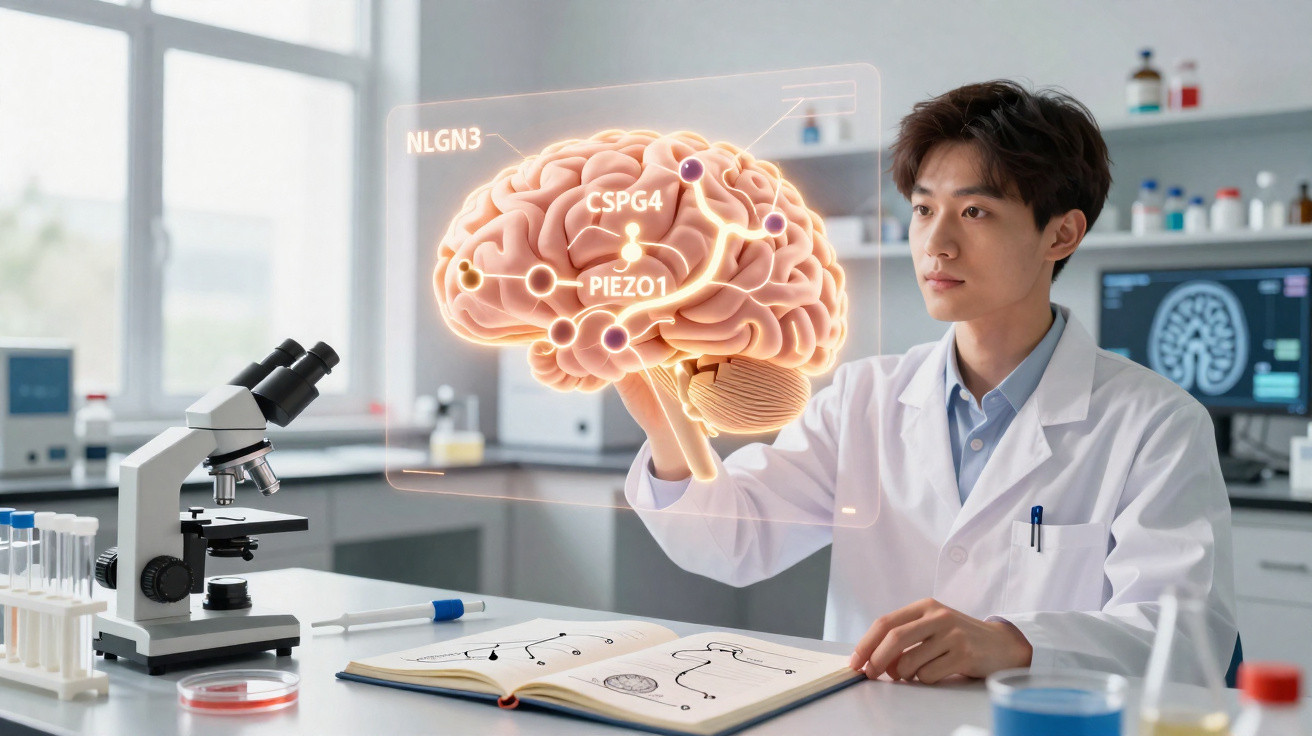
One protein was particularly notable: chondroitin sulphate proteoglycan 4 (CSPG4), which is plentiful on the surfaces of both OPCs and glioma cells.
PIEZO1 links NLGN3 to glioma cell proliferation
When NLGN3 bound to CSPG4, the membrane of the glioma cell physically became tighter.
This alteration sets off events within the cell: greater membrane tension activates an ion channel called PIEZO1. Turning a physical force into a biological response in this way is known as mechanotransduction.
The resulting flow of ions activates signalling inside the cell that drives glioma cell proliferation.
The team next examined whether PIEZO1 truly affected glioma growth. They used gene editing to create patient-derived glioma cells without PIEZO1, then implanted them into mouse brains alongside control experiments involving otherwise comparable cells with PIEZO1 preserved.
After four weeks, glioma cells lacking PIEZO1 were proliferating significantly less than cells with the channel intact.
The researchers then sought to establish why the NLGN3-CSPG4-PIEZO1 system exists at all.
Returning to healthy OPCs, they found the same mechanism operating. NLGN3 binds to CSPG4 and activates PIEZO1, although the ensuing intracellular signalling produces a different outcome.
Instead of making OPCs proliferate, this pathway keeps the cells as immature OPCs, preventing their maturation into oligodendrocytes. This could help the brain retain a healthy pool of OPCs.
To verify this, the researchers genetically removed NLGN3 from mouse OPCs. They found that OPC reserves in the corpus callosum fell by around 30 percent.

A potential vulnerability, but a cautious path to treatment
The cancer cells, then, are not creating a new system from nothing. Rather, they hijack and repurpose the brain's normal machinery for their own ends.
This presents scientists with a possible new glioma vulnerability to explore: its reliance on mechanosensitive signalling.
Related: This Common Drug Seems to Fight One of The Deadliest Brain Cancers
But the finding also demonstrates why cancer can be so difficult to treat: any intervention will require care. As healthy brain cells also use this machinery, translating the discovery into a treatment may depend on inhibiting the cancer without disturbing the normal OPC population.
"The findings presented here underscore a critical role for an NLGN3-CSPG4-mechanotransduction pathway in the interplay between neuronal activity and glioma progression, advancing understanding of a key mechanistic pathway by which gliomas exploit neuronal signals for growth," the researchers write.
"The identification of mechanotransduction as an important mediator in this process suggests new therapeutic opportunities, highlighting the potential for targeting mechanosensitive pathways in glioma and possibly in other cancers."
The findings were published in Nature Neuroscience.
This article was fact-checked and edited by Peter Dockrill. Although we take pride in our process, we are only human. If you notice an error, please tell us.






Comments
No comments yet. Be the first to comment!
Leave a Comment