
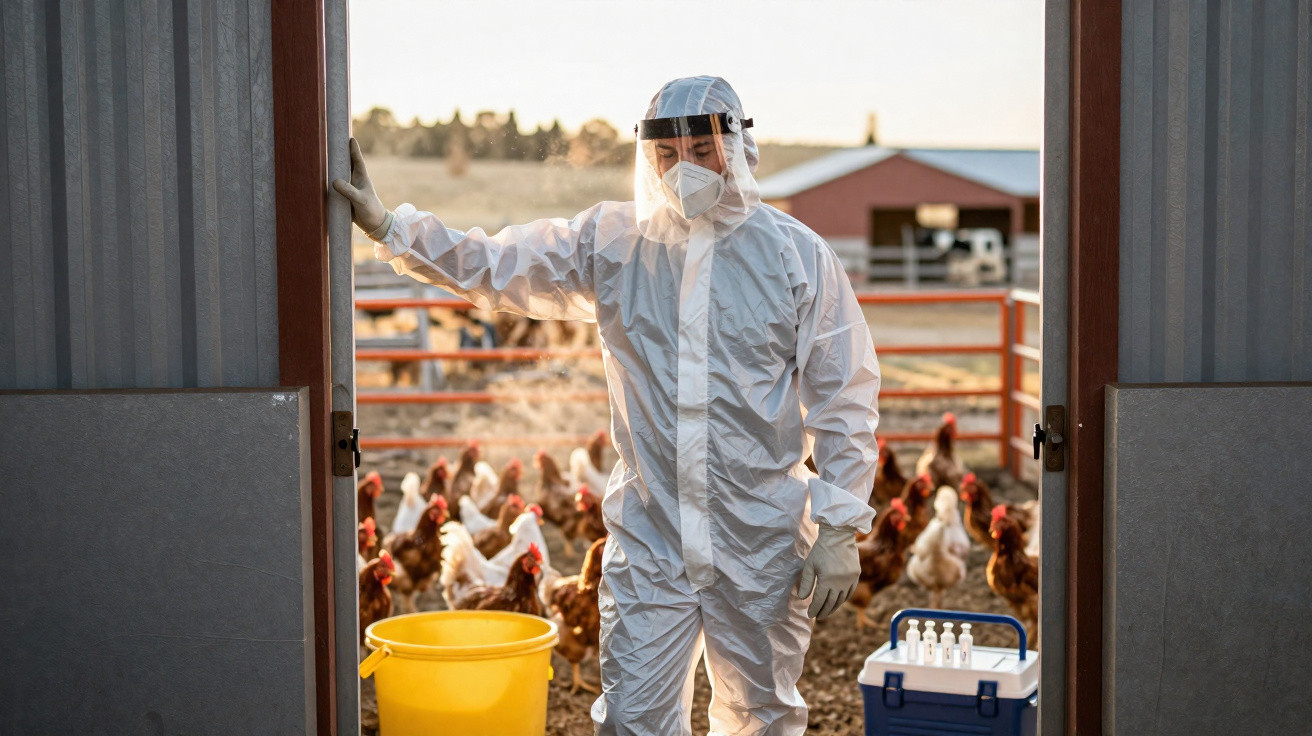
Bird flu may have moved from a Colorado dairy farm to a neighbouring poultry farm, where five employees involved in culling infected birds have contracted the virus.
The extremely contagious virus, avian influenza H5N1, has the potential to cause a pandemic, prompting efforts to develop a vaccine that could limit its devastating consequences.
Human cases linked to the Colorado poultry farm
The US Centers for Disease Control and Prevention (CDC) has confirmed four human infections connected with the commercial egg-laying operation. A fifth case is still awaiting CDC confirmation, although it is also currently considered presumptively positive.
There is not yet sufficient evidence to establish how the poultry farm became infected or where the infection came from. However, the theory is that the virus crossed from dairy cattle to the poultry site.
"Genomic sequencing of samples from the poultry operation confirms the same type of genotype of highly pathogenic avian influenza that is in the nearby dairy herds," acting senior adviser Eric Deeble from the US Department of Agriculture said at a press briefing on Tuesday, recorded by CBS journalist Alexander Tin.
Although this finding cannot map the virus's journey between species, it indicates that the virus may be able to flourish in several animal hosts without requiring substantial mutation.
Avian influenza H5N1 and the risk of cross-species spread
Scientists are deeply troubled by that prospect. The more species a virus is able to move between, the more effectively it may spread. Earlier this year, cattle in the US began catching avian flu, and the virus subsequently infected two people.
"CDC's assessment of the risk to the general population remains low, and CDC has not changed its recommendations," principal deputy director of the CDC Nirav Shah said in the press briefing.
"For example, CDC is not recommending H5 specific vaccines for livestock workers given the mild symptoms that have been noted thus far, and the absence of any changes to the virus's genetic makeup that would suggest that the risk to human health is increased."
He added that an early assessment of viral genes taken from one infected poultry-farm worker found no mutations that raised concern.
"The sequence is very closely related to two sequences from infected chickens from the farm where the worker was likely exposed," Shah said.
"And in addition to that, one of the virus's subunits was 100 percent identical to the Texas and the first human case from Michigan."
Culling workers face the highest infection risk
Human symptoms have so far appeared mild and recovery has been quick, but the larger worry may be the consequences for agriculture.
Milk from infected cows is considered unsafe to drink, while culling to stop additional transmission - as with the 1.8 million birds at the Colorado poultry farm concerned - causes a substantial reduction in livestock numbers.
These culls seem to put people at greater risk of becoming infected. According to the Colorado Department of Public Health and Environment, the five affected workers were among staff loading birds into carbon dioxide gas chambers for culling.
"There were large scale industrial fans that certainly helped keep the barns cool, but those fans also spread things like feathers around, which are known to carry the virus," Shah said.
"In addition, the culling method that was used here entailed workers moving from chicken to chicken, increasing the degree of interaction with each potentially infected bird."
Although personal protective equipment for this unpleasant work is normally extensive, workers probably found it difficult to sustain those precautions as Colorado temperatures rose to nearly 40 °C that day, Shah told the briefing.
An industrial hygienist has been brought in to examine approaches that could better prevent transmission.






Comments
No comments yet. Be the first to comment!
Leave a Comment