

Scientists and athletes have raised concerns that extreme heat could overlap with Olympic and Paralympic competition dates, potentially with fatal consequences.
The Paris Olympics were last held a century ago. Since that time, average temperatures have risen by 1.8 °C, while 50 heatwaves were recorded between 1947 and 2023, according to a new report.
During the summer of 2003, a lethal heatwave caused the deaths of more than 14,000 people in France. Climate change has made such extremes ten times more probable and increased the risk of heat-related deaths in central Paris by 70 percent.
"The fact that the Olympics will take place during high summer means that the threat of a devastating hot spell is a very real one," states the report, co-produced by the British Association for Sustainable Sport and the climate advocacy group FrontRunners.
Paris Olympics heat risks for athletes
Mike Tipton and Jo Corbett, physiologists at the Extreme Environments Laboratory at England's University of Portsmouth, caution that the Games could place athletes in conditions that undermine performance and, in the worst cases, threaten their lives.
"Hot and/or humid conditions make it harder to lose heat to the environment and more difficult to regulate deep-body (core) temperature," they explain.
"This impairs physical performance, particularly when the exposure is prolonged and sustained high work rates are required."
One of the most common measures of how the body experiences heat is the wet-bulb globe temperature (WBGT).
Rather than relying only on air temperature, WBGT provides a more detailed indication of the conditions facing an athlete. It accounts for humidity, measured with a thermometer whose bulb is covered by a wet wick, as well as air movement and radiant heat, usually from the sun.
Humidity levels have a major effect on the body's capacity to shed heat through sweating.
A study published in 2022 concluded that the highest WBGT young, healthy people can withstand before losing the ability to regulate body temperature is about 31 °C (88 °F). This could be reached when the air temperature is roughly 30 °C alongside very high humidity.
WBGT limits across Olympic sports
Elevated ambient temperatures and humidity, conditions now more likely than ever during Parisian summers, raise the risk of sunburn, heat cramps, exhaustion and even heat-stroke collapse.
Sports authorities use WBGT thresholds to reduce athletes' exposure to heat stress. However, concerns remain that these limits are insufficiently strict to protect competitors in an increasingly warm world.
In tennis, a WBGT reading of 30.1 °C triggers an 'Extreme Weather Policy', which provides for a 10-minute break. At 32.2 °C WBGT, tournament officials can halt play.
The triathlon will be cancelled if the WBGT index rises above 32.2 °C. Hockey, by contrast, has no defined WBGT threshold: safety measures are not activated until air temperatures reach at least 35 °C.
A 2023 study identified hockey as one of the high-endurance athletic sports affected by heat at the Tokyo Olympics in 2020.
"During the Games, at least one hockey athlete suffered heat stroke, while another three reported heat-related illnesses," the new report states.
"Given this, it is particularly concerning that – despite the threat of heatwaves during the Paris Olympics – the International Hockey Federation (FIH) is only allowing reserves to be drawn from the 16-person squads."
Athletes call for stronger heat protections
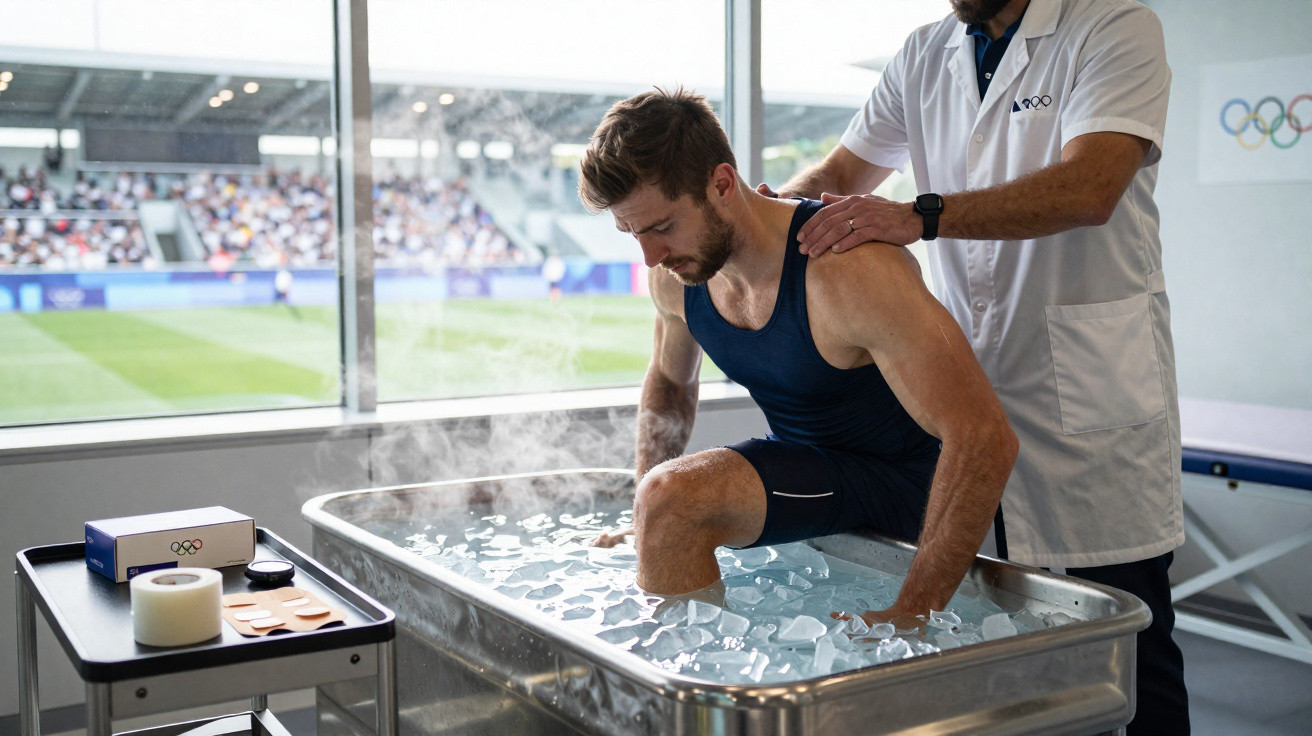
Hockey player Hugo Inglis, who will compete at the Olympics for a fourth time in Paris this summer, has first-hand experience of heat stress. At the 2020 Tokyo Olympics, his team suffered three hamstring tears, which he attributes to pre-match ice baths intended to help players continue in oppressive heat.
Inglis worries that many competitors are "too afraid to speak out about having to play in such grueling conditions because of concerns about how they might be perceived."
The report urges governing bodies to reconsider event timetables to avoid extreme heat, strengthen safety procedures, review fossil-fuel sponsorship and enable athletes to speak openly about the ways climate change is affecting their sport.
The complete report, "Rings of Fire: Heat Risks at the 2024 Paris Olympics", is available here.





Comments
No comments yet. Be the first to comment!
Leave a Comment