
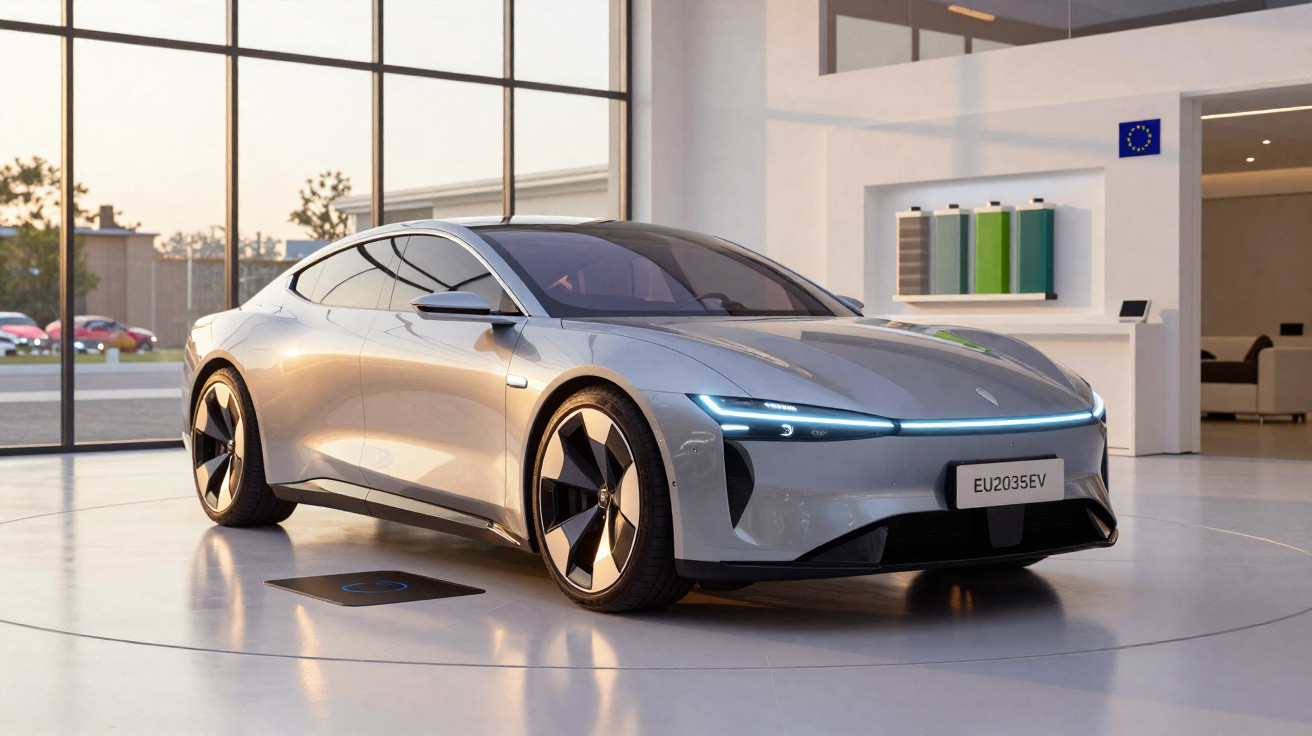
The European Union (EU) has a target: for the new-car market to be 100% electric by 2035. Yet several organisations warn that, without a coordinated plan, meeting this goal could come at a high cost: millions of jobs could be lost, the motor industry could become less competitive, and consumers could have reduced access to new cars.
These are exactly the three areas addressed by a report from the Centre for European Policy Studies (CEPS), produced in collaboration with the European Automobile Manufacturers’ Association (ACEA).
Entitled “Transition to electric vehicles: challenges and tools for moving Europe towards low-carbon mobility”, the paper sets out the main barriers to electrifying the automotive sector and puts forward an integrated plan. Its authors say the plan is designed to ensure Europe delivers its emissions-reduction targets without weakening its industrial strength.
What are the obstacles to electric vehicles?
According to CEPS, there are several challenges, with the most obvious being the high price of electric vehicles compared with combustion-engine models. Their average price is €45,000, more than twice the €20,000 that most consumers are prepared to spend.
The vehicle battery is the main reason for this cost, accounting for around 34% of an electric car’s total price. Batteries made in Europe are also 20% more expensive than those manufactured in China. This is largely due to the heavy reliance on imported critical raw materials, including lithium, cobalt and nickel, which are exposed to geopolitical risks.
Charging infrastructure and workforce skills
These issues are compounded by insufficient charging infrastructure, particularly outside major cities, alongside the urgent need to retrain the workforce. Without this, workers risk being left behind, with significant social consequences.
The industry also faces intense competition from China, where manufacturers benefit from state support and lower costs. High energy prices and the EU’s regulatory complexity make competitive vehicle production in Europe even more difficult.
The solutions: subsidies and incentives
To prevent economic and social disruption during the transition to electric vehicles, the CEPS report recommends practical action across several key areas.
A central proposal is demand-side support, including subsidies aimed at lower-income households and small and medium-sized enterprises (SMEs), harmonised tax incentives, and better use of the Social Climate Fund and the new emissions trading system for transport (ETS2).
From an industrial perspective, the report calls for Research and Development (R&D) investment to be redirected towards strategic technologies such as batteries, automotive software and autonomous driving. It also argues for closer coordination between funding programmes including Horizon Europe and other regional policies.
CEPS further highlights the challenge of scaling up new technologies. It proposes strengthening instruments such as the Innovation Fund and involving the European Investment Bank (EIB) in venture-capital solutions. EU countries are advised to simplify and increase state aid.
Finally, the report stresses the need to speed up the rollout of the charging network by using the Alternative Fuels Infrastructure Facility (AFIF) and European cohesion funds. This would address regional disparities and make it easier to adopt electric vehicles across the EU.






Comments
No comments yet. Be the first to comment!
Leave a Comment