
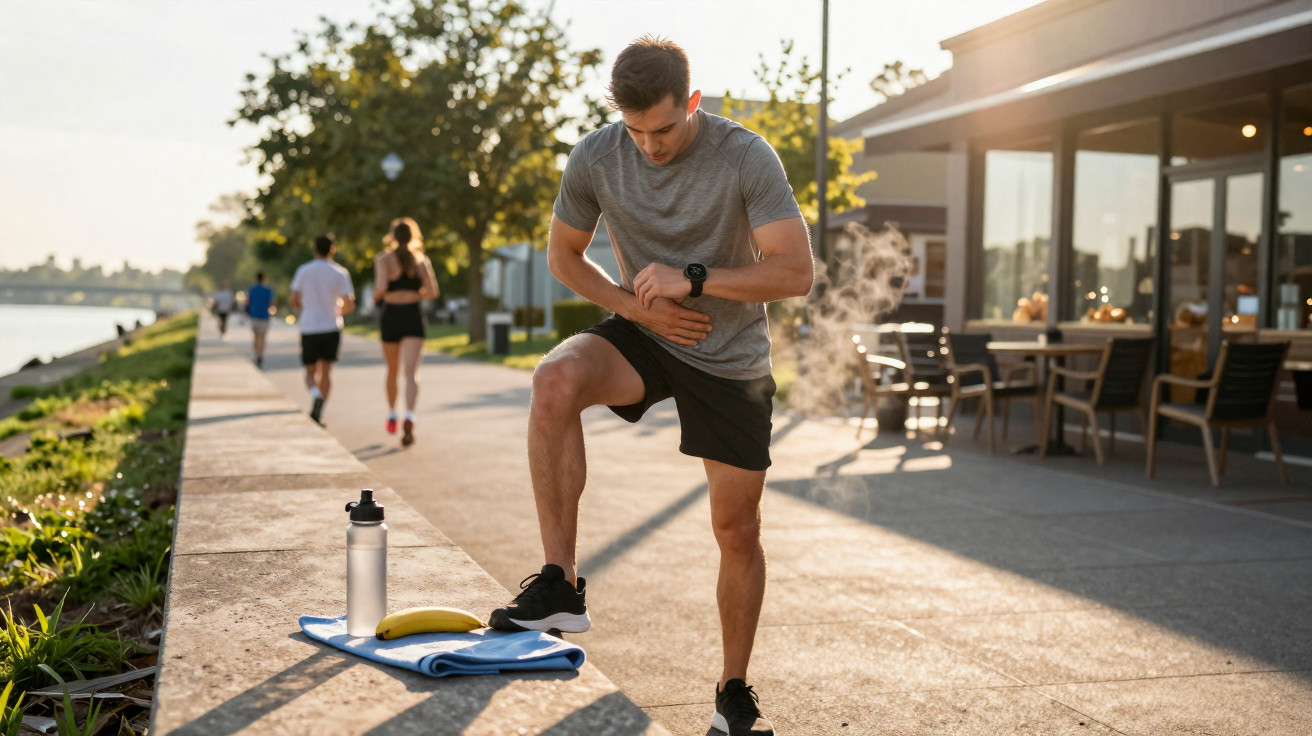
The idea is appealing: supposedly, going for a run or lifting weights before your first bite of the day forces the body to draw directly on its fat stores. On social media, fasted training is often presented as an insider tip for achieving a beach-ready body more quickly. But what do physiology and research actually say – and who could find that training without eating first backfires?
What happens in your body when you exercise without breakfast
After a night’s sleep, carbohydrate stores in the liver and muscles are noticeably lower. These stores are made up of glycogen, the body’s preferred fuel during exercise. Insulin levels are low at the same time, which can theoretically make it easier to release fatty acids.
This is where the widespread assumption comes from: little glycogen and little insulin must mean the body taps into fat for energy. And, in fact, when you are fasted, the body uses a greater proportion of fat for fuel during moderate exercise than it does after breakfast.
“When you are fasted, the proportion of fat burned increases – but that tells us nothing yet about the eventual change in fat deposits around the hips.”
What matters, however, is how total energy expenditure is distributed across the whole day – and that is far more complex than many fitness videos suggest.
A higher fat share during exercise does not automatically mean less body fat
A key misconception is that people equate the fat burned during a workout with actual fat loss. In technical terms, these are two separate processes:
- Fat oxidation: fat is used as an energy source at that particular moment.
- Breakdown of fat tissue: the visible and measurable reduction in fat stores over weeks or months.
You may oxidise more fat during half an hour of fasted jogging than you would after breakfast. But if you then use more carbohydrates for the rest of the day and tuck into crisps and chocolate in the evening, the net outcome remains the same: no movement on the scales.
The body continually aims for balance and compensates for short-term shifts in fat and carbohydrate use over the hours that follow. In the end, the overall calculation is what counts:
“Whether you lose fat is determined primarily by your calorie balance across the entire week – not by whether you train in the morning with or without bread.”
Why fasted training often means you burn fewer calories
Less fuel rarely leads to better performance. With depleted stores, many people struggle to maintain their pace or move heavy weights. The body quickly switches into something resembling an energy-saving mode.
Common effects of exercising without breakfast include:
- lower intensity when running or cycling
- fewer repetitions and lighter weights during strength training
- faster fatigue and difficulty concentrating
A simple calculation illustrates this:
| Scenario | Total calories | Fat proportion | Calories from fat |
|---|---|---|---|
| 30–40 minutes of fasted running | approx. 300 kcal | approx. 60 % | approx. 180 kcal |
| More intense session after a small meal | approx. 500 kcal | approx. 40 % | approx. 200 kcal |
Although the first example has a higher proportion of fat, the second session uses more energy overall – and even more calories from fat. You simply need enough energy to improve endurance and build muscle. Anyone who repeatedly trains with low blood sugar often makes little sporting progress.
The boomerang effect: cravings after fasted training
The body does not like energy deficits. After demanding exercise without fuel, many people experience a powerful appetite a few hours later. There is also a psychological element: “I was brave and went running early this morning, so I’ve earned that bread roll with extra spread.”
This combination can easily produce a calorie surplus that completely cancels out the supposed benefit of fasted training. People who are prone to cravings or who have little experience managing their diet can fall into this trap particularly quickly.
Another point is worth noting: the so-called “afterburn effect” (EPOC), meaning elevated calorie expenditure after exercise, is considerably greater following intense sessions. Very few people reach that intensity on an empty stomach. As a result, some of the potential additional calorie expenditure in the hours after training is lost.
Stress hormones, tiredness and muscle loss: the downsides
Training on an empty stomach places the body under stress. It responds by increasing the stress hormone cortisol. This is normal in the short term, but persistently elevated levels may have undesirable effects over time, including greater fat storage around the abdomen and water retention.
There is another issue for anyone who wants to become not only lighter but also more toned: the risk of muscle loss. When very little carbohydrate is available and training becomes longer or more intense, the body can use amino acids from muscle tissue to make new sugar.
“Anyone who regularly trains too hard while fasted risks losing valuable muscle – and thereby slowing their calorie expenditure at rest.”
Muscles are rather like the body’s built-in calorie furnace. The less muscle you have, the harder it becomes to lose weight sustainably. A poorly planned fasted approach can therefore create the exact opposite of the effect you hoped for in the long run.
The real lever: your calorie balance, not the time of day
When it comes to fat loss or standing still, there is no way around one simple principle: over days and weeks, you need to use more energy than you consume. Whether you train in the morning before breakfast, during your lunch break or after work in the evening plays only a secondary role.
Someone who automatically eats less by skipping breakfast – for example as part of intermittent fasting – can genuinely create a deficit this way. However, the effect comes from lower calorie intake, not from any magical property of the fasted workout.
A small pre-exercise snack, such as a banana or yoghurt, will not ruin your progress. On the contrary, it allows many people to train harder and for longer, burn more calories and feel more alert during everyday life.
Who fasted training suits – and who it does not
Despite the criticism, this form of exercise has its place when used deliberately. Some people feel light, alert and capable in the morning without breakfast. For them, it can fit well into daily life and help establish a consistent routine.
Suitable uses may include:
- easy, short runs at a low heart rate
- walks or gentle cycling to begin the day with movement
- targeted training to improve fat metabolism in endurance athletes under supervision
By contrast, anyone prone to circulation problems, dizziness, headaches or severe cravings is much better off having a small meal beforehand. Fuel in the tank is particularly worthwhile for intense intervals, heavy strength training or long sessions lasting an hour or more.
Practical tips if you still want to try it
- Begin with short, easy sessions lasting 20–30 minutes.
- Drink a glass of water, coffee or tea before exercise, without huge amounts of sugar.
- Keep an eye on your heart rate and stay in a moderate range.
- Plan a balanced meal afterwards containing protein, carbohydrates and some fat.
- Stop exercising if you feel sick, dizzy or as though your vision is going dark.
Why a long-term routine matters more than the fasted-training hype
Anyone wanting to change their body shape needs a system that fits their own life and can be maintained. Forcing yourself to exercise every day before breakfast when you feel awful and perform poorly rarely gets you where you want to be. Many people give up in frustration after only a few weeks.
These foundations are much more effective:
- regular movement several times a week
- a moderate calorie deficit that does not feel like constant misery
- sufficient protein to maintain or build muscle
- sleep and stress management, so that hormones and hunger signals reflect what is really happening
Fasted training can be an optional tool within this toolkit, but it does not replace a clear nutritional strategy. Many people find that a small snack before exercise leaves them feeling stronger and more motivated, enabling them to complete consistently better sessions – and it is precisely that consistency which eventually makes trousers looser and gradually, reliably changes what they see in the mirror.






Comments
No comments yet. Be the first to comment!
Leave a Comment