
You would not know it from the way she lifts her shopping bag onto a chair, then stoops to fasten a reluctant shoelace without pausing. No grimace. No clumsy brace against the table. Just a smooth, familiar action her body plainly understands.
At a table two spaces away, a man in his early fifties eases himself into a chair with both hands planted on his thighs, as though he is unsure whether the seat will hold him. Same city, same rain drumming outside, but their muscles and joints suggest very different paths ahead.
We are fond of discussing miracle supplements and “age-defying” creams. But the routine that quietly determines whether you can still rise easily from the sofa at 70 is far less exciting. It is not sold in glossy packaging. In fact, it is something your grandparents probably understood already.
It begins with the way you move through an ordinary Tuesday.
The everyday habit in plain view
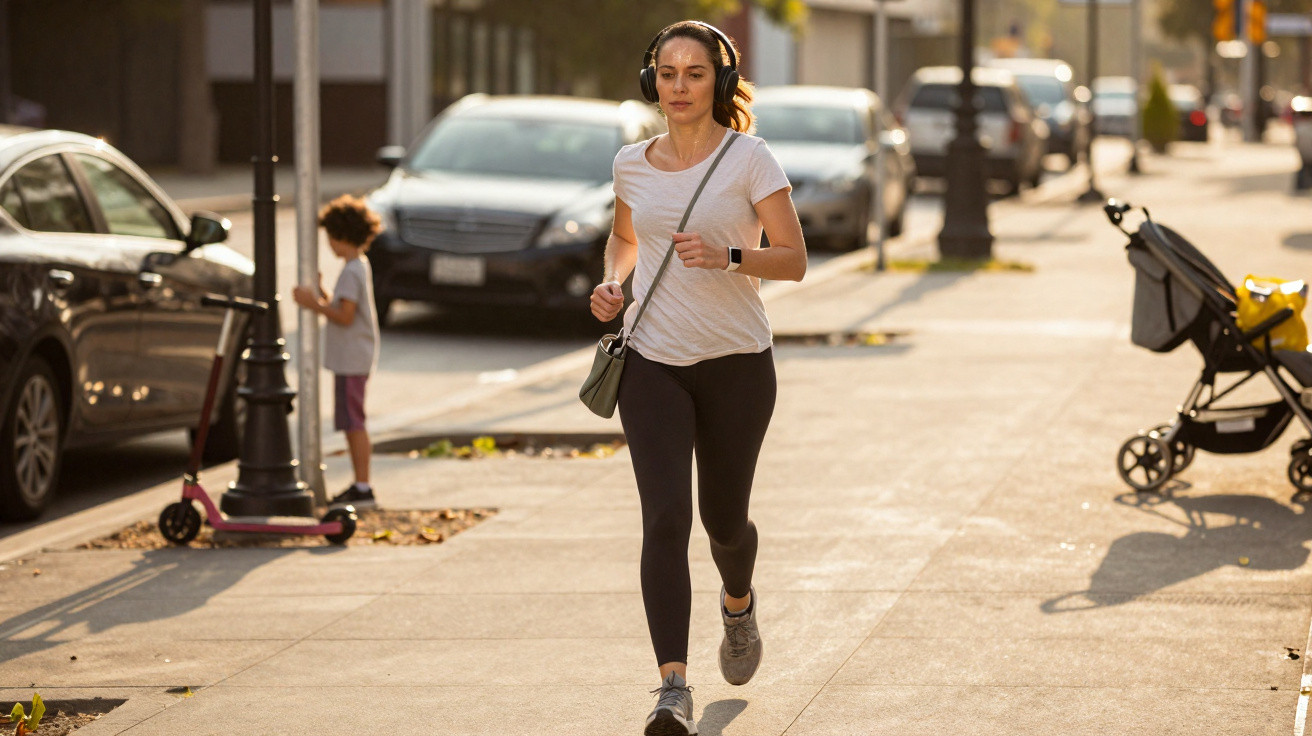
Watch people who remain well as they age and the pattern soon becomes obvious: they walk. Not only at the gym or while wearing activewear on a Sunday morning. They walk to the shops and the bus stop, around their home, upstairs, then downstairs again after remembering they left their glasses behind.
This is not about boasting over step counts or buying costly fitness trackers. It is about the determined, slightly old-fashioned practice of making walking part of everyday life. Brief spells of movement recur throughout the day, like a soft rhythm underneath everything else. Their bodies remain used to exertion. Their joints continue to understand load and gravity. Balance is not merely something they possess in theory; they use it whenever they step around a puddle.
Public-health researchers repeatedly identify the same trend. Those who walk briskly on most days, including for relatively short stretches, are more likely to retain their independence for longer. In practical terms, that is what physical resilience means: carrying your own shopping, managing your own stairs and getting up from the floor without assistance. A large UK study by University College London found that a quicker usual walking pace was associated with a lower likelihood of death from nearly every cause, with no sports-drink sponsorship needed.
Walking is unusual because it works the entire system simultaneously: the heart, lungs, muscles, tendons and even the small stabilising muscles around the ankles. Each step puts a gentle question to the body: “Can you handle this?” Over time, those repeated questions become a discreet training programme. The nervous system practises coordination, muscles remain active, and bones continue receiving the message that they need to stay strong and dense. That is the gradual, unglamorous work behind “aging well”.
Making walking a genuine physical resilience habit
When doctors mention “physical activity”, many people imagine ending up sweaty and bewildered in an online fitness class. It is hardly surprising that they avoid it. A resilience habit works differently: it fits into the life you already have rather than requiring you to become a different person.
Consider creating a personal walking ritual instead. Take a brisk 10–20-minute circuit after breakfast. Leave the bus one stop earlier on the journey home. Only answer certain phone calls when you are on the move. A woman in her late sixties from Manchester told me that she walks to the postbox every day, even if she has no letters to send. “I post myself,” she laughed. That small, fixed circuit has kept her legs working properly for years.
Physical resilience is built more through regularity than grand gestures. A quick walk that makes you a little breathless, repeated on almost every day, benefits circulation and muscles more effectively than one intense session every fortnight. As walking can also provide transport, space to think or a chance to unwind after work, it is much easier to maintain than a guilt-driven gym pledge. The routine is not “exercise”; it is “I move as I go about my day.”
At a personal level, walking changes how you view effort as well. Movement stops being something to avoid or hand over to someone else. Carrying a rucksack, climbing two flights of stairs rather than one, or standing on the train instead of searching for a seat becomes ordinary rather than a punishment. You gain a quiet trust in your body’s ability to manage. In later years, that confidence can help protect against the cycle of fear, inactivity and rapid deterioration that affects so many people after a small injury or illness.
Fitting walking into a busy, imperfect life
That is the principle. Then Wednesday evening arrives, rain is blowing sideways and your brain feels like porridge. This is the point at which a resilience habit either survives or disappears. The answer is to make the starting point almost ridiculously easy.
Build on routines you already have. On the school run, park two streets away. During your lunch break, take a five-minute circuit of the block before looking at your phone. While watching television in the evening, march on the spot or walk along the hallway during the adverts. It need not be elegant; it simply needs to happen regularly.
A physiotherapist I spoke with recommends a “Daily 20”: two minutes of easy walking for every hour spent largely sitting down. There is no need to set a timer; attach it to natural pauses instead. While the kettle boils, walk for two minutes. Once you have finished an email, get up and go to the most distant tap or printer. Across a day, these small, odd intervals can often total 30–40 minutes. Across a year, they create a very different outcome for your joints and muscles.
There is, of course, the less encouraging alternative we all recognise: long hours at a desk followed by sinking into the same place on the sofa each evening. Joints become stiff in the positions in which we keep them. The body excels at what it rehearses, including remaining still. More positively, it also becomes skilled at movement when you begin nudging it in that direction. An extra five minutes of activity each day is a small but meaningful vote for your future self.
Let us be honest: nobody really manages this every day.
People who keep walking over the long term are not fuelled by extraordinary willpower. They make the behaviour easier instead. They leave comfortable shoes by the door, hang a waterproof on the same hook and choose a familiar route that does not involve navigating six alarming junctions. They ensure that walking takes slightly less effort than the alternative. On days when they “can’t be bothered”, they choose a shorter route rather than abandoning the habit altogether. That flexibility sustains them where perfection would not.
There is an emotional element, too. On a difficult day, spending ten minutes outdoors may seem futile or even self-indulgent. On a good day, it is easy to miss it because other plans feel more appealing. That is precisely why walking is such an effective resilience habit: it teaches your mind to turn up for something quietly valuable, even when the reward is neither immediate nor dramatic.
“People always ask me about the best exercise for healthy aging,” says Dr Rachel Cooper, a researcher in ageing and mobility. “I tell them: the best one is the one you’ll still be doing in ten years. For most people, that’s walking.”
- Begin very small: even five minutes of brisk walking daily can become your “starter habit”.
- Attach it to something: use the same time and cue, such as coffee, commuting or phone calls.
- Focus on resilience, not weight: walking supports future strength, rather than simply burning calories.
The understated value of staying on your feet
There is an odd mismatch between what we claim matters to us and the way we live. Most of us say we would like to be active grandparents, or at least avoid depending on our children for everything. Yet our routines revolve around chairs, lifts, cars and deliveries. We remove effort at every opportunity, then are surprised when our bodies struggle on the occasional times we demand more from them.
Lasting physical resilience does not appear on a particular birthday, nor does it vanish overnight. It resembles a savings account built through countless small deposits. Choose a walk after dinner over more screen time. Use the stairs when your bag is not too heavy. Get up one more time when staying seated would be easier. These are not dramatic transformations; they are almost too ordinary. That is exactly what makes them effective.
Eventually, the question will not be “Can I reach 10,000 steps?” It may be “Can I get out of this hospital bed without help?” or “Can I still carry my own shopping?” Everyday walking is a rehearsal for those situations long before they arise. It develops the muscles you will require, the balance you will rely on and the cardiovascular fitness that can help you recover more quickly after surgery or illness.
Years from now, on a cold morning, you may bend to tie your shoelace and notice nothing whatsoever. No click, no groan and no calculation about where to place your hands. Simply a body that still understands movement because you never stopped asking it to move. That is the purpose of this habit: preserving a future in which you can continue living life on your own terms, one ordinary step at a time.
| Key point | Detail | Why it matters to the reader |
|---|---|---|
| Everyday walking as a “resilience habit” | Regular, brisk walks integrated into normal routines rather than limited to workouts | Demonstrates a realistic route to remaining strong and independent with age |
| Frequent small movements outperform rare exertion | Short walks repeated each day support the heart, muscles, joints and balance | Encourages manageable changes instead of intimidating fitness plans |
| Shape your surroundings for movement | Keep shoes by the door, choose easy routes and connect walks with existing habits | Makes consistency much more achievable in busy, imperfect lives |
FAQ:
- How fast should I walk to build physical resilience? Aim for a speed at which you can talk but cannot sing. You should be slightly out of breath, with your arms swinging, and feel as though you are “on a mission” rather than taking a gentle stroll.
- Is walking enough, or do I need strength training too? Walking is an excellent foundation. Simple strength exercises, such as rising from a chair or using light weights, can improve your resilience further, particularly in the legs and hips.
- What if I have joint pain or arthritis? Short, frequent walks on level, forgiving surfaces often help joints more than complete rest. Begin gently, pay attention to your body and speak with a physiotherapist or GP if pain worsens or persists.
- Do I need 10,000 steps a day for benefits? No. Research indicates meaningful health benefits at around 4,000–6,000 steps, particularly if some are brisk. Being consistent matters far more than pursuing a perfect figure.
- How quickly will I notice changes if I start now? Many people notice improvements in mood and energy within a couple of weeks. Balance, stamina and confidence in everyday tasks generally develop over several months of regular walking.





Comments
No comments yet. Be the first to comment!
Leave a Comment