
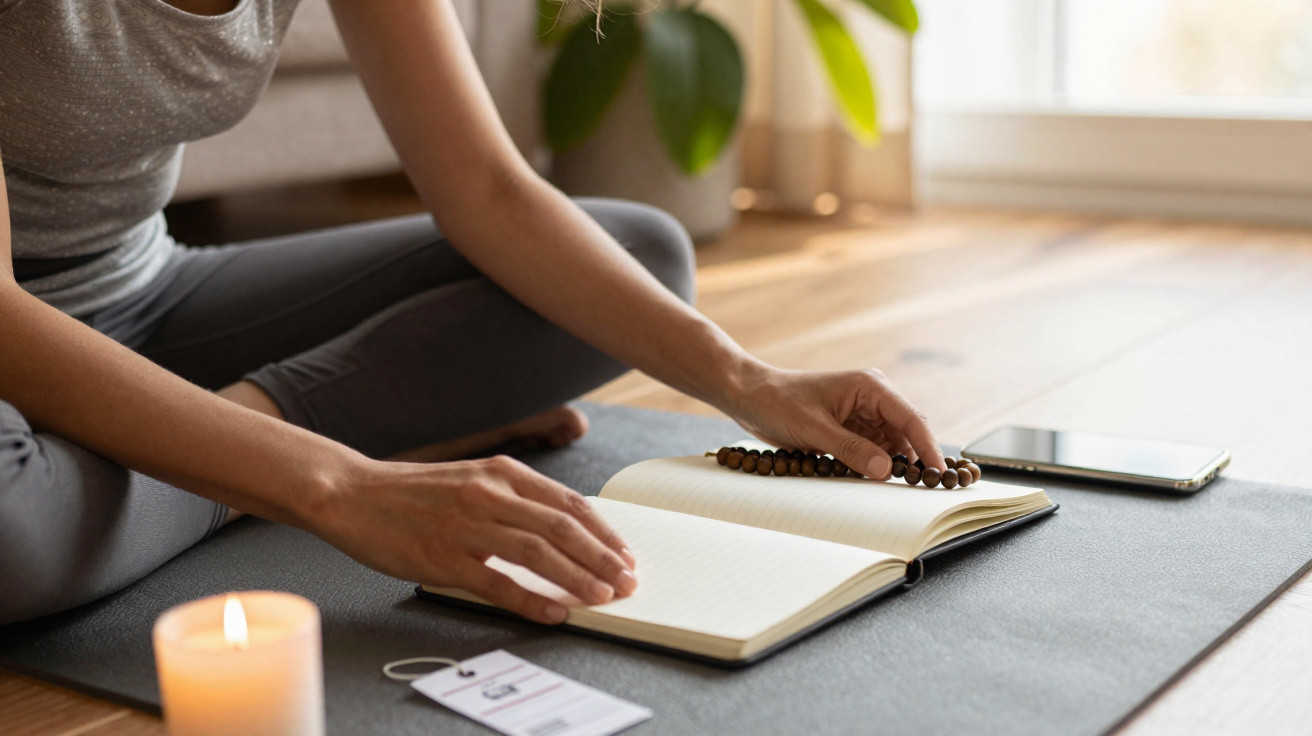
Transformation and change are often exhausting. At times, as soon as you tell the universe that you want to take a different route, it seems to place barriers in front of you-as though it is testing the depth of your determination.
Late last year, I chose to reinvent my persona online and create a brand with a presence both locally and internationally. I also decided to spend more than a month in London training to become a yoga instructor. That is an enormous dream for any girl to imagine, never mind make happen. Ironically, as I write these words for the first time, I find myself asking: what on earth was I thinking!!?! With a little over two months before I leave the beautiful home I know so well, anxiety is beginning to rise, obscuring my original aims and intentions.
These are my reflections on meditation and anxiety relief…
Goal setting, anxiety and the future
Goal setting is an important ability and the central focus of any coaching relationship. You picture a desired future result, develop an action plan, and then work towards that objective through self-discipline and effort. It can strengthen your sense of purpose and direction. Commitment and visualisation are among the strategies that can help you reach your goals. With goals, the emphasis is always on what lies ahead.
If, like me, you have a Type A personality, goal setting can easily take over your life and push anxiety levels sky-high. In particular, I can forget to live through the journey and share it with the people who care about me most.
Following tearful afternoons, feelings of panic, a fear of failing and a temptation to give up, I drew myself back in and started paying attention to my internal dialogue.
Anxiety influences far more than your emotions; it also affects your thoughts, behaviour, self-image and overall experiences. Above all, it plays havoc with your internal dialogue. Anxiety naturally leaves you feeling less satisfied, less optimistic and more tense about everything around you.
Where should I direct my energy, and how could I understand what was happening to me internally as well as externally?
Intentions in Buddhist teachings
In Buddhist teachings, establishing an intention is very different from setting a goal. Rather than being focused on the future, it is a practice or path concerned with how you are ‘being’ in the present moment. Intentions involve recognising what matters most to you and committing to bring your actions in the world into line with your inner values. Your focus should rest on the ever-present ‘now’ amid life’s continually changing flow. In my case, that means not concentrating on the falling pound-to-rand exchange rate!
It became clear that I had been excessively focused on a future outcome instead of my inner experience in the present. I was getting caught up in minor concerns, such as whether I would manage a headstand before leaving for London, rather than acknowledging and rewarding myself for other parts of my practice. Like so many of us, I had become detached from a context that was bigger and more meaningful than my goal-oriented activity. I was expecting my goal setting to feed my intentions. Yet grounding yourself in intention is what provides the capacity and integrity to pursue your goals. Intention is the foundation of goal setting. When we return to our intentions instead of our goals, we are more resilient in times of emotional distress.
"All that we are is a result of what we have thought. The mind is everything. What we think, we become"
Buddha
Meditation for anxiety relief and internal dialogue
My mind still tends to drift into scattered thoughts and insecurity. Changing my internal dialogue will require both time and commitment. Meditation has always supported me in doing this. Meditation is a proven way to rebuild positive internal dialogue. According to Deepak Chopra, meditation moves you beyond the ego-mind and into the quiet and stillness of pure consciousness.
That does not mean you have to be a Buddhist or an extreme spiritualist. For me, meditation is simply 5–10 minutes of quiet each day. I may sit upright or lie flat on my back, sometimes with music and sometimes in silence. I concentrate on my breathing and counting, allowing my thoughts to move freely before gently guiding them back to my breath. I also try different mantras, positive affirmations and gratitude.






Comments
No comments yet. Be the first to comment!
Leave a Comment