
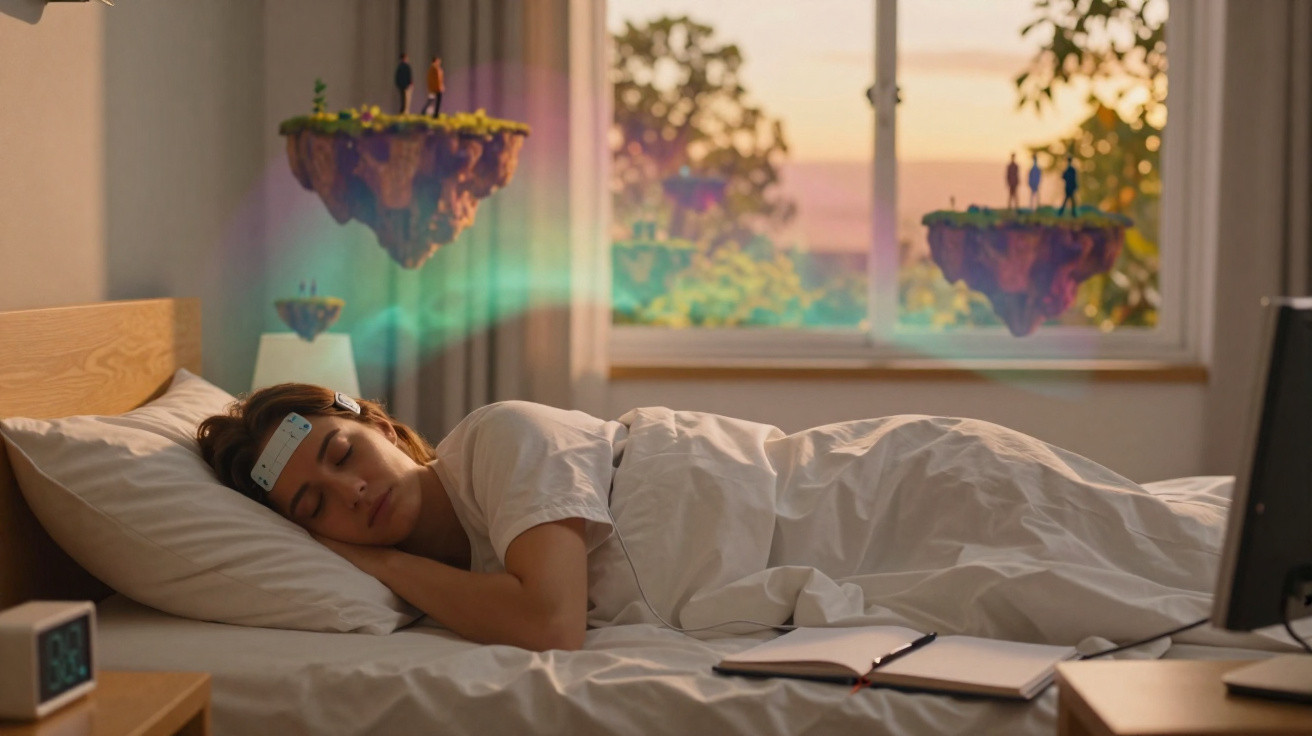
New research from Italy challenges the simple equation that eight hours automatically means good sleep. According to the findings, it is not only the duration of the night that matters, but also the intensity of our dreams. What counts is whether we feel fully inside a dream, or instead remain at its edge, sensing everything only indistinctly.
How dreams alter our sense of deep sleep
A research group led by neuroscientist Giulio Bernardi at the IMT School for Advanced Studies in Lucca observed healthy adults across several nights in a sleep laboratory. Rather than concentrating solely on established measures such as brainwave activity, the team focused particularly on subjective experience: what is happening in the mind immediately before waking?
The study shows that the more vivid and immersive a dream feels, the deeper and more restorative sleep seems – even when the brain objectively "needs" less sleep.
The researchers refer to the dreams’ “vividness” and “immersion”. This describes the sensation of truly being present in a dream: distinct images, intense sounds, emotions and bodily sensations. It is almost as though a person is awake, only in a different reality.
More than 1,000 awakenings: what the researchers did in the laboratory
The study involved 44 healthy adults, each of whom spent four nights sleeping in the laboratory. During that period, they were repeatedly woken briefly and asked straight afterwards to describe what they had experienced just before awakening.
At the same time, the researchers recorded brain activity using high-resolution EEG technology (electroencephalography). This enabled them to link participants’ subjective accounts with measurable data.
- 44 participants, all physically healthy
- Four nights per person in the sleep laboratory
- More than 1,000 planned awakening points in total
- Precise EEG recordings throughout the night
- Direct questions about dream content and the feeling of sleep
Participants then rated their impressions. Had their sleep felt deep or rather light? Had there been a clear dream before waking, or merely a blurred residual thought?
Vivid dreams = deep sleep? The surprising answer
The analysis revealed a clear pattern. Participants experienced their sleep as particularly deep in two circumstances:
- During phases in which they could report no conscious mental activity at all – in other words, classic “dreamless” deep sleep.
- After highly vivid, detailed and immersive dreams in which they felt strongly involved.
The picture was very different when participants described only hazy, fragmented impressions – perhaps isolated images, snippets of words or feelings, but no coherent dream narrative. In those cases, they rated their sleep as markedly lighter and less restorative.
Vague, broken fragments of dreams repeatedly came with the feeling: "That was not proper deep sleep."
What makes this particularly interesting is that the conventional biological markers of sleep pressure declined normally as the night went on. Objectively, the brain “needed” less sleep. At the same time, however, participants reported feeling that their sleep was becoming deeper, in parallel with more intense, immersive dream phases.
Why the study challenges the traditional view of deep sleep
Many textbooks still state that deep, restorative sleep can be identified primarily by slow brainwaves on an EEG. The new study suggests that this view does not go far enough.
The researchers found indications that the subjective depth of sleep is linked not only to these slow waves. Instead, dream experience appears to play a key part in how people assess their night afterwards.
According to Bernardi, this may explain why patients in sleep laboratories can often show normal readings yet still feel exhausted during the day. They may be dreaming differently – less immersively, less coherently and perhaps in a more disrupted way.
Dreams as a “protective mechanism” for sleep
The scientific group proposes that dreams should no longer be dismissed as a mere “by-product” of the brain. Instead, they may act as a kind of buffer that stabilises the experience of genuinely being asleep.
Dreams appear to function like an internal protective shield, screening sleepers from outside stimuli and preserving the continuity of the night.
This idea connects with long-standing assumptions in sleep research and classical psychoanalytic thinking: dreams as the “guardians of sleep”. What is new is that precise brain recordings and systematic questioning now support this assumption.
What this could mean for people who feel they sleep badly
Many people attending sleep clinics tell the same story: “The measurements say I am getting enough sleep. But in the morning I still feel as though I have been awake all night.”
The new study offers one possible explanation. Biological parameters may look favourable and sleep pressure may fall normally, yet the internal experience does not match. Dreams might be too fragmented, or may not properly develop at all.
This raises interesting questions for sleep medicine in practice:
- Should doctors specifically ask about the nature of dreams, rather than sleep duration alone?
- Could therapies that affect dream quality improve the feeling of being restored?
- Might medicines that suppress or intensify dreams have a greater role than previously thought?
This approach is especially relevant for people with sleep disorders who may objectively spend a long time in bed but subjectively feel little restoration, such as those with insomnia or certain anxiety disorders.
How you can influence your own dream quality
The study itself did not test any specific behavioural advice. However, other sleep and dream research points to several ways of increasing the likelihood of clear, coherent dreams:
- Keep regular sleeping hours: A stable sleep routine supports orderly sleep cycles with more dependable dream phases.
- Reduce alcohol in the evening: Alcohol can suppress dream sleep or fragment it severely.
- Limit screen use before bed: Intense blue light and constant stimulation can delay falling asleep and disrupt the course of the night.
- Keep a dream diary: Writing down dreams in the morning strengthens recall and makes dream experiences more consciously noticeable.
- Manage stress: Relaxation practices such as breathing techniques, meditation or gentle stretching can reduce unnecessary cycles of nighttime rumination.
These measures do not guarantee “cinema-quality” scenes in the mind. They can, however, create conditions in which the brain is better able to develop more structured sleep and dream phases.
What researchers want to clarify next
The data presented so far come from a relatively small but carefully conducted laboratory study. The institutions involved – including the Scuola Superiore Sant’Anna in Pisa and the Fondazione Gabriele Monasterio research centre – are continuing to expand their sleep laboratories.
In future, the teams aim to establish exactly how particular EEG patterns relate to types of dreams, which brain regions are especially active during immersive dreams, and where pathological forms of sleep – such as sleep apnoea or severe nightmare disorders – fit into this picture.
Another compelling question is whether targeted interventions affecting dream structure could improve the subjective sense of restoration. Possible options include behavioural therapies, biofeedback methods or technical approaches that fine-tune brain activity during sleep.
Why we should discuss dreams when we discuss sleep
The Italian data suggest that anyone who counts only the hours spent in bed overlooks an important part of what is happening. People do not judge their sleep by duration and measurement curves alone, but also by their own internal journey through the night.
In practical terms, discussions about sleep should not be confined to “How long did you sleep?” Questions such as “What do your nights feel like?” and “Do you experience clear dreams, none at all, or only confused fragments?” could become far more important in future – both in medical appointments and when considering personal sleep quality.






Comments
No comments yet. Be the first to comment!
Leave a Comment