
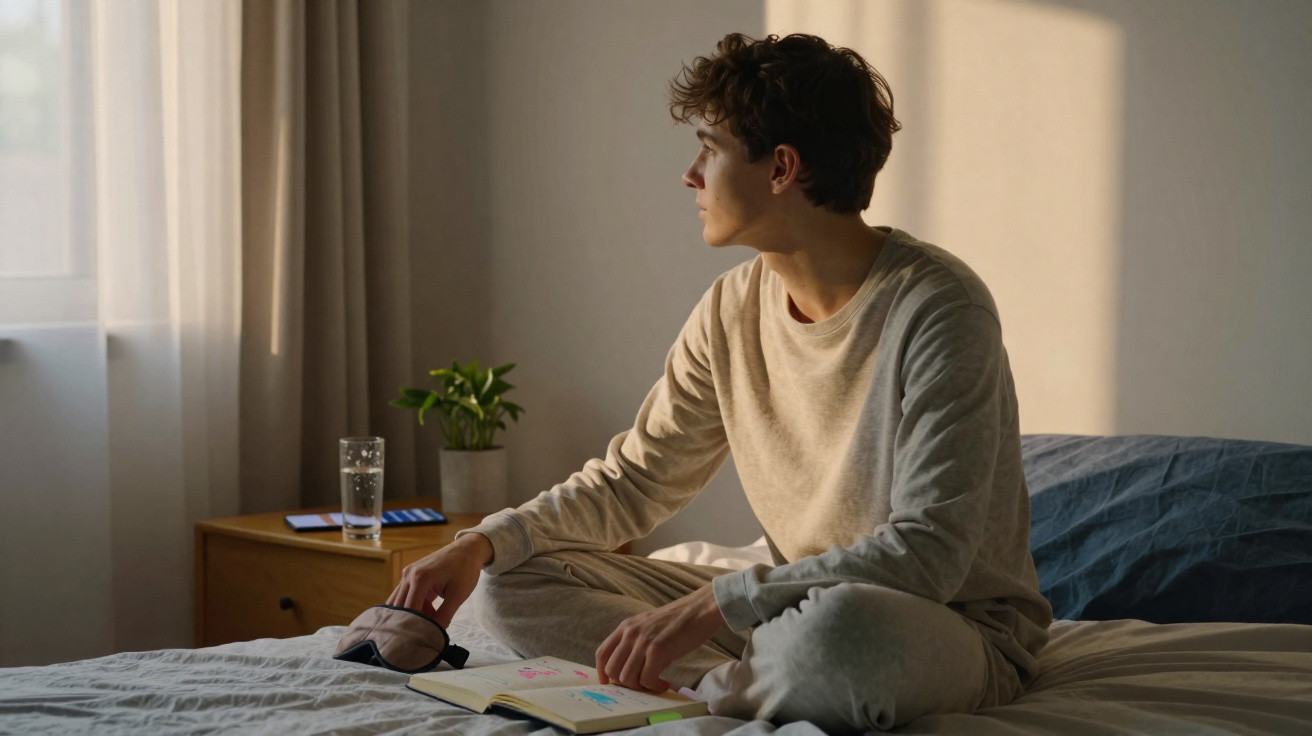
Your phone lights up at 2:37 a.m.: “Awake too?”
You look up at the ceiling as the streetlamp casts a faint blue glow across your bedroom, and it suddenly hits you that someone else is also spending another long night alone with their thoughts.
Half asleep and half on edge, you flick through videos promising “sleep hacks”, breathing apps and miracle teas. There is something strangely exposing about seeing how many people can no longer simply shut their eyes and drift away.
On some nights, you drop off instantly; on others, you lie awake revisiting conversations, rehearsing disasters that have not even happened, and calculating the time left before your alarm goes off.
You might tell yourself it is simply “bad sleep”.
Psychology suggests it could be more than that.
Your sleep habits are emotional signals in pyjamas
Psychologists are increasingly viewing sleep as more than a biological necessity: it can also act as an emotional thermometer. The way you fall asleep, wake up and experience the night can often reflect what is happening beneath the surface, whether that is stress, loneliness or anger you held back at work.
If you fall asleep every evening as though someone has switched you off, it may point to exhaustion rather than genuine rest. Conversely, staying awake while repeatedly replaying the same moment closely resembles rumination: the mental hamster wheel often found in anxious minds.
Sleep patterns cannot diagnose every problem, of course. Even so, they can create a surprisingly accurate outline of our emotional state.
Consider “revenge bedtime procrastination”, a phrase that emerged in psychology circles before being quickly embraced by exhausted people everywhere. You know the pattern: you are worn out, but intentionally remain awake, scrolling, watching another episode or disappearing into TikTok at 1 a.m. because the day never seemed to belong to you.
It is seldom really about the programme or the phone. It is about reclaiming time: a quiet act of resistance against days crowded with obligations, bosses, children and noise. Researchers have associated this behaviour with high stress, limited control and a strong need for personal space.
Then there is the familiar 4 a.m. awakening. Not a gentle return to consciousness, but a sudden jolt: your heart is racing and your mind is already running through unpaid bills and unanswered messages. This pattern is often connected with anxiety and depressive states, with the mind seemingly choosing the quietest hour to turn up its volume.
Psychology frames it like this: your nervous system does not finish work when you close your eyes. When emotions are pushed aside throughout the day, they may return at night as insomnia, nightmares or sleep so deep that it feels like an escape.
Chronic insomnia is closely linked with hyperarousal, where the body remains in a “watch out, danger” state even while you are in bed. At the other end of the spectrum, people who sleep excessively may be dulling emotional pain, something frequently seen during depressive episodes.
The brain relies on sleep to process memories, regulate mood and “clean up” emotional residue. When that internal work is blocked or overloaded, the outcome is not merely “bad sleep”. It is your emotional system raising a small but persistent flag.
Reading your nights as a gentle emotional map
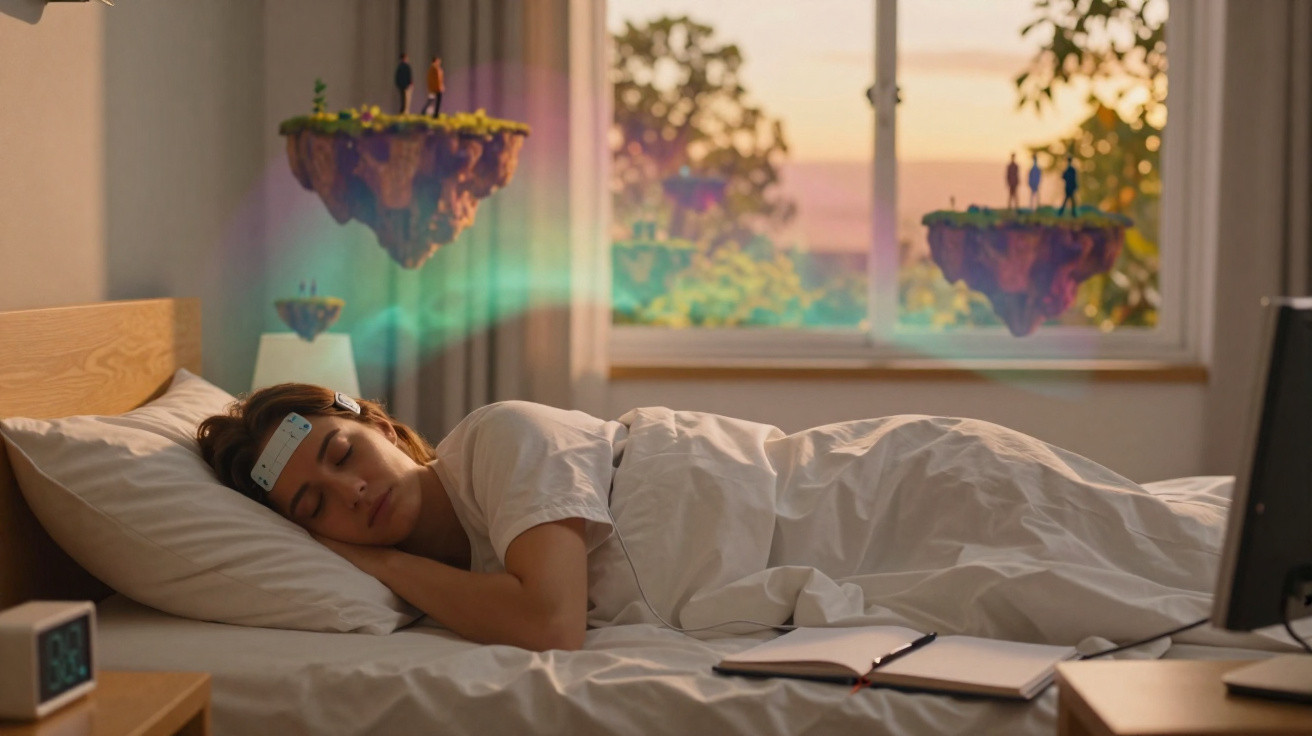
One straightforward approach psychologists recommend is keeping a “sleep + feelings log” for a week. It does not need to be an intensely detailed spreadsheet; a notebook by your bed is enough.
Before bed, write down three things: how the day felt emotionally, such as stressed, calm or overwhelmed; what keeps circling in your mind; and what you did during the final hour before sleep. In the morning, record how you slept, how often you woke and the first emotion you felt on waking.
Patterns can emerge sooner than you expect. You may notice that conflict-filled days lead to later sleep, while days when you felt unseen or depleted leave you sleeping too long and still exhausted.
The purpose is not to judge yourself. It is to gently interpret your own nights.
Many people attempt to “fix” sleep by focusing only on the surface: a darker bedroom, a new mattress or lavender sprays. These may be helpful, but if you go to bed angry, anxious or quietly heartbroken, your body does not forget merely because you have pressed “sleep mode”.
A kinder adjustment is to view the hour before bed as emotional hygiene rather than simply screen time. Small actions matter: take a brief walk after dinner to give your brain space to process the day; write a one-line worry list to “park” thoughts until tomorrow; or say aloud what you are feeling, even if you only say it into your notes app.
Honestly, nobody manages this every day. But doing it occasionally, particularly on nights that feel especially heavy, gradually shows your nervous system that it is safe to unwind. You are not a machine that just powers down at 11:23 p.m.
As one sleep psychologist likes to say: “Your nights are often the honest version of your days.”
When your body prevents you from sleeping, it is rarely doing so out of pure cruelty. More often, it is trying to complete a conversation your mind declined to have earlier.
If you fall asleep immediately through sheer exhaustion
You could be functioning under chronic stress or emotional overload. Small breaks and clearer boundaries during the day may matter more than any bedtime tea.If you stay awake replaying past events
This may indicate anxiety, regret or unresolved conflict. Writing about it or talking it through can lessen the mental reruns at night.If you wake too early with a heavy mood
This can reflect depressive states or prolonged emotional strain. It may be worth considering professional support, not as a failure but as help.
When sleep becomes a mirror rather than only a symptom
When you begin to understand your nights as messages instead of personal shortcomings, a subtle change takes place. Rather than asking, “What’s wrong with my sleep?”, you start asking, “What is my sleep trying to tell me about my life right now?”
That can be an uncomfortable question. If bedtime fills you with dread because silence makes your thoughts explode, perhaps your days are too noisy, rushed or full of things left unsaid. If you regularly “escape” into prolonged, disconnected sleep, perhaps waking life feels too severe, demanding or not fully your own.
Sleep is deeply personal and shaped by hormones, surroundings, health and habits. Still, there is often an emotional layer humming underneath it all. Paying attention to that layer does not mean treating every poor night as a pathology; it means responding to yourself with curiosity rather than harshness.
| Key point | Detail | Value for the reader |
|---|---|---|
| Sleep reflects emotions | Patterns such as insomnia, oversleeping or early waking can often reflect stress, anxiety or low mood | Helps you understand nights as signals rather than simply failures |
| Simple tracking method | A short daily “sleep + feelings log” links the emotions of your days with the rest you get at night | Offers a practical way to build self-awareness and make changes |
| Gentle pre-sleep rituals | Small emotional hygiene practices before bed can reduce mental overload | Supports better sleep quality while addressing underlying emotional tension |
FAQ:
Does bad sleep always mean I have a mental health issue?
No. Many factors affect sleep, including caffeine, screens, hormones, noise and changes to your routine. When poor sleep continues for weeks alongside mood changes, it may indicate deeper emotional or psychological strain.What sleep pattern is most linked to anxiety?
Struggling to fall asleep and waking repeatedly during the night are strongly linked with anxiety. Even when the body is meant to be resting, the mind can remain alert, searching for danger or replaying worries.Can oversleeping be emotional too?
Yes. Routinely sleeping for long periods yet still feeling exhausted can be associated with depression, burnout or emotional escape. It deserves attention, especially when motivation and enjoyment in daily life are disappearing.Is tracking my sleep and emotions really useful?
It will not solve every problem, but it replaces vague impressions with identifiable patterns. This can make discussions with a doctor, therapist or even yourself much clearer and more rooted in reality.When should I seek professional help about my sleep?
If poor sleep continues for more than a month, affects your work, relationships or safety, such as driving while drowsy, or comes with intense sadness, panic or hopelessness, it is time to seek support. You do not have to “deserve” help - ongoing suffering is reason enough.





Comments
No comments yet. Be the first to comment!
Leave a Comment