
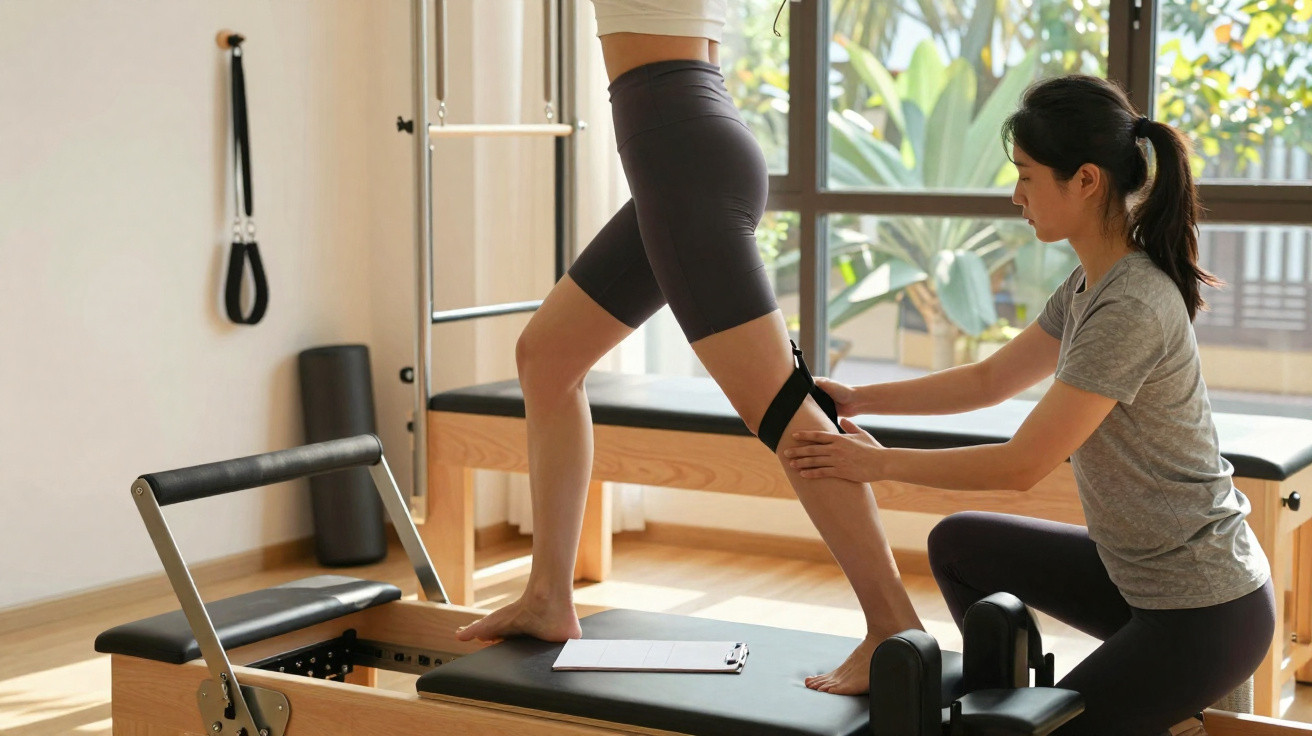
As physiotherapists, we support athletes and active people daily, from those returning after an injury to those aiming to elevate their performance. In both situations, one exercise method we regularly recommend is Reformer Pilates.
More than simply a Pilates apparatus, the Reformer is an adaptable tool for rehabilitation and conditioning. It can enhance movement quality, strength and control. Whether the aim is injury recovery or improved performance, the Reformer provides a safe, evidence-based approach to developing a robust, balanced body.
Reformer Pilates for Sports Injury Rehabilitation
Goal: To regain optimal movement patterns while safeguarding healing tissue.
Benefits: Resistance, range of movement and loading can be tailored to each client’s requirements and stage of recovery.
- Low impact and kind to joints
The Reformer relies on spring resistance, allowing me to alter the load so muscles are challenged while pressure on joints and injured tissues is kept to a minimum. This is especially useful during the early phases of rehabilitation and for ongoing joint concerns.
- Rebalances muscles and improves movement efficiency
Compensatory patterns commonly develop after injury: some muscles work too hard while others become underactive. Reformer exercises enable me to help clients re-establish appropriate muscle activation and symmetry, improving movement efficiency and lowering the likelihood of re-injury.
- Builds core control and postural stability
Poor control through the trunk or insufficient pelvic stability contributes to many sporting injuries. The Reformer is highly effective for engaging the deep stabilising muscles around the core, hips and spine. In turn, this supports alignment, coordination and control during dynamic movements.
- Facilitates neuromuscular re-education
An injury can affect the body’s awareness and control. The Reformer’s supported, accurate movements help restore neuromuscular connections, enhancing coordination, confidence and functional movement patterns.
Reformer Pilates to Enhance Sports Performance
Goal: To develop functional movement, body awareness, power and flexibility.
- Develops functional, sport-specific strength
Rather than concentrating on isolated muscles, Reformer Pilates uses integrated movement patterns. This helps athletes strengthen the muscular chains required for their sport, improving power, control and efficiency.
- Improves flexibility and dynamic mobility
Athletes can find it difficult to achieve a balance between flexibility and strength. The Reformer develops both, expanding range of movement without sacrificing stability. This carries over into smoother, better-controlled athletic movement.
- Boosts balance, coordination and agility
The Reformer’s unstable platform challenges balance and proprioception, both of which are vital for agility and rapid reactions in sport.
- Supports recovery and helps prevent injury
Consistent Reformer training can improve circulation, muscle recovery and body awareness, helping to reduce injury risk and support a long sporting life. Many of my clients say they feel stronger, more mobile and better equipped for the demands of training and competition.
- Erin Lynch, Sports Physiotherapist and Pilates Instructor




Comments
No comments yet. Be the first to comment!
Leave a Comment