
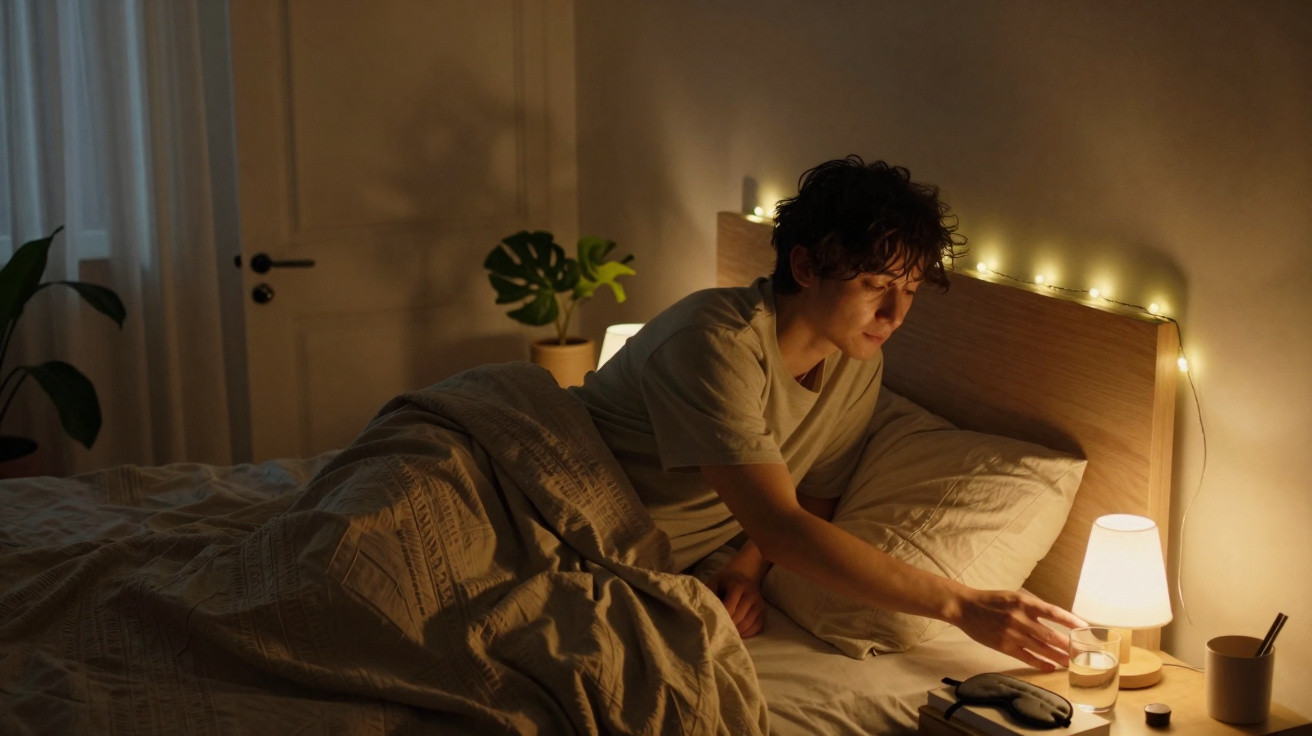
A yellowish glow spills from beneath bedroom doors, while tiny LEDs blink on chargers and screens, and the hallway lamp remains on “just in case”. Beyond the windows, the city has drawn its blackout curtain. Indoors, however, the walls remain gently illuminated, like a hotel corridor that is never entirely shut down.
You are lying on your back, neither properly awake nor properly asleep. Light on the ceiling makes it seem more secure. Shadows have clear edges rather than blurring into uncertainty. Each corner feels accounted for.
You tell yourself it is because you may need the bathroom, or because you could want to read. But the real reason is less practical and far more personal.
Part of you simply does not want night to become completely dark.
And that part is attempting to tell you something.
What your “light on” habit reveals about hidden safety alarms
People generally see sleeping with the lights on as an unusual bedtime preference. A harmless quirk, much like wearing socks in bed or requiring three pillows.
But speak to people who struggle to sleep in darkness and another pattern emerges. Terms such as “safe”, “on edge”, “vigilant” and “alone” quickly arise. The light is more than illumination: it becomes a small glowing bodyguard.
Our nervous systems do not communicate in full sentences; they communicate through rituals. Your habit of falling asleep with the light on can often be saying: I don’t fully trust what might happen if I let go.
The habit is more widespread than you may think. A 2022 sleep survey conducted by a US clinic found that nearly 40% of adults sleep with some form of light on at least a few nights each week. It is not limited to children or people who are “afraid of the dark”. It includes managers, parents, students and people who appear completely steady during the day.
One woman I interviewed, 35, works in finance and lives in a stylish flat with coded doors and cameras. She leaves her hallway illuminated throughout the night. At first she dismisses it as “laziness”, before quietly explaining that she grew up in a home where shouting would break out after midnight.
She could never predict when a door might slam. Her doors are quiet now, but her lights remain on. For her, safety is something she needs to see.
There is a reason darkness can reactivate old warning systems. As children, we can learn quickly that difficult things happen when adults are exhausted, the house becomes quiet and nobody is watching. Darkness can become associated with uncertainty.
At a neurological level, complete darkness heightens the feeling that you cannot scan for danger. The amygdala, the area that reacts to threat, can become slightly more alert. Leaving a light on is a way of reassuring your brain: “Relax, you can still check the room.”
So, resisting the switch is not “dramatic”. You are negotiating with a subconscious that has decided sleep means vulnerability, and vulnerability requires a watchtower.
How to meet your safety needs without ruining your sleep
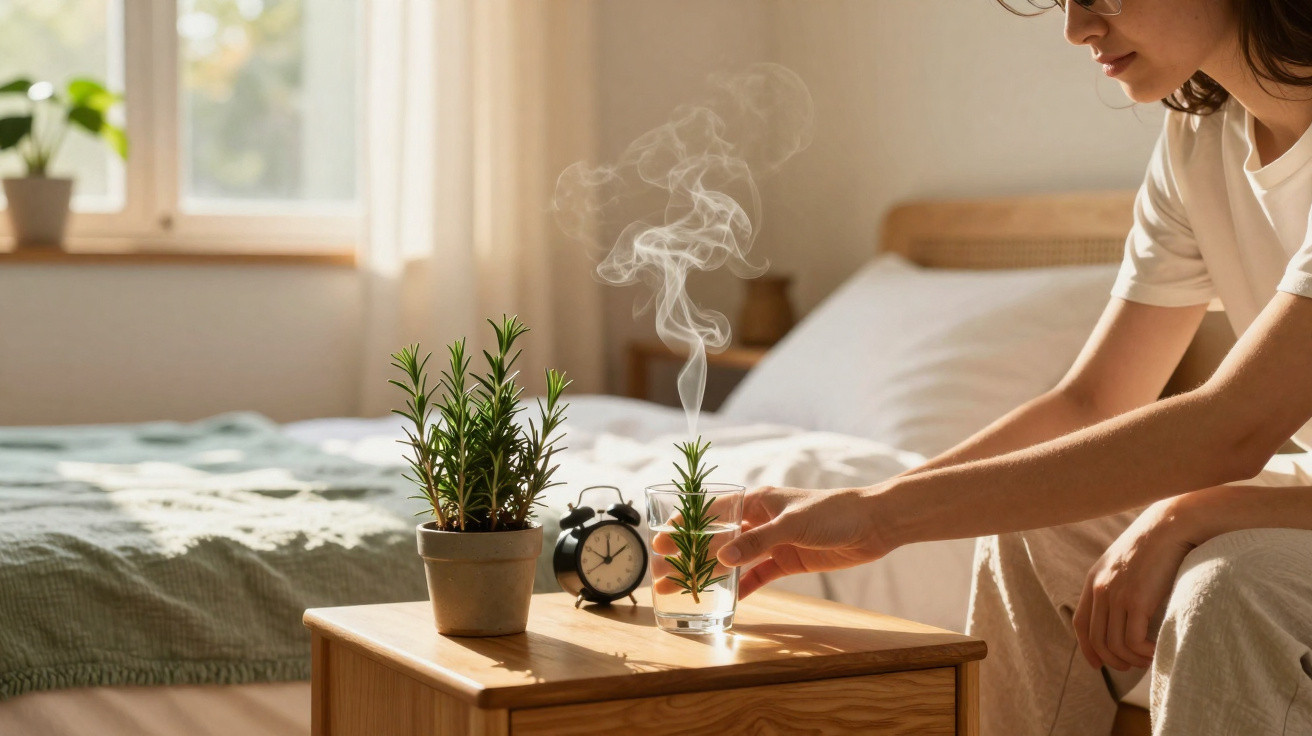
If having light feels essential, begin by reducing it rather than removing it completely. Replace the main ceiling light with a warm, low-wattage night light positioned behind furniture. Allow the room to glow instead of flooding it with brightness.
Consider using a small plug-in light in the hallway rather than placing it directly in the bedroom. Your brain can still register, “I can see my way out”, while your melatonin has a better chance of doing its job. Blue-heavy light is particularly harsh, whereas amber or red-tinted bulbs are much gentler for sleep.
At bedtime, pair the light with a straightforward phrase: “The door is locked. I’m safe enough to rest.” It may sound simple, and that is precisely why it works. You are helping your body form a new link: safety plus dimness, rather than safety plus daylight.
There is also the unspoken message your room gives you about safety. A door that does not close properly, windows without curtains and a phone lighting your face at 2 a.m. can all leave the nervous system partly on guard.
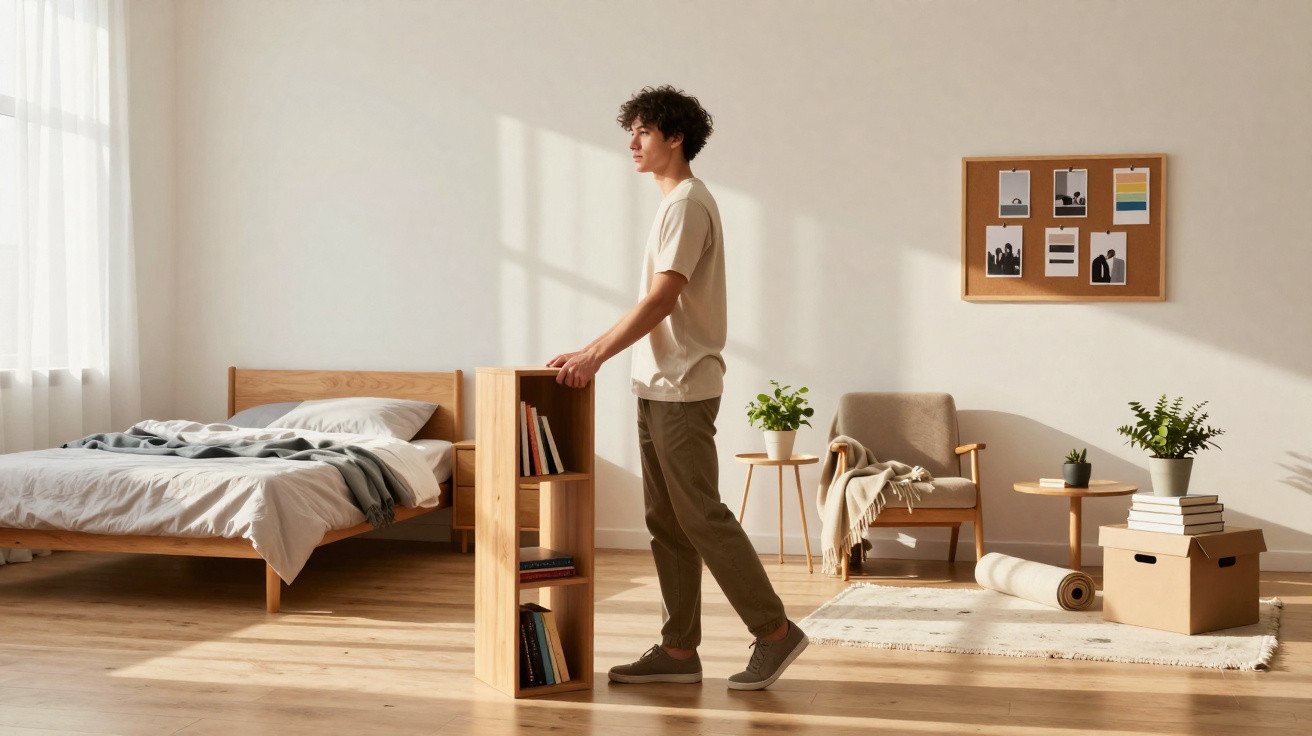
Focus on small adjustments rather than a complete bedroom overhaul. Put up one reliable curtain. Choose a bedside lamp that you can turn off without leaving the bed. Perhaps add a heavy blanket, which gives the body a quiet weighted message: “You’re held.”
Let’s be honest: nobody transforms their sleep routine in a week. Habits linked to survival do not disappear because you have read one clever suggestion. They gradually soften when they repeatedly encounter evidence that the present is different from the past.
Psychologists working with trauma and anxiety see this pattern frequently.
“When people say they ‘can’t sleep without the light on’, what they often mean is: ‘I don’t yet believe that this room, this life, will stay calm if I fully let go,’” explains a clinical psychologist who specialises in sleep and safety.
This does not mean you are weak. It means you have adapted. Your body is attempting to protect you with the tools available to it.
You can support it in learning different tools by combining modest environmental changes with gentle mental check-ins. This is not forced positivity, but a simple reality check: Where am I? Who has keys? What is different from the home where I grew up?
- Choose dim, warm lighting rather than bright white light.
- Keep the light outside the bedroom whenever possible.
- Add one “safety signal” - a lock, curtain or routine - each week.
- Pay attention to memories or images that arise when you attempt complete darkness.
- Seek support if the fear feels bigger than the room.
Letting darkness return on your own terms
The aim is not to achieve heroic, pitch-black sleep tomorrow night. The meaningful change is moving from “Dark means danger” towards “Dark means rest, and I get to decide that.” This kind of rewiring is quiet and unremarkable. It develops on ordinary Tuesday nights, not through dramatic breakthroughs.
You could try a timer that lowers the light after 30 minutes, allowing you to fall asleep with it on but wake to more darkness than you previously permitted. Or you might make one evening each week your “braver night”, reducing the light by only one level.
At a deeper level, you are speaking with your younger self - perhaps the child who lay awake listening for footsteps. In effect, you are whispering: the person who can protect you now… is you.
| Key point | Detail | Why it matters to the reader |
|---|---|---|
| Light as a safety signal | Leaving lights on often reflects a nervous system that associates darkness with unpredictability or a past threat. | It helps you stop blaming yourself and understand the habit as protective rather than “stupid”. |
| Small environmental changes | Moving to dim, warm lights and placing them outside the bedroom can reduce alertness without taking away safety cues. | It provides realistic adjustments that acknowledge your fears while supporting better sleep. |
| Rewriting associations | Repeated experiences of safety alongside gentler darkness can gradually teach your brain that “dark” can mean “rest”. | It offers a route to lasting change instead of quick-fix techniques that do not last. |
FAQ:
- Is sleeping with the light on really that bad for my health? Bright light, particularly white or blue-heavy light, may interrupt melatonin production and fragment sleep. A very dim, warm night light is less harmful, although complete darkness generally supports deeper, more restorative sleep over time.
- Does sleeping with lights on mean I have anxiety or trauma? Not necessarily. It may relate to anxiety, previous experiences or simply habit. If the idea of darkness brings on intense fear, tension or memories, it could be worth exploring with a therapist.
- How can I help my child who refuses to sleep without the light? Use a gentle night light, make bedtime calm and discuss what frightens them without dismissing it. Gradually lowering the brightness over several weeks often works better than turning it off suddenly.
- What’s the best type of light if I can’t sleep in complete darkness? Select a low-wattage, warm-toned or red-tinted light and keep it away from your eyes. Avoid overhead lighting and cool white LEDs, which stimulate the brain more strongly.
- How do I know if I need professional help for my fear of the dark? If fear prevents you from sleeping, living alone or travelling, or if you experience panic rather than mild discomfort, speaking with a mental health professional can offer genuine relief and more than one practical strategy.




Comments
No comments yet. Be the first to comment!
Leave a Comment