
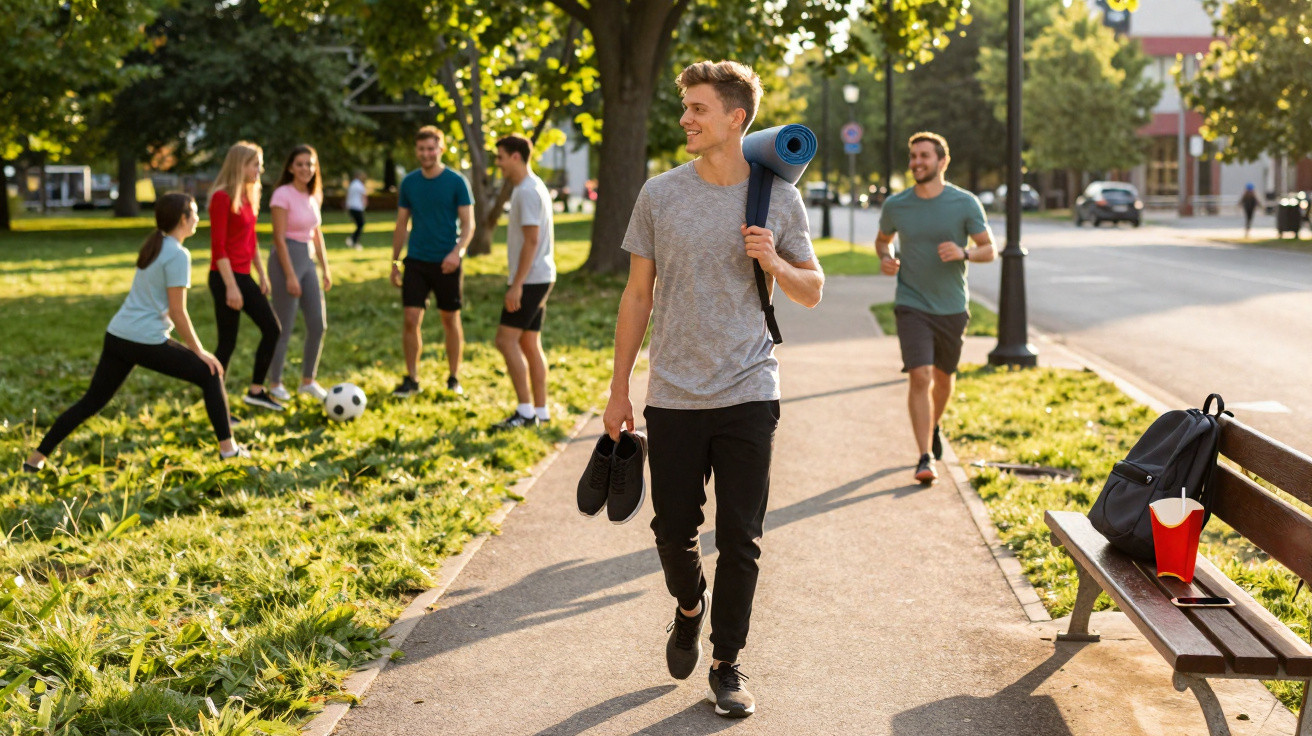
High school naturally keeps many people on the go. PE lessons, team training and after-school clubs can make exercise an automatic part of daily life. Once graduation arrives, however, that built-in routine can disappear quickly.
For many young adults, more time is spent sitting and less is spent being active, whether because of work demands or the draw of screens. The transition may be subtle, but its effects can build over time.
Physical activity drops after high school
A national poll offers a stark snapshot: one in three parents report that their children aged between 18 and 25 are either only minimally active or entirely inactive.
The results are from the University of Michigan Health C.S. Mott Children’s Hospital National Poll on Children’s Health, which surveyed 1,550 parents in February.
The figures highlight a widespread difficulty in early adulthood, as schedules alter and priorities change.
“Physical activity has a profound impact on overall health, but many people do not maintain the same level of activity as they get older,” said Mott Poll Co-Director and Mott pediatrician Dr. Susan Woolford.
“Young adulthood can be a particularly challenging time, especially as structured opportunities like sports and gym classes fall away. After high school, young adults often need to put in more effort to find activities they enjoy and make time for them.”
Barriers to staying active
According to parents, the obstacles are largely simple: there is little time, limited interest and constant access to screens. Mobile phones, gaming and streaming can consume hours that could otherwise be spent moving.
A smaller number of parents identify expense, not having someone to exercise with or health concerns as the chief issue. Instead, motivation appears to be the greatest barrier.
“Parents are telling us that interest is a major barrier,” said Dr. Woolford. “If young adults do not find physical activity enjoyable, they are much less likely to make it part of their routine.”
How physical activity shifts with age
The ways in which young people keep active also change as they get older. Those aged between 18 and 20 are more likely to take part in group pursuits. Sport, dance and skating remain part of their lives, often connected to friends and socialising.
For those aged 21 and over, the pattern changes. Exercise becomes more solitary, with gym sessions taking the place of team sports. Some stay active through physically demanding work, while the social element begins to diminish.
“This shift may reflect a move away from social forms of activity to more independent ones,” noted Dr. Woolford. “Social connection can make physical activity more enjoyable and may help people stay active longer.”
Parents try to provide support
Many parents are not simply watching this shift unfold. They attempt to encourage their children towards a more active way of life.
Some offer support, while others recommend activities or take part alongside them. A small number also pay for gym memberships or classes.
Even so, these approaches are not always successful. Parents of less active young adults frequently say their efforts have little effect. Merely telling someone to exercise is unlikely to last when the activity feels like a burden.
“Encouragement alone is not always enough,” said Dr. Woolford. “Finding activities that are enjoyable and accessible is key to helping young adults build lasting habits especially if activities can be linked to things they value.”
One approach appears particularly useful: taking part together. Going for a walk, exercising with a partner or playing an informal game can help. It creates accountability and can make activity feel less lonely.
Why long-term physical activity matters
Parents are concerned not only about the immediate situation, but also about what these patterns could mean in the years ahead.
Being less active now may contribute to health difficulties later in life. Some parents also fear it could influence employment prospects, particularly for jobs requiring energy and endurance.
However, support is not always available. Only about one in four parents say a healthcare professional has discussed physical activity with their child in recent years, leaving many opportunities for advice untaken.
“A common challenge for young adults is maintaining a healthy lifestyle as they become more independent,” said Dr. Woolford. “For some, that means fitting exercise into a busy schedule or limited budget. For others, it’s about building a routine.”
Creating lasting habits
The routines young adults develop today affect more than their day-to-day lives. They can continue into later adulthood, influencing how people care for their bodies and look after their health over time.
“Parents can still play an important role during this transition,” said Dr. Woolford. “The habits formed at this stage can shape long-term health and well-being.”
This opportunity will not remain indefinitely. Once routines become established, changing them is more difficult. Choosing an enjoyable activity, setting aside time for it and continuing with it can be decisive.




Comments
No comments yet. Be the first to comment!
Leave a Comment