
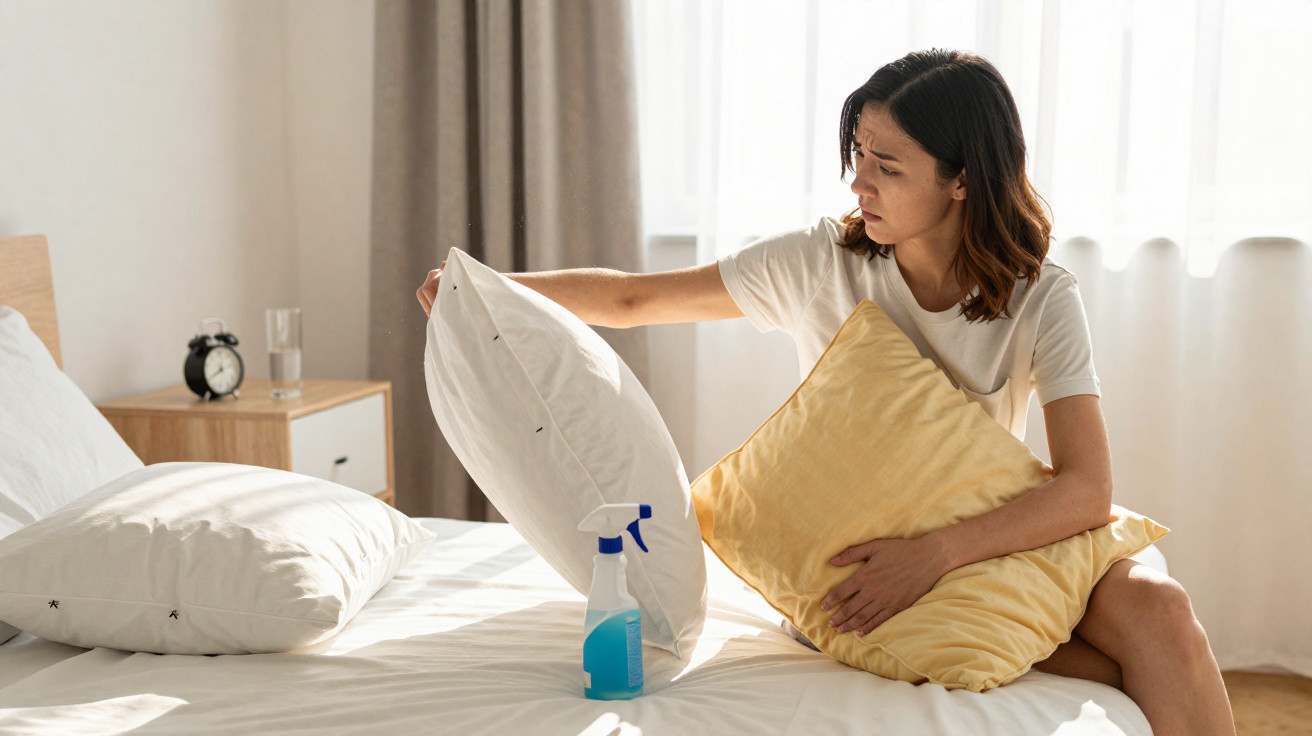
Many people simply hide the sight with a fresh pillowcase. Yet the discolouration remains, becomes more pronounced and may be a clear sign of sleeping habits and health. Looking more closely can reveal what is happening in bed overnight.
What really causes yellow stains on pillows
Yellowish marks on pillows almost never appear “just like that”. They develop through a gradual, ongoing process. Every night, tiny amounts of different substances make their way into the pillow filling:
- Sweat and natural skin oils
- Saliva from sleeping with an open mouth
- Dead skin cells
- Residue from hair styling and skincare products
We spend roughly one third of our lives in bed. Over months and years, every pillow therefore collects a considerable amount of these substances. Even a thick pillowcase cannot block them completely: much of it gradually seeps through the fabric into the filling.
Yellow stains are essentially an archive of sweat, oil, saliva and skin debris – compressed into visible traces of your nights.
Over time, sweat and skin oils in particular oxidise, giving the material a slightly brownish-yellow colour. This is especially noticeable on pale pillow fillings. People who sweat heavily, drool regularly at night or use rich creams often tend to see the stains sooner and more intensely.
When a pillow becomes a health risk
The appearance is one concern; the potential health implications are another. A yellowed pillow can become an ideal home for unwelcome occupants.
Dust mites, bacteria and irritated airways
The combination of moisture, warmth and skin debris creates ideal conditions for dust mites and bacteria. They multiply inside the pillow without us noticing.
- Allergic reactions: Itchy eyes, a runny nose and sneezing fits in the morning may be caused by mite droppings.
- Breathing problems: People with asthma or sensitive bronchial tubes often react more strongly to dusty, old pillows.
- Skin irritation: Bacteria and old cosmetic residue can worsen spots, rashes or itchy patches on the face.
- Risk of infection: Open areas on the skin or lips come into contact with a build-up of germs directly beneath the face.
In extreme cases, an old pillow with yellow discolouration can function like a damp, warm ecosystem – right beside your head.
If you wake with a blocked nose, experience headaches more often or suddenly notice more skin problems around your face, do not only consider pollen or diet. It is also worth examining your pillow critically.
Warning signs that mean you should take your pillow seriously
Not every faint shadow in the fabric is a serious issue. However, certain signs clearly indicate that thorough cleaning or replacement is needed:
- Clearly visible yellow or brownish edges, especially around the head area
- A musty, damp or stale greasy smell
- Visible clumps or hard patches inside
- Poorer sleep and more frequent tossing and turning
- Increased allergy symptoms in the morning after waking
When several of these apply, a new pillowcase will often no longer help: the issue has reached the core of the pillow.
How to prevent yellow stains before they appear
The good news is that simple everyday routines can prevent much of the problem. Taking action early can significantly extend a pillow’s lifespan.
| Measure | Benefit |
|---|---|
| Use a pillow protector | Special, preferably waterproof covers keep sweat and saliva away from the pillow filling. |
| Change pillowcases weekly | Less oil and skin debris, with a lower germ load on the surface. |
| Air pillows every day | Moisture can escape, and dust mites strongly dislike dry conditions. |
| Plump pillows regularly | The filling stays loose and moisture does not collect in dense clumps. |
People who sweat heavily, such as during hot summer nights or the menopause, benefit particularly from a good pillow protector. The cover is easy to machine-wash and catches most of the exposure.
If the pillow is already yellow: what cleaning can still save
Once discolouration has appeared, a wash cycle can often help. However, the outcome depends greatly on the material.
Step-by-step pillow care
- Check the pillow label: not every material can withstand a 60°C wash.
- Clean washable pillows in the washing machine, ideally on a gentle cycle.
- Pre-treat stains by dabbing them carefully with a mixture of hydrogen peroxide and water (1:5).
- Tackle stubborn marks with a mixture of household vinegar and water (1:3).
- Dry extremely thoroughly, preferably in sunlight, as its UV rays also reduce germs.
Using pillows again while they are still wet or damp is not a good idea – germs multiply particularly quickly in residual moisture.
If you are unsure whether your pillow can be washed, it is better to invest in a new one than ruin the old one in the machine.
When it is time for a new pillow
Experts recommend replacing pillows every one to two years on average, depending on their quality and care. It is definitely time to say goodbye when the following apply:
- Severe discolouration that can no longer be removed
- A persistently unpleasant smell despite washing
- It has become flat and offers hardly any support
- You regularly wake up with neck tension
Replacement also makes sense from a hygiene perspective: after years of intensive use, the interior contains a great deal that cannot be washed out completely.
Which pillow supports better sleep – and fewer stains?
Choosing the right pillow has several benefits at once: less yellowing, less pain and more restful sleep. A few factors matter most:
- Material: Many people choose hypoallergenic fillings such as memory foam or latex. These often attract fewer mites and are easier to keep clean.
- Firmness: Side, back and front sleepers need different levels of support to keep the cervical spine as straight as possible.
- Breathability: Pillows with good air circulation retain less moisture, so yellow stains develop more slowly.
- Washability: Some models can be fully machine-washed, while for others only the cover can be washed.
A clean, suitable pillow is not only more comfortable – it can also reduce snoring, neck pain and morning tiredness.
Why small nighttime habits have a big effect
Going to bed with heavy make-up still on, working rich oils into your hair or collapsing onto the pillow sweaty after exercise all accelerate the yellowing process considerably. Just a few straightforward changes can make a difference:
- Clean your face thoroughly before sleeping.
- Apply hair oils and heavy styling products as early as possible in the evening, rather than immediately before bed.
- After sweating heavily, take a quick shower before lying down.
- In summer, place a thin cotton towel over the pillow – it can be washed quickly.
People with sensitive skin or allergies in particular benefit from placing greater emphasis on sleep hygiene. After all, the pillow is the surface that touches the face directly for hours every night.
Ultimately, yellow stains are no reason to panic, but they are a useful indication. Your bed responds to your daily routine, and your body responds to what builds up in the bed. Taking these signals seriously supports more hygienic, calmer and usually healthier sleep in the long term.






Comments
No comments yet. Be the first to comment!
Leave a Comment