
At 17am, does your brain suddenly start narrating your whole life? That was my reality for weeks. My yoga teacher saw me yawning my way through a class and gave me a small bedtime ritual I could genuinely manage. No devices. No sermon. Only breathing, gravity and a wall.
The first evening, it seemed ridiculous. The second was gentler. On the third, I slept until daylight.
It was a Wednesday, with rain pushing at my window like a cat asking to be let inside. Outside, London glowed orange and buzzed; indoors, I was completely wired. I had kept scrolling well beyond the point where it was enjoyable. My eyes stung, yet my mind remained stubbornly alert.
At yoga the following morning, my teacher noticed straight away: raised shoulders and a clenched jaw. She did not make a fuss. Instead, she sat me beside the studio wall and demonstrated something so simple that I nearly laughed. Legs up. Breath down. Hands here.
I had not managed a full night’s sleep for weeks, and I wanted a solution rather than a philosophy. She described it as a “closing ritual”. Start with two minutes, then move to five. One small commitment before bed. Bring the day to a close.
The tiny pre-bed ritual that changed everything
My teacher did not attempt to cure my “insomnia”. She addressed the part of me that could not locate the brakes. We have all known the feeling: the body is drained while the mind is lacing up its trainers. This ritual offered my nervous system a recognisable signal: you are safe, you can relax, we are settling now.
On the first night, I set a seven-minute timer and followed her sequence exactly. Humming like a bee in the darkness felt faintly absurd. On the second night, midway through, I felt my shoulders sink, as though somebody had turned down a dimmer switch running along my spine.
By night three, I could not remember hearing the timer. I woke to light slipping around the blind, with the sensation of having just finished a long swim. There is no magic involved. It is more like finding a door that had been unlocked all along.
This is why it helps. Extended exhales encourage the body towards the parasympathetic system, the restful branch associated with digestion, sleepiness and slower rhythms. Legs-up-the-wall removes some of the load from your feet and calves, signalling to the brain that there is no need to run tonight: we are home. Resting a hand on your belly creates a straightforward anchor that is not another thought. It is all quiet, almost minimal. Yet it is enough.
The exact pre-bed sequence my teacher gave me
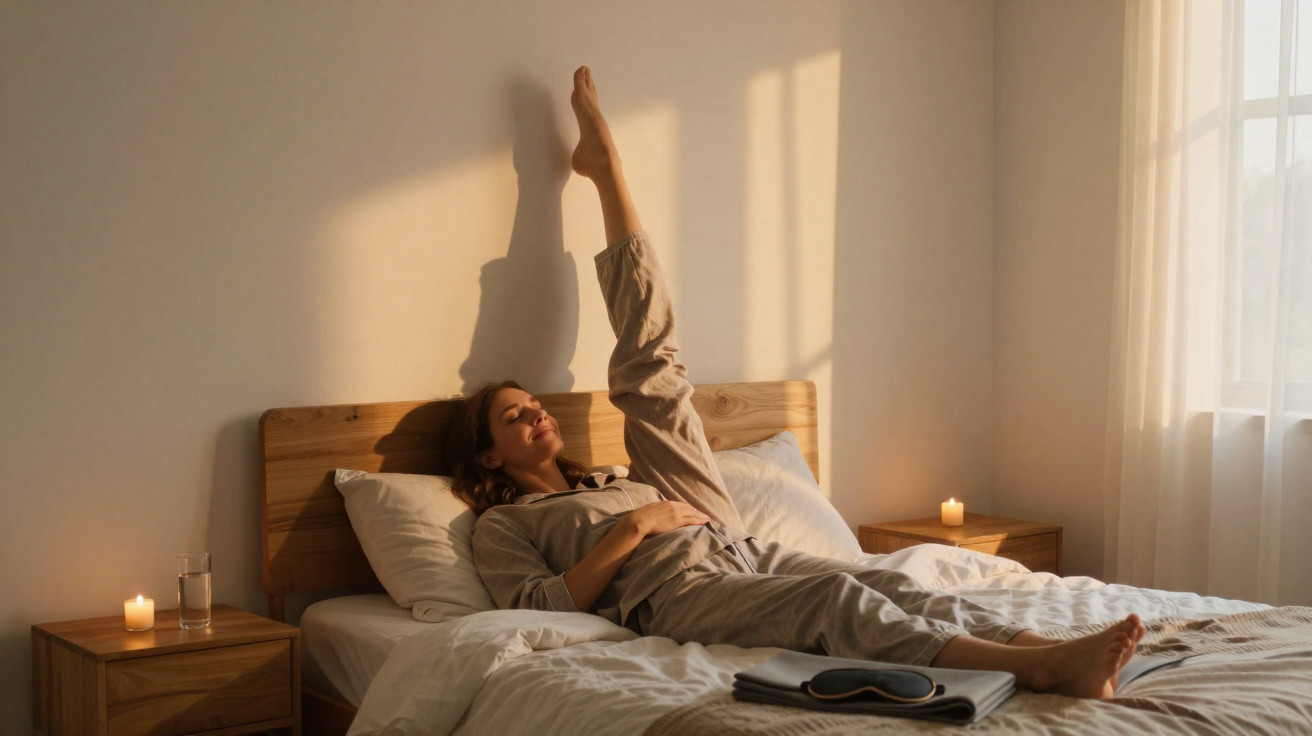
Lower the lights. Place your phone face down on the other side of the room. Set a seven-minute timer - Seven minutes is enough. Sit on the floor beside a wall, with a cushion ready. Lie back, edge your hips near the wall, then lift your legs onto it. Your knees may be bent. Put your right hand low on your belly and your left hand over your heart.
Inhale through your nose to a count of four. Exhale gently to a count of six. Keep the breath soft in your throat and weighted towards your belly. Once you have completed five or six rounds, seal your lips and hum a low, unhurried note as you breathe out for another three breaths. Keep the hum soft, almost private. To finish, allow your breathing to settle into its own rhythm as you silently repeat, “done for today”.
Choose comfort over effort. If the wall position feels too intense, rest your calves on a chair seat instead - Comfort first, form second. Should your lower back complain, move farther away from the wall so your hamstrings do not feel overworked. If humming makes you self-conscious, hum quietly inside your mouth. If you tend to count too precisely, abandon the numbers when they become fussy and return your attention to the hand on your belly.
Honestly, no one manages this every day. You will forget. You will fall asleep on the sofa. You will be away from home. When that happens, use the smallest possible version: one minute, one hum, one “done for today”. You are helping your body learn a rhythm, not taking an exam.
The line from my teacher that stayed with me was: Breathe lower, not louder. This is not a performance; it is simply a way of putting yourself to bed.
“Don’t chase sleep,” she told me. “Invite it. Make the room, and let sleep do the arriving.”
- Where: on the floor or bed, close to a wall or chair. Wear pyjamas and keep the lighting low.
- Props: a cushion or folded blanket beneath your hips, plus an optional eye mask.
- Timing: 3–7 minutes. Stop after two minutes if you already feel sleepy.
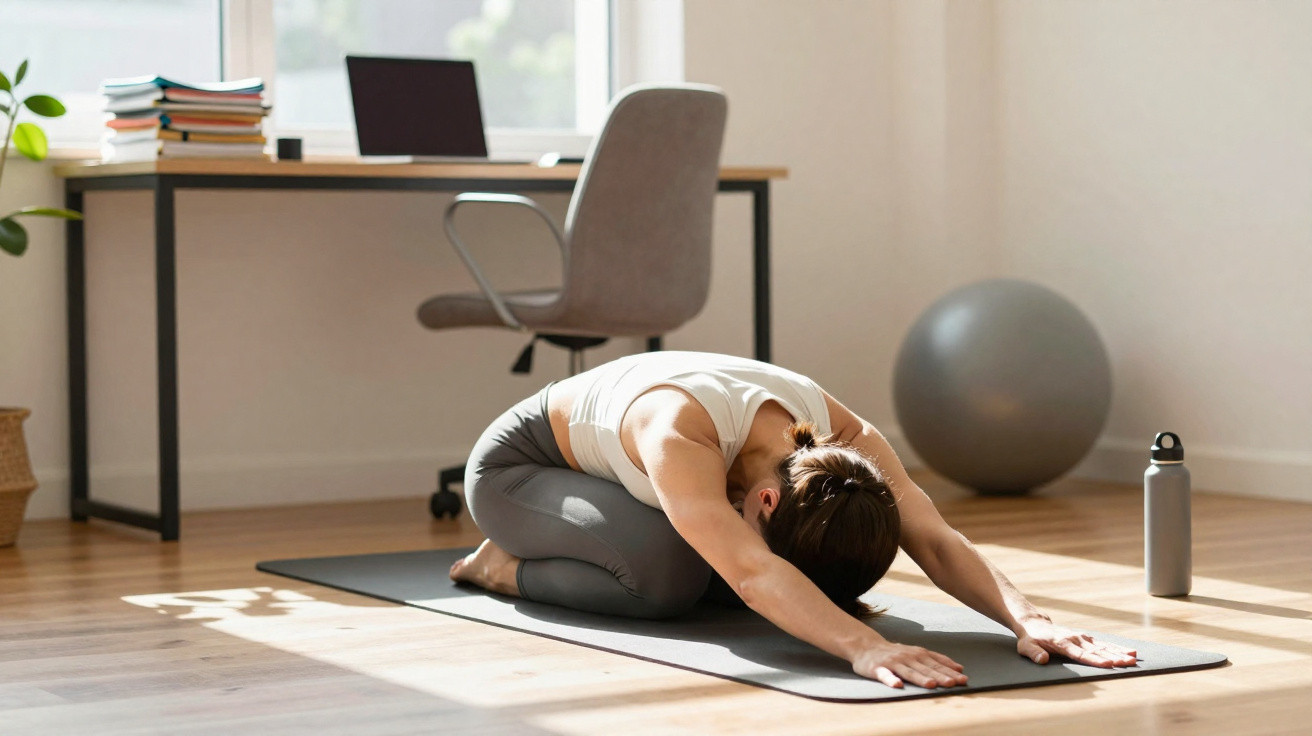
- Alternatives: try Child’s pose for one minute if legs-up-the-wall does not suit you.
What changed for me - and what might change for you
I stopped trying to force the night into submission. Instead, I began ending the day as you close a laptop: not by snapping its lid shut, but by saving the file and clicking the cross. The ritual became a signal. The moment my calves met the wall and my hand rested on my belly, my system knew where we were heading.
I also found small, unglamorous changes that still made a difference. I scrolled less, without announcing a scrolling detox. I woke at 3am less frequently, and when I did, I repeated three humming exhales before drifting off again. My shoulders seemed to sit a centimetre lower. The ritual did not solve my life; it stopped my nights from retelling it.
You may try it once and feel absolutely nothing. You may equally try it and cry a little. Both responses are fine. This practice has a gentleness that does not demand that you be good, brave or flexible. It only asks you to be present. The wall supports your legs; the breath supports everything else. If you give it a go, tell somebody what happened. Stories can help put us to bed too.
| Key point | Detail | Why it matters to the reader |
|---|---|---|
| Ritual over rescue | A 3–7 minute sequence tells your body that “day is done” | Offers a manageable, repeatable way to ease towards sleep |
| Gravity is a tool | Legs-up-the-wall takes weight off the legs and settles the system | A no-cost position that feels soothing straight away |
| Exhale leads | 4–6 nasal breathing with gentle humming on the out-breath | Straightforward breathwork that guides the nervous system towards rest |
FAQ
- How long should I hold legs-up-the-wall? Anywhere from two to five minutes is enough. Come down sooner if you feel drowsy.
- What if my hamstrings are tight? Keep your knees bent, or place your calves on a chair. Aim for comfort, not a stretching session.
- Can I do this in bed without a wall? Yes. Support your calves with pillows, leave one hand on your belly and use the same breathing pattern.
- Is humming really necessary? It is helpful. Both the vibration and the longer exhale signal calm. If it feels strange, hum softly or picture the hum instead.
- Will this replace therapy or medication? No. It is a gentle form of support. Speak to a clinician if sleeplessness continues or concerns you.

Comments
No comments yet. Be the first to comment!
Leave a Comment