
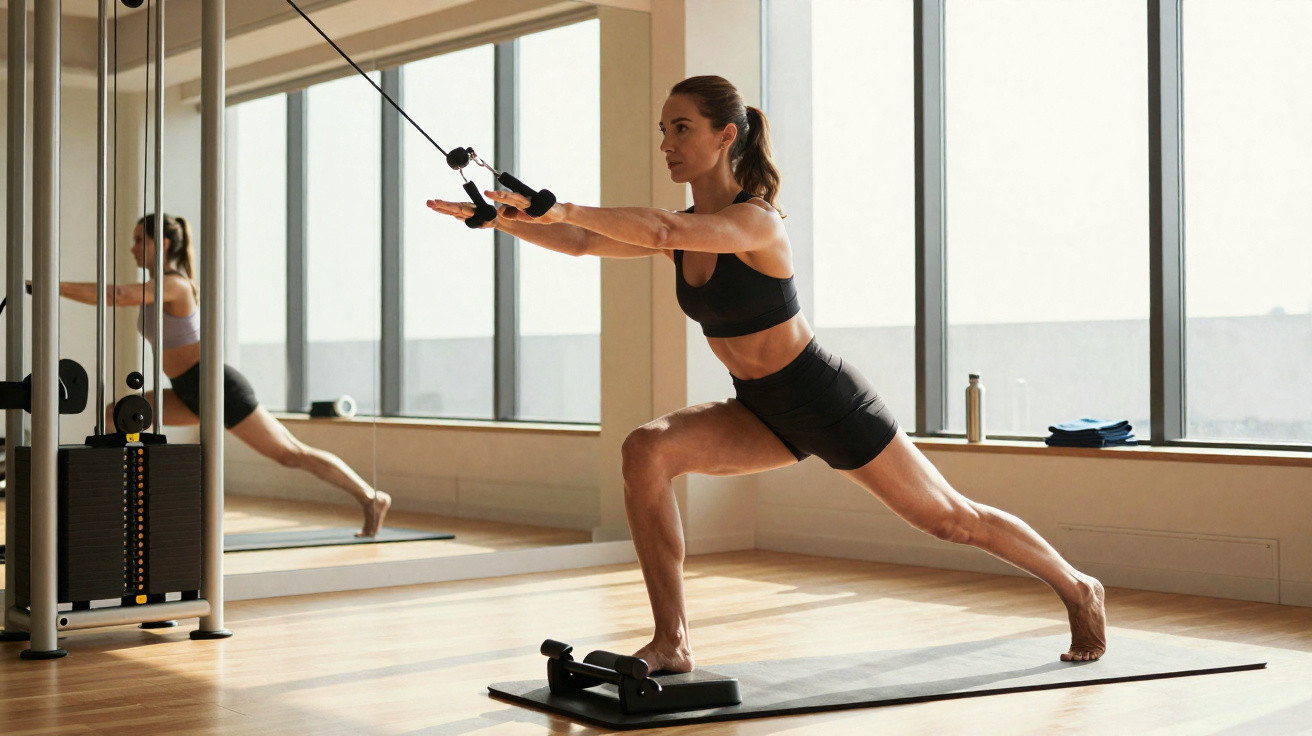
A slow yet exceptionally demanding training method promises a breakthrough precisely at this point.
Many fitness enthusiasts know the feeling: Pilates has improved their posture and made their backs more stable, yet their physique somehow looks unchanged. Anyone seeking visible muscle definition often turns to punishing HIIT or CrossFit, only to be frustrated later by sore knees and tired hips. Away from the spotlight of trend-led classes, an alternative is gaining ground that sounds like a compromise but feels like a game changer: Lagree Training on the so-called Megaformer.
When mat Pilates is no longer enough
At first, Pilates can seem almost magical: the body stands taller, breathing becomes more conscious and back pain eases. After several months, however, a common issue arises: the body has learnt to perform the movements efficiently. Exercises begin to feel easier, but the muscles barely respond any more.
The reason is straightforward: without progressively increasing the load, the body stops adapting. The result is:
- muscles no longer become stronger
- visible definition reaches a plateau
- motivation drops because effort no longer produces change
At this stage, many people choose drastic solutions such as sprints, jumps and burpees. Although these raise the heart rate and calorie expenditure, they also place substantial strain on:
- joints and ligaments through hard landings
- the pelvic floor, particularly after pregnancy
- the back when technique is anything less than perfect
“What is missing is a method that works intensely – without wrecking the body.”
Lagree Training: not ‘Pilates on steroids’, but a concept in its own right
Originating in California, Lagree Training may initially resemble a more forceful version of Pilates. In fact, it is a distinct system: high-intensity muscular training with minimal impact, performed on a specialist machine known as the Megaformer.
Its central principle is to keep muscles under tension until they can no longer continue actively. Because there are no jumps or harsh landings, joints and tendons remain protected. Every movement is slow, controlled and performed against constant resistance.
How the Megaformer differs from a conventional Pilates Reformer
Visually, the two machines appear similar: both feature a carriage, cables and springs. In practical terms, though, they are very different. The Megaformer is larger, more adaptable and specifically designed to create a demanding workload.
- a moveable carriage that creates considerable instability
- platforms at both ends for varied foot positions
- springs offering finely graded resistance levels
Whereas the Reformer is often used in rehabilitation to make movement easier, the Megaformer does the reverse: it hardly ever lets up. The machine does not take work away from you; it demands it.
“There are barely any breaks on the Megaformer – muscles remain under constant fire while joints stay in a safe position.”
A hybrid of muscle building, endurance and brutally honest core training
Lagree is characterised by complex movements that challenge several muscle groups at once. For example, you might hold a lunge position on the unstable carriage, use your core to maintain balance and pull cables with your arms at the same time. Your legs, glutes, abdominals, back and shoulders all work simultaneously.
Your heart rate rises not because you are sprinting, but because so much muscle tissue requires oxygen at once. Anyone expecting to “have a quick rest” soon discovers that every centimetre is work.
The appeal of an extremely slow pace
Ironically, the aspect many people initially underestimate is what makes this method so compelling: slowness. While online fitness videos often focus on speed and repetition counts, the Megaformer prioritises time under tension.
Why four seconds can suddenly feel endless
Lagree Training follows one simple rule: each stage of a movement should last at least four seconds, both on the way down and on the way up. Momentum is not welcome.
This creates several crucial effects:
- the body cannot ‘cheat’ by using momentum as a shortcut
- every muscle fibre has to work continuously
- smaller, deeper muscles are activated too
“The more slowly you move, the harder the muscle truly has to work – and that is exactly what changes the shape.”
Sustained tension rather than brief bursts of strength
In traditional strength training, there are usually small moments of rest between repetitions. On the Megaformer, muscles are deliberately held in a middle zone where they are never allowed to relax completely. One set can last for up to two minutes.
This constant tension produces a burning sensation that shocks many people in their first class. Yet this very ‘agony’ triggers the carefully measured stress response that stimulates fat burning and muscle development – despite a relatively short workout.
How the Megaformer awakens hidden muscles
Even those who consider themselves well trained often receive some very honest feedback on the Megaformer. Marathon runners and strength athletes alike can suddenly feel muscle groups they did not know existed.
Instability as a route to a flat, strong core
The freely moving carriage is intentionally unsteady. It forces the body to make constant adjustments. As a result, the deep core muscles, which receive little stimulation in everyday life, are continually recruited.
The emphasis is not on the traditional ‘six-pack’, which pushes the stomach forwards, but on the transverse abdominal muscles that act like a corset. After only a few weeks, many people report:
- a noticeably firmer midsection
- a waist that appears slimmer
- greater confidence in the lower back
Quick transitions keep the heart rate in the fat-burning zone
The exercises themselves are slow, but the changes between them are rapid. You move from legs to arms, from a side plank to a rowing movement, within seconds. This keeps the heart rate elevated without requiring a sprint.
“The result is a kind of secret cardio: you sweat, breathe deeply, but never feel as though you have completed a long run.”
The welcome muscle shake as a clear signal
People attending their first class are often startled when their legs or arms suddenly begin to shake uncontrollably. In the context of Lagree, this phenomenon is simply called the ‘Shake’ – and it is considered a mark of quality.
When shaking shows that something is really happening
This trembling occurs when muscles reach a point at which they are close to their limit but must continue working. At that moment, the nervous system and muscles are ‘negotiating’ afresh how much they can deliver.
It is precisely during this phase that the body adapts. Rather than seeing the moment as failure, you learn to view it as progress. With regular training, people notice that they gain more control over the shaking and can sustain sets for longer.
Intensity without impact – kind to knees, hips and back
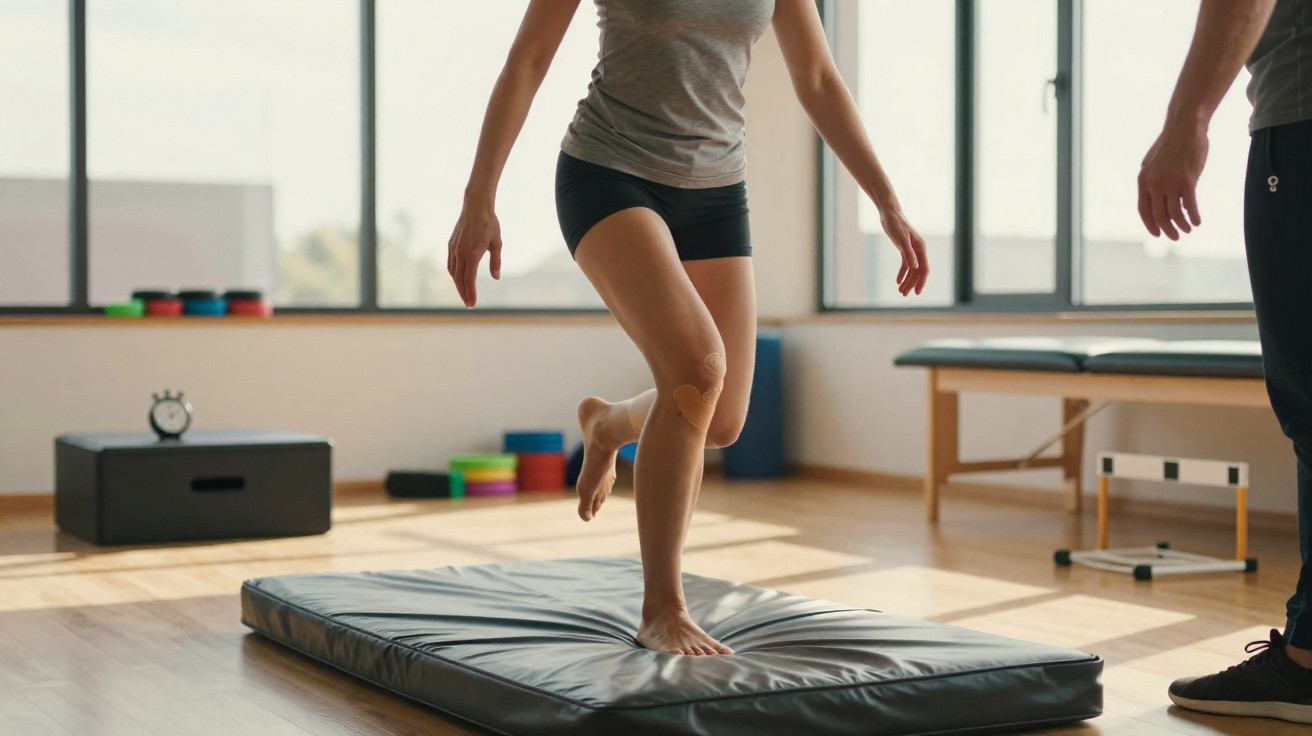
Unlike jumping exercises, hands and feet remain in continuous contact with the machine. There is no impact and no sudden change of direction. This makes it possible to strengthen the muscles surrounding sensitive joints without adding further stress to those joints.
For people with sensitive knees, those recovering after pregnancy or those with chronic back issues, this is a key benefit: they can train hard without feeling ‘wrecked’ for days afterwards.
Noticeable changes without completely exhausting yourself
Many people moving on from Pilates or light strength training report visible changes within just a few weeks: clearer lines in the shoulders and arms, firmer thighs and more defined glutes. At the same time, the muscles tend to look long and lean rather than heavily pumped up.
The look: defined, athletic, but not ‘bulky’
Working slowly in lengthened positions helps build strength without making muscles appear bulky. Those training two to three times a week often notice that:
- posture and gait become more upright
- the centre of the body feels more stable
- everyday movements such as climbing stairs become easier
Notably, despite the high intensity, many people leave class feeling alert and clear rather than weighed down by exhaustion. That makes the workout easier to maintain within a busy routine.
Why many do not want to return to conventional workouts
Once someone has experienced how demanding a 45-minute session on the Megaformer can be, basic mat exercises or repetitive treadmill workouts can often feel incomplete. In a short period, Lagree combines:
- muscle building
- core training
- a cardio effect
- joint protection
For many, this concentrated mix of stimuli makes the method almost ‘addictive’ – naturally, only in a positive sense.
Who benefits most from Lagree Training
This method is especially useful for people who want to feel stronger and more defined without overloading their bodies with jumps and maximal weights. It is particularly beneficial for:
- experienced Pilates fans who need greater stimulation
- busy professionals with little time who want a compact all-in-one workout
- athletes aiming to improve core stability
- people returning to exercise for whom jogging or HIIT is too harsh on the joints
Naturally, Lagree is not a miracle cure: anyone attending inconsistently and spending the rest of the day sitting will progress more slowly than someone who is generally active and pays at least some attention to nutrition. However, the method provides a highly effective framework for making noticeable progress with comparatively few hours per week.
Tips for getting started and useful combinations
Anyone who is curious should begin with studio-led classes. The machine offers many possibilities, and good instruction helps prevent overload and poor movement patterns. Two sessions a week are entirely sufficient at the start.
Useful additions include gentle endurance sessions such as walking, cycling or easy swimming. They support recovery and the cardiovascular system without placing substantial extra fatigue on the muscles. Initially, hard runs and heavy squats on the day immediately after a Lagree session are not ideal – the body needs time to adapt to the unfamiliar stimulus.
Anyone who has felt as though they are pushing against an invisible wall on a Pilates mat may find a distinctly uncomfortable yet highly effective answer in the Megaformer. The combination of slowness, sustained tension and intelligent resistance makes one thing very clear: a workout does not need to be fast to transform the body noticeably.



Comments
No comments yet. Be the first to comment!
Leave a Comment