

Food allergies are more than an inconvenience: they can be frightening. Picture being in a busy restaurant and suddenly feeling your throat begin to close.
For people who have severe reactions, allergies can even be fatal. Their inherently unpredictable nature means an allergy that was previously moderate may become severe without warning.
This uncertainty creates considerable anxiety for people with allergies, particularly children and parents.
Food allergy treatments and the gut microbiome
Researchers have made substantial progress on food-allergy treatments. Both oral immunotherapies and skin patches can help desensitise children to peanuts, offering protection if they accidentally consume small amounts.
The gut offers another possible route for retraining the immune system. It contains an enormous community of bacteria and other microbes, which can either support or undermine health.
In a new trial, researchers gave 15 adults with peanut allergies capsules containing faecal microbiota: carefully processed gut-bacteria communities taken from the faeces of healthy donors.
Known as a faecal microbiota transplant, or faecal matter transplant (FMT), this promising treatment is intended to 'reset' the gut microbiome.
Human trials have found that it can help alleviate depression, inflammatory bowel disease, type 2 diabetes, and other conditions, although it doesn't work for everyone.
Studies also show that giving mice a cultured selection of gut bacteria can suppress their food allergies.
Now, human evidence suggests that poo transplants could offer similar benefits.
Watch the related video on YouTube
The FMT clinical trial for peanut allergies
Run at Boston Children's Hospital, the clinical trial was a phase 1, open-label study focused on safety and on establishing whether FMT could effectively address peanut allergies.
All participants began the study highly sensitive to peanuts. In a medically supervised food challenge, every participant reacted to 100 milligrams or less of peanut protein - less than half a peanut.
The initial 10 participants underwent FMT, receiving 36 capsules over 1-2 days. The pills contained gut bacteria supplied by healthy volunteers who did not have a peanut allergy.
A further 5 participants received a poo transplant after first completing a short antibiotic course designed to alter their gut microbiome before treatment.
Overall, the treatment was well tolerated. There were several minor side effects but no serious adverse events, and no participant had an allergic reaction to the transplant itself.
So, did FMT work?
Although 9 participants did not respond, 6 people (40 percent) did. Including antibiotics in the treatment regimen appeared to improve the outcome.
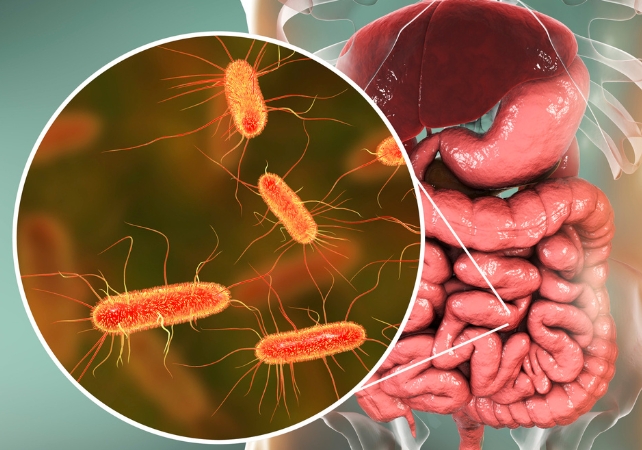
Each person's gut microbes form their individual microbiome, which treatments such as FMT can alter. (Science Photo Library/Canva)
Among those who had not received antibiotics, 3 people tripled their tolerance for peanut protein, reaching 300 milligrams. The other 3, in the antibiotic group, increased their tolerance by roughly six-fold, to 600 milligrams.
One of these six responders tolerated every dose tested, amounting to 1,043 milligrams of peanut protein in total.
"These responses represent a marked improvement after a single dose of FMT, considering that it takes around 6 months of daily oral immunotherapy for patients to tolerate a dose of 300 milligrams of peanut protein," the researchers write in their paper.
Greater tolerance does not mean a person is free of their allergy. Crucially, however, the response persisted for at least 4 months - the study's full duration.
FMT may be difficult for some people to contemplate, but it could prove more acceptable than oral immunotherapies. Those treatments must be taken every day; otherwise, patients become allergic again.
As almost half the Boston trial participants experienced substantial and lasting benefits, one expert said FMT's potential is "really, really exciting".
How gut bacteria may alter allergic responses
How could certain gut bacteria change allergic responses in some people so rapidly?
Working this out took detective work - and mice.
Researchers transferred gut bacteria from participant stool samples collected four months after FMT into mice. The mice had been raised in an environment devoid of any microbes, making them germ-free.
Mice given bacteria from the human responders were less likely to develop food allergies. If allergies were induced, these animals also gained some protection from anaphylaxis.
Further testing indicated that two bacterial species in the genus Bacteroides were probably responsible for this protection. They appear to act by stimulating regulatory immune cells, making the body less trigger-happy in response to allergens.
Related: Your Gut-Brain Link May Offer a New Way to Fight Cognitive Decline
It remains uncertain whether precisely the same process occurs in people. But isolating the right bacterial strains could move researchers closer to precise treatments that might lower the risk of unforeseen side effects.
Despite these encouraging early findings, FMT will not become available for food allergies soon. The trial included only 15 adults and had neither a placebo group nor blinding.
Bigger randomised, placebo-controlled trials will be necessary, though this study's results provide a basis for future research.
An estimated 30-40 percent of people have at least one allergy, while up to 5 percent of people will have a severe allergic reaction - anaphylaxis - at some time in their lives.
These results offer hope for an allergy treatment that does more than repeatedly expose the immune system to an allergen in an effort to build tolerance.
Instead, it retrains the immune system through the gut microbiome, potentially providing relief that lasts.
All that potential began with a pile of poo.
Read the complete findings in Science Translational Medicine.
This article was fact-checked by Rachel Garner and edited by Clare Watson. Although we take pride in our process, we are only human. If you spot an error, please let us know.






Comments
No comments yet. Be the first to comment!
Leave a Comment