
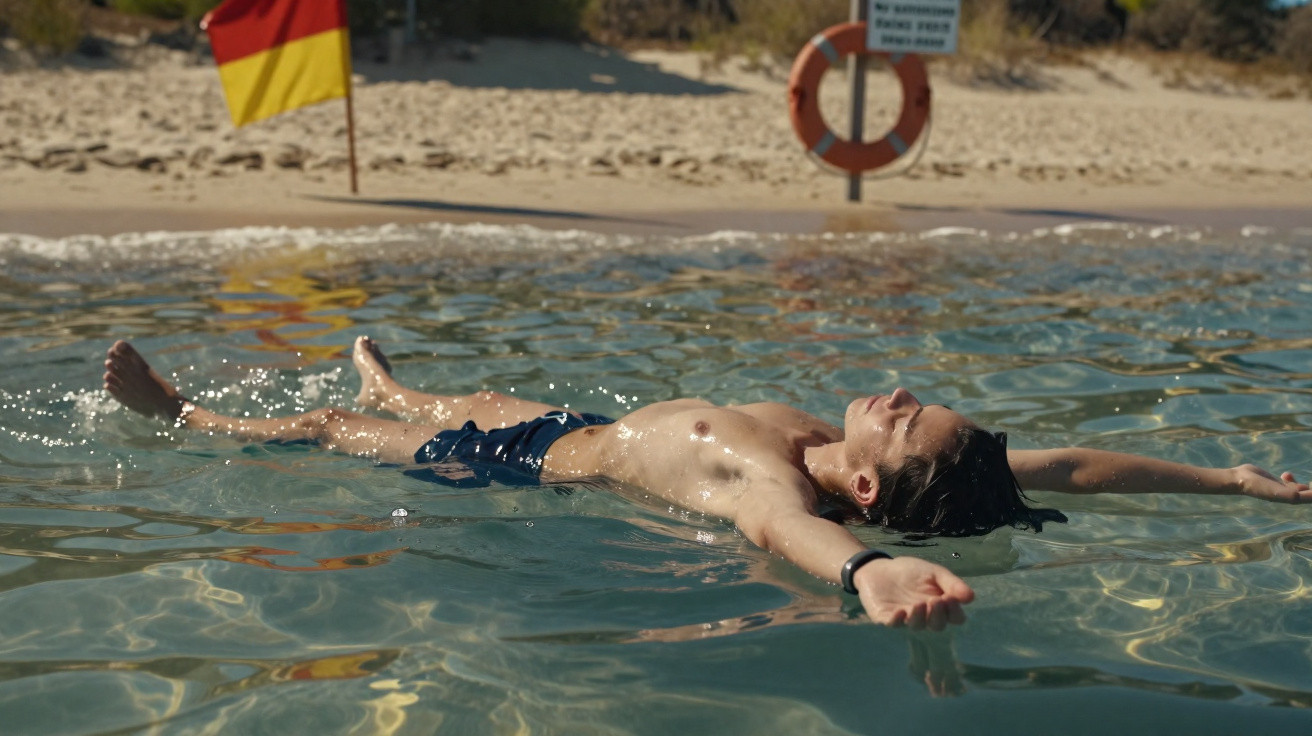
Simply being close to blue spaces - seas, rivers and lakes - can help us feel calmer. Water activates the parasympathetic nervous system, which supports the body’s rest-and-digest response.
This soothing response reduces heart rate and blood pressure, helping to explain why water-based activities bring comfort and pleasure to so many people.
However, time around water brings substantial risks that must not be overlooked. In the UK, drowning is among the leading causes of accidental death, exceeding deaths from house fires and cycling accidents. About 400 people accidentally drown each year in the UK’s coastal and inland waters.
Importantly, 40% of these events happen when someone had no intention of entering the water. Examples include being surprised by an incoming tide during a coastal walk or going into the water to save a dog. This starkly shows that danger is not confined to conventional water users.
The Royal Society for the Prevention of Accidents reports more than 100,000 water rescues annually. Such incidents can have devastating and long-term consequences, with survivors - and their families - often experiencing serious injuries or post-traumatic stress disorder.
Global incident-report data indicates that men are 80% more likely to drown than women, with middle-aged men and teenage boys facing particular risk.
This increased danger is linked to men spending more time in the water and taking greater risks, including swimming alone or after dark, drinking alcohol, and not wearing life jackets.
Pressure from others, alongside a tendency to misjudge hazards by believing water is safe when it is not, also helps explain men’s higher drowning rates.
Water safety research at Bournemouth University
My neuroscience and communication research team at Bournemouth University is collaborating with the Royal National Lifeboat Institution to explore ways of improving water-safety messaging. We use virtual-reality simulations to record brain activity while participants experience immersion in water.
Using emotion sensors built into smart glasses, we are examining how people experience emotional loads, including fear, in virtual-reality situations such as unexpectedly falling into water from a boat or cliff.
The technology will be demonstrated at an exhibition at Bournemouth University during August 2024, both to draw attention to the dangers of being close to water and to gather further data.
To date, our findings have revealed the difficulties and complexity of human emotions in making safer choices around water, as well as the part instinct plays in gender-related decision-making.
Men appear to perceive risk differently and are more inclined towards impulsive decisions. Women, by comparison, generally take more precautions and show a stronger preference for safety and avoiding risk.
Water safety risks near and in water
The type of activity also changes the level of risk. People taking part in paddleboarding or kayaking generally prepare with suitable equipment and skills. As a result, they are usually safer than people playing in the water on inflatable items such as lilos, which are often used without preparation and can easily be carried away by a strong current.
Unplanned entry into water is more dangerous still. This can happen when tides catch someone out during a shoreline walk or when a person takes a selfie near a clifftop edge. The surprise of falling into the water, combined with a lack of preparation, raises the danger.
Being unprepared greatly heightens the risk of drowning. People who fall into water unexpectedly are often fully clothed and may also be afraid of water.
Fatal drownings frequently occur in inland waterways, as canals, streams, lochs and lakes can be colder than the sea, appear misleadingly calm, and conceal many hazards.
Water may be deeper than expected, contain hidden currents, or hold debris such as broken glass or an old bicycle. It may also be polluted, posing a serious health risk, or difficult to leave because the banks are steep and slippery.
Float to live
Instinct has a major influence on our response to water. You may be relaxed and swimming at one moment, only for conditions to change rapidly and for a rip current to take you by surprise.
Our natural response is often to swim forcefully against the rip current. Instead, the safest action is to swim parallel to the shore to get clear of the rip. People without experience or education about rip currents may not know how to recognise one, let alone escape it safely.
When we suddenly enter cold water, cold-water shock automatically makes our bodies more alert and raises adrenaline levels. We gasp, hold our breath and attempt to swim hard until exhausted. Resisting this instinct may save your life.
Whether you intend to have a refreshing swim, take a gentle walk along the coast, or run beside a canal, understanding how to stay safe is essential. It can make the difference between a safe trip and a fatal accident.
Research suggests that these five straightforward actions are highly effective. They are simple to recall and can be used by anyone, regardless of swimming ability or whether the water is fresh or salt.
First, tilt your head back and keep your ears beneath the water so that your airways remain open. Fight the urge to panic; try to relax and breathe normally. Lightly paddle with your hands to help yourself stay afloat. Do not worry if your legs sink, as buoyancy varies from person to person. Lastly, extend your arms and legs, which helps you remain stable in the water.
If you see somebody in difficulty, do not enter the water to rescue them. Instead, call out the “float to live” steps and immediately contact your local emergency hotline to request the coastguard.
Jill Nash, Senior Lecturer, Bournemouth University
This article is republished from The Conversation under a Creative Commons licence. Read the original article.






Comments
No comments yet. Be the first to comment!
Leave a Comment