
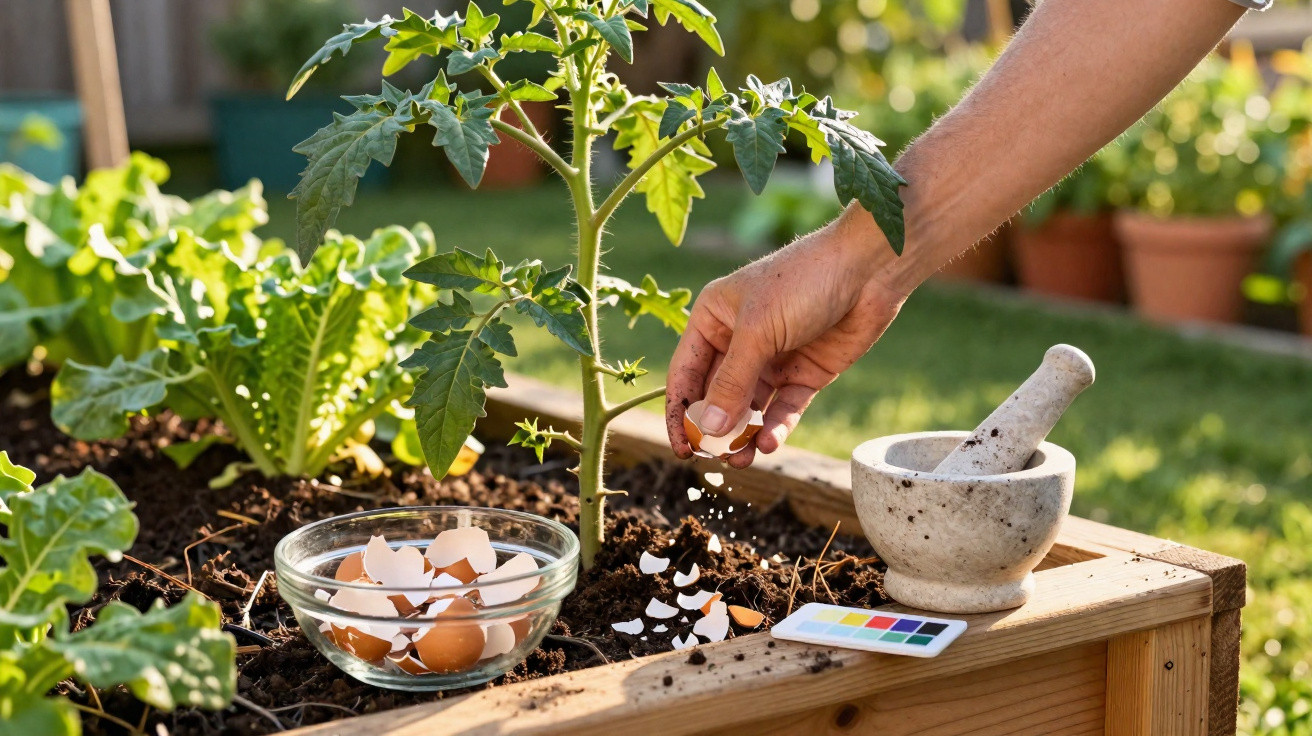
A familiar breakfast tip keeps resurfacing: crush eggshells into the soil to give plants calcium and help their stems grow sturdier. It seems frugal and almost suspiciously straightforward, which is probably why it endures. But do botanists genuinely support it, and what does success actually mean in an ordinary garden?
One chilly early morning, I watched my neighbour spread the shells left from Sunday omelettes along her tomato row. They snapped in her hands like delicate china. A kettle steamed on the porch as we drank coffee and remembered last summer’s tomatoes, cracked around their shoulders and drooping beneath their own weight. A botanist friend had once described calcium as the understated engineer of plant structure: it helps plant cells bind together. Kitchen waste can contribute, she said, provided you see it as a long-term input rather than an emergency remedy. The shells tapped onto the earth like coins dropped into a tin. My neighbour smiled and continued scattering them. Could breakfast really help stems become stronger, almost unnoticed?
Why eggshell calcium matters to plants
Calcium is not a showy plant nutrient. It does not create nitrogen’s leafy green growth or deliver the flowering boost often linked with phosphorus. Instead, calcium provides strength: it cross-links pectins within cell walls, stiffens leaf and fruit tissue, and supports properly formed new growth, helping stems retain their form. When calcium is lacking, or when plants absorb it unevenly, the signs can include weak growth, lettuce tip burn, and the dreaded sunken patch on tomato and pepper fruit. Since eggshells consist largely of calcium carbonate, gardeners naturally ask whether a breakfast leftover can serve as a structural ingredient. It can, but only when given time to work.
The numbers make the idea more tangible. A standard chicken eggshell weighs about five grams and contains roughly 95 percent calcium carbonate. Calcium itself accounts for around 40 percent of that carbonate by mass, so each shell holds approximately two grams of elemental calcium in a chalk-like mineral form. In neutral soil, that mineral dissolves slowly, meaning it supplies nutrients gradually rather than all at once. A market gardener I met one late spring keeps shells in a bucket beneath her sink, then bakes and grinds them before spreading a cup over every new bed during autumn clearing. By the next summer, her lettuces remained crisp for longer and her tomato skins stayed firm through the August heat.
That delayed release is important. Calcium carbonate dissolves more easily in slightly acidic root zones with active microbes and consistent moisture. Shells ground into a fine powder expose much more surface area than large fragments, allowing calcium to become available more quickly in the mildly acidic, microbe-rich areas around roots. Large pieces or intact shells may remain in the soil for a year or longer while delivering virtually no useful calcium during the current season. Eggshells are not a quick fix. They offer a slow, local way to gradually increase soil calcium across months, while also raising pH slightly. Where soil is already alkaline, gypsum may be a better calcium source because it does not produce that pH increase.
How to use eggshells so they actually work
The process is straightforward, although the small details determine whether it is effective. Wash the shells, dry them on a tray, and bake them at a low temperature-about 200°F/95°C-for 10 to 15 minutes so they become brittle and hygienic. Use a coffee grinder or pestle and mortar to turn them into powder, with a texture nearer flour than gravel. The powder felt like chalk between my fingers. Mix a tablespoon into the top inch of soil in a 6–8 inch pot, or apply roughly a cup per square yard in garden beds. In newly made beds, combine the powder with compost so decomposition can begin sooner.
Failures usually result from missing the grinding step or assuming shells will prevent this year’s blossom-end rot by next week. Throwing large, sharp pieces over the soil surface is much like placing pebbles along a path: it may look orderly, but it changes very little. The idea of “eggshell tea” sounds resourceful, but calcium carbonate hardly dissolves in plain water, so a jar containing shells and water contributes almost nothing. Realistically, nobody keeps up that routine every day. If raising soil pH is a concern, use less shell material or choose gypsum to add calcium without a liming effect. Shells also will not deter slugs; controlling moisture and picking them by hand at night are still more effective.
I once asked a university horticulturist for the briefest guidance they would offer a home gardener on eggshells and calcium. They laughed, then gave me one sentence, which I noted down and taped above my potting bench.
“Grind it fine, think months not days, and water like clockwork.”
- Grind, don’t just crush. Smaller particles make calcium available more quickly.
- Incorporate them into soil or compost. Scattering them on the surface is largely decorative.
- Apply moderate amounts. Use a little in each pot, or around a cup per square yard in beds.
- Combine use with regular watering. Plants take up calcium alongside moisture.
- Choose gypsum if your soil pH is already high.
A wider view to carry into your next season
There is a modest pleasure in transforming a kitchen leftover into a source of quiet strength for plant stems. It is like a dialogue between the sink and the soil, conducted in the language of patience. We have all watched a tomato plant collapse in July and wished for an instant answer in a cup; the more helpful approach is building resilience months earlier through small, easily overlooked actions. Eggshells are one element, compost another and mulch a third, but the real foundation is a watering routine you can maintain regardless of how busy the week becomes. Watering rhythm matters more than magic amendments. Add your shell collection to the compost heap, reserve a grinder for garden jobs, and regard calcium as sturdy scaffolding rather than a rescue treatment. Someone you know may test the method, adapt it and share it onwards.
| Key point | Detail | Why it matters to the reader |
|---|---|---|
| What eggshells provide | About 95% calcium carbonate; roughly 2 g calcium per shell when fully broken down | Understand the genuine nutrient value in this kitchen leftover |
| How to make it effective | Bake, grind into powder, and mix into soil or compost; think months, not days | Achieve measurable outcomes rather than simply reassuring rituals |
| What not to expect | No immediate cure for blossom-end rot; “eggshell tea” has minimal effect; pH may rise slightly | Avoid wasted effort and common misconceptions |
FAQ:
- Do eggshells really add calcium to soil? Yes, although gradually. Finely ground shells release calcium carbonate over months as mild acidity and microbes act on them, increasing the soil calcium pool over time.
- How long does it take for eggshells to break down? Powdered shells can begin contributing during a growing season. Coarse fragments may persist for a year or longer with little effect, particularly in dry or alkaline soil.
- Will eggshells prevent blossom-end rot on tomatoes? They may provide long-term help where low soil calcium contributed to the problem, but blossom-end rot is often caused by irregular watering. Stabilise moisture before focusing on anything else.
- Are eggshells better than lime or gypsum? They are free, gentle and slow. Agricultural lime raises pH while adding calcium more quickly; gypsum adds calcium without changing pH. Base the choice on a soil test.
- Can I just steep shells in water for “calcium tea”? Not really. Calcium carbonate is barely soluble in plain water, leaving the tea with trivial levels of calcium. Grinding the shells and mixing them with soil works far better.





Comments
No comments yet. Be the first to comment!
Leave a Comment