
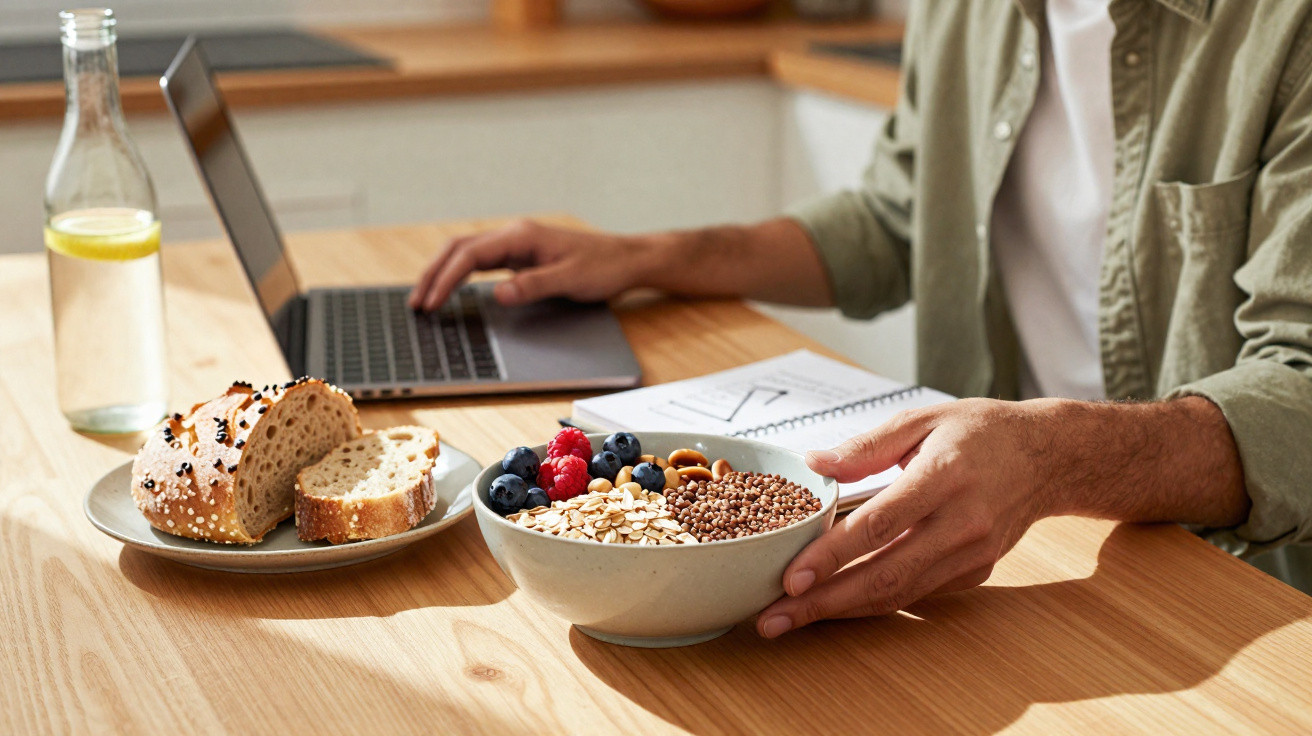
Your coffee has gone cold, your to-do list feels like a cruel joke, and you notice that breakfast has slipped your mind again. By 11:30, your hands are starting to shake as you reach for the nearest option: perhaps a white bagel from the office kitchen or a few biscuits left beside the printer. For one brief, brilliant spell, your energy returns at full force. Then, right as the meeting begins, you hit the slump. Foggy thinking. Irritability. The low, persistent hunger that makes every job seem more difficult than it ought to be.
We tend to describe this as “being tired” or “needing coffee”. More often, it is a blood sugar roller coaster. And the grains on your plate can frequently be what set it in motion. The answer is not necessarily drastic or restrictive, either. It may come down to something as ordinary as the bread in your sandwich or the pasta in your lunch box.
Why busy days can depend on blood sugar
During a hectic working day, it is easy to assume that productivity and willpower dictate the timetable. Yet glucose is often the quiet force in charge. Whenever you eat something based on refined flour - soft white bread, a pot of instant noodles or a croissant wolfed down between calls - your body receives a rapid rush of sugar that it cannot process gently.
At first, a glucose spike can feel useful: your thoughts speed up, you move faster and your voice becomes more animated. Insulin then rushes in to deal with the surge. Your energy falls away, hunger quickly returns and your mood drops for no clear reason. You might blame work or a lack of self-control, even though much of the trouble began with that seemingly innocent white roll from the café downstairs.
Imagine an ordinary office morning in London. At one technology company, snack choices were casually monitored for a month: between 8 and 10 a.m., employees mainly chose white toast and pastries. By 11:15, Slack messages were full of “So tired” and “Need coffee again”. It was not laziness; their blood sugar was moving back and forth like a pendulum.
When that team began offering whole grain toast, porridge oats and brown rice salads at meetings, a curious pattern emerged. Trips to the coffee machine decreased slightly. Fewer staff mentioned the afternoon slump. There was no miracle eating plan or demanding set of rules - only a move away from refined grains and towards whole grains. It was hardly glamorous, but the office atmosphere seemed more even and less fraught.
The explanation is straightforward: whole grains take longer to digest. They retain fibre, bran and germ, the elements removed when flour is refined. Fibre works as a brake, changing a blood sugar roller coaster into something closer to a gradual hill. Digestion slows, glucose reaches the bloodstream at a steadier rate, and the body does not need to respond with huge bursts of insulin.
Rather than sharp peaks followed by crashes, the result is a flatter curve. That steadiness can help you stay clear-headed during a late-morning presentation or remain patient with your children at 6 p.m. - a time when white pasta might otherwise have left you grumpy and rummaging through the cupboards for another sweet snack.
Whole grain swaps for steadier energy
A simple place to begin is with the foods you repeat most often: breakfast and lunch. No nutrition qualification is required, only a little label reading and an openness to a more nutty flavour. Replace white toast with a substantial whole grain loaf. Swap sweetened cereal for oats soaked overnight with a little milk and frozen berries.
For lunch, pick brown rice instead of white rice in a takeaway bowl, or cook wholewheat pasta at home. Such small changes slow digestion without taking up extra time. You can still have sandwiches, bowls and pasta - but their fuel changes from “fast and furious” to “steady and patient”.
The honest reality is that refined grains are what the world is designed to sell. They are less expensive, softer and available everywhere. When you enter a bakery at 8 a.m. while barely awake, glossy croissants are likely to win. Let us be honest: hardly anyone manages this every day. Before their first meeting, nobody is really studying bread labels, comparing fibre content and checking ingredient lists.
Instead, focus on the choices that involve the least effort. Find one dependable whole grain bread and buy it regularly. Keep microwaveable brown rice at home for evenings when cooking feels beyond you. Put packets of oats in your desk drawer, so the pastry tray is not the sole option. Perfection is not the aim; you are simply making the better choice more likely.
“Once I stopped treating food like a reward and started treating it like a tool, my whole workday changed,” a project manager in Manchester told me. “Switching to whole grains didn’t fix my job, but it fixed that 3 p.m. collapse where I hated everyone for no reason.”
Use this quick checklist when selecting grains:
- Check that “whole” or “wholemeal” is the first word in the ingredients list.
- Look for at least 3g of fibre per serving; 5g or more is better still.
- Limit products that list sugar among their first three ingredients.
- Opt for grains that still resemble grains, such as oats, quinoa, barley and brown rice.
- Pay attention to how you feel 2 hours after eating - it is your most useful feedback.
Rethinking energy one plate at a time
This is not really an abstract argument about being “healthy”. It is about having more control. Keeping blood sugar reasonably stable can create a different sort of day: fewer outbursts, fewer desperate trips for snacks and fewer jobs left unfinished because your mind suddenly feels packed with cotton wool.
Whole grains will not remove stress or repair a toxic workload. They may, however, reduce the intensity of the unseen swings that make minor issues feel overwhelming. On a disorderly Tuesday, that little extra space - that added calm - can be the difference between snapping at a colleague and responding to the same situation with a clear mind.
For many people, the discovery happens by chance. They start eating porridge to “diet”, then find a month later that meetings seem less punishing. Or a parent trying to feed their children “better” realises they shout less in the car on the journey home when dinner is brown rice and vegetables rather than white pasta and garlic bread. These stories circulate quietly among friends, in staff rooms and through WhatsApp chats.
The next time your energy suddenly plummets, consider your last meal rather than your willpower. Whole versus refined. A slow hill rather than a steep fall. It is a small question that can have a surprisingly large effect on the rest of your day.
| Key point | Detail | Why it matters to the reader |
|---|---|---|
| Whole grains stabilise blood sugar | Fibre and intact grain structures mean they digest more slowly. | This can help prevent energy crashes and mood swings on busy days. |
| Simple swaps are most effective | Choosing whole grain bread, oats, brown rice or wholewheat pasta is often sufficient. | It makes change achievable without transforming your entire diet. |
| Pay attention to your body | Notice how different meals leave you feeling after 2–3 hours, then adapt. | It makes food a practical aid for focus and calm rather than a strict set of rules. |
FAQ
- What is classed as a whole grain? Whole grains retain each of the kernel’s three parts: the bran, germ and endosperm. Examples include oats, brown rice, quinoa, barley, wholewheat, bulgur and rye.
- Will changing to whole grains help me lose weight? Not by itself. They may keep you satisfied for longer and reduce snacking, which could support weight loss over time, but their main advantage is steadier energy.
- Are all brown loaves genuinely whole grain? No. Certain “brown” breads are simply white flour coloured with molasses. Make sure “wholemeal” or “whole wheat” is listed first in the ingredients.
- Can refined grains still be eaten occasionally? Yes. There is no need to eliminate them. Many people feel best when they choose mostly whole grains during the week while remaining flexible for social meals and treats.
- How quickly might I notice a change? Some people experience calmer energy within a few days of eating regular whole grain meals. Others need a couple of weeks of consistent choices before they properly notice the difference.






Comments
No comments yet. Be the first to comment!
Leave a Comment