
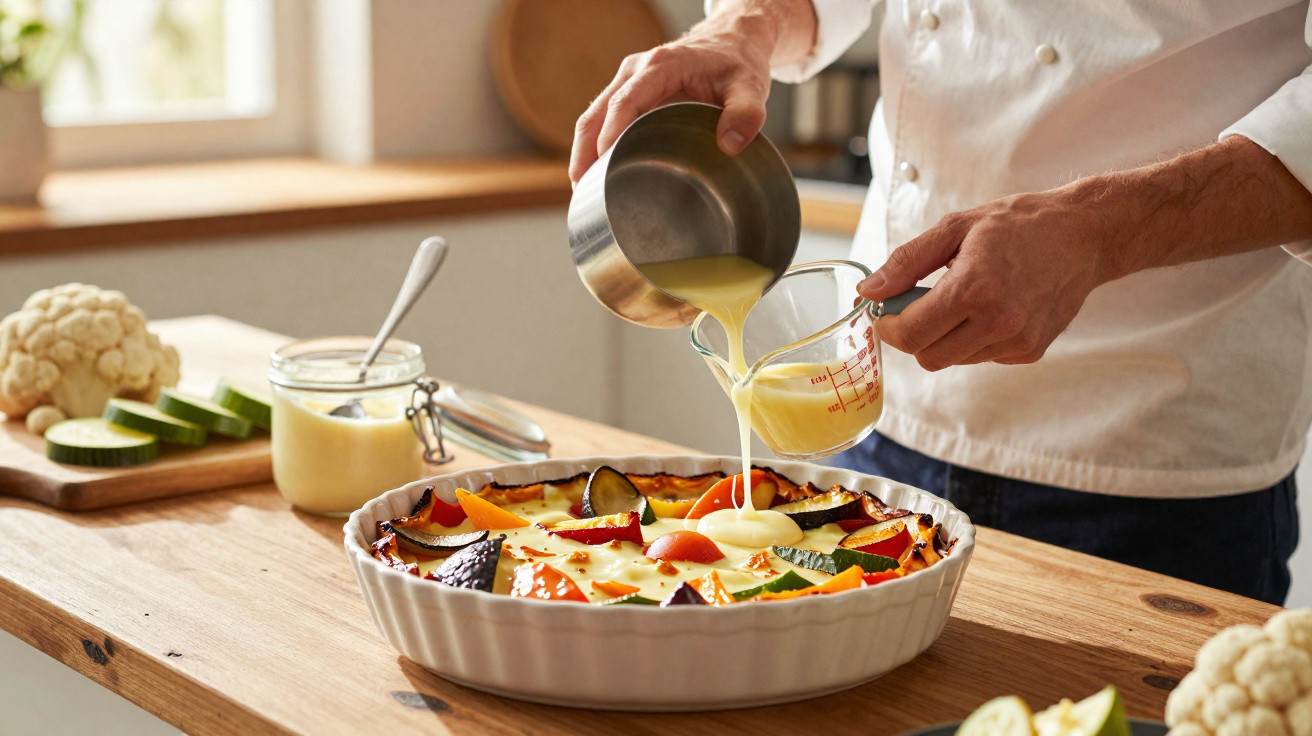
Anyone who regularly makes potato gratin, pasta bakes or oven-roasted vegetables knows the dilemma: without a thick cheese topping, the comfort-food appeal is missing; with one, the dish quickly becomes a calorie bomb. A rather understated cheese from a traditional French region offers a surprisingly simple solution – and contains roughly half the calories of mozzarella.
Why cheese turns a bake into a calorie trap so quickly
A look at the nutritional values shows why this oven classic becomes so rich. Traditional hard and semi-hard cheeses, such as Comté, Beaufort and similar varieties, generally contain around 400 kilocalories per 100 grams. Their lengthy maturation removes water, leaving fat and protein more concentrated.
That concentration creates their intense flavour, but it also means that even a handful of grated cheese adds up considerably. Covering a baking dish of potatoes, pasta or vegetables generously can therefore add several hundred extra calories to each portion.
Cream-cheese-style varieties and mozzarella fare somewhat better by comparison. They contain more water and consequently provide less energy per 100 grams. This is why they are popular choices for vegetable bakes and lasagne. Even so, mozzarella remains relatively energy-dense when used liberally.
A particular processed cheese from the Franche-Comté region contains only around 130 kilocalories per 100 grams – yet can still make a bake creamy and savoury.
The surprising calorie saver: Cancoillotte
The cheese in question is called Cancoillotte. It is a regional classic in parts of France, although it is still little known in the UK. This is a very runny processed cheese traditionally made from skimmed milk, a little butter and water.
Its production method is the key: because it starts with skimmed milk, the mixture contains far less fat than many other cheeses. On average, Cancoillotte contains about 130 kilocalories per 100 grams. For comparison:
- Mozzarella: approximately 250–280 kcal / 100 g
- Traditional hard cheese (e.g. Comté): around 380–420 kcal / 100 g
- Cancoillotte: approximately 130 kcal / 100 g
The difference matters particularly in bakes, where people rarely use only 20 grams of cheese. Even when used generously, its energy content remains substantially lower than that of a thick layer of grated cheese.
In flavour, Cancoillotte resembles a mild, gently seasoned processed cheese. Its texture sits somewhere between pouring cream and a thick cheese sauce. This flowing consistency is precisely what makes it so useful in bakes: it blends effortlessly with sliced potatoes, pasta or vegetables, creating the characteristic “stretchy cheese” effect when served.
How to prepare a lighter Cancoillotte bake
Anyone who has previously simply poured cream and grated cheese over a baking dish will barely need to alter their cooking routine. The basic principle stays the same; only the ingredients are slightly different.
1. The creamy base: Cancoillotte instead of cream and cheese
For a classic potato or vegetable bake, Cancoillotte can be made directly into the sauce:
- Place approximately 150–200 g of Cancoillotte in a saucepan,






Comments
No comments yet. Be the first to comment!
Leave a Comment