
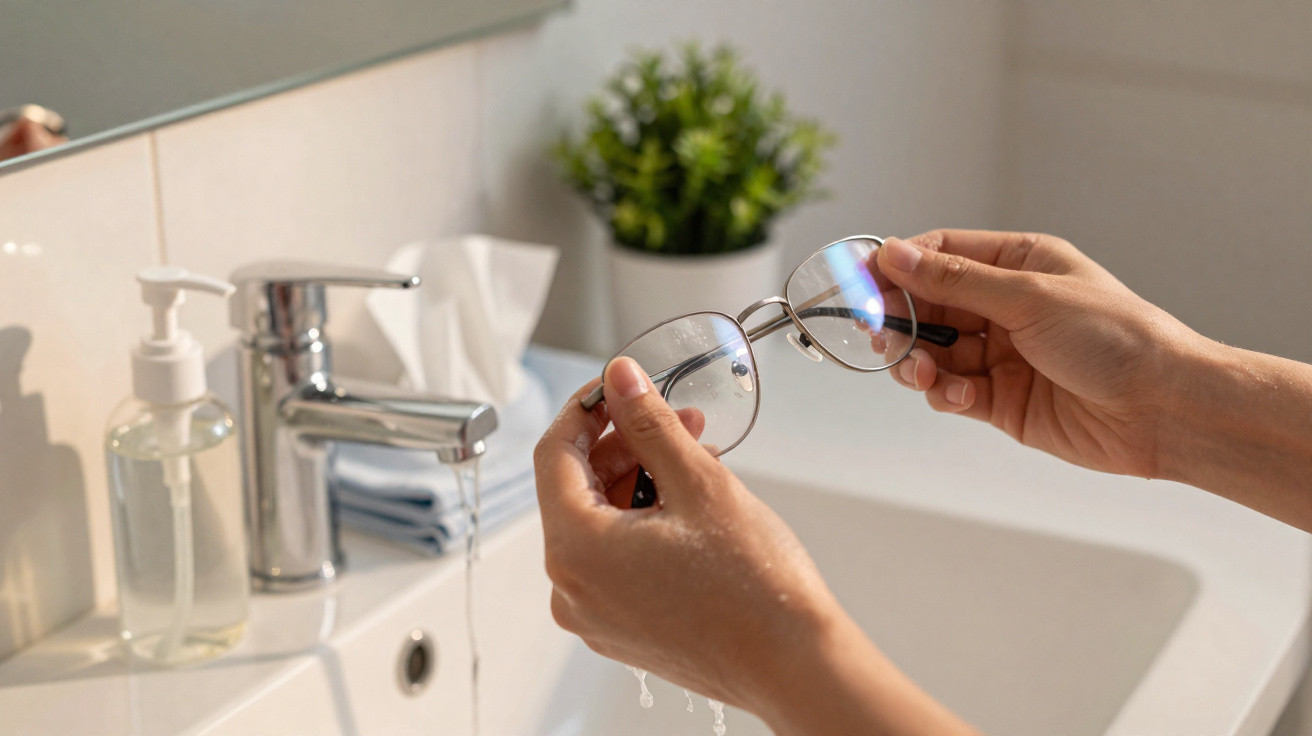
Smears reappear. Lustre disappears. The solution begins before a cloth goes anywhere near the lenses.
Opticians recommend a simple, low-tech method that brings back clear vision while safeguarding today’s coatings. All it needs is water, a minute amount of mild soap and a disposable drying material. Its effectiveness depends on sequence and contact time rather than a costly spray or a “pro-grade” cloth.
Why microfibre becomes less effective over time
New microfibre cloths are good at picking up grease and dust. However, they can become hazardous after collecting grit and skin oils. With every wipe, those trapped particles can rub across the lenses.
Many shop-bought sprays contain surfactants and solvents, some of which do not suit anti-reflective coating layers. Lingering cloudiness is frequently caused by residue rather than grime. More vigorous rubbing aggravates this issue and raises the risk of tiny scratches.
Dry wiping acts like very fine sandpaper. Water must remove grit before any fabric makes contact.
The opticians’ routine for clear glasses lenses
This method is both inexpensive and straightforward, and it suits prescription spectacles as well as sunglasses.
- Begin by rinsing under a light flow of lukewarm water. This washes away dust and hard debris that could scratch the lenses.
- Put one small drop of mild washing-up liquid on your fingertips. Gently work it over both sides of each lens using brief circular movements. Clean the bridge, nose pads and frame edges, where oils tend to gather.
- Rinse again thoroughly using lukewarm water. Any soap left behind can form a film and make dirt accumulate more quickly.
- Blot the glasses dry with a clean, lint-free disposable paper towel. Avoid forceful rubbing. For any remaining marks, breathe lightly on the lens and dab it again.
Choosing the right soap
Use a mild washing-up liquid or gentle hand soap that contains no abrasives. Do not use bleach, ammonia, powerful antiseptics, solvent-rich window cleaners or high-alcohol wipes. Aggressive chemicals may etch or dull modern lens coatings.
Rinse, soap, rinse, pat. That four-step rhythm prevents haze and protects coatings.
Looking after modern lens coatings
Most lenses have several protective layers, including anti-reflective, hard, hydrophobic and oleophobic coatings. Rinsing before cleaning protects these treatments by carrying away abrasive particles. Mild soap dissolves natural skin oils without harming the coating chemistry.
Less usual finishes may require more care. If your glasses have mirrored, photochromic or specialist coatings, ask an optician to confirm which cleaning products are compatible. Professional cleaning is also useful if grease has worked its way beneath the frame rim or nose pads.
Errors that can scratch, warp or stain glasses
- Cleaning lenses while dry. Dust can contain quartz-like minerals, and dry rubbing causes scratches.
- Applying domestic cleaning products. Ammonia, vinegar and bleach can damage anti-reflective coating layers.
- Using the same dirty cloth repeatedly. Grit lodged in the fibres can make an otherwise soft cloth act like an abrasive pad.
- Drying glasses with heat, whether in sunlight or on a car dashboard. Heat can distort plastic frames and put strain on adhesives.
- Neglecting hinges and screws. Built-up dirt can irritate the skin and trap moisture that may corrode metal parts.
When to take glasses to an optician
Grease that has entered the gap between a lens and its frame may require partial disassembly. Optical practices use ultrasonic cleaning baths to loosen dirt in narrow spaces without scuffing surfaces. They can also test screw tightness, examine the nose pads and identify coating damage at an early stage.
Sunglasses and polarised lenses
The same rinse–soap–rinse–pat method also protects polarising films. Do not allow sunscreen or oils to dry on the lenses, as oily marks can bake on and become difficult to remove.
Avoid prolonged soaking for wooden frames or delicate bio-based frames. Wash the lenses in the usual way, then clean the frame with a lightly dampened cloth.
Quick comparison of glasses-cleaning methods
| Method | Clarity | Risk to coatings | Cost | Best use |
|---|---|---|---|---|
| Rinse + mild soap + pat dry | High | Low when rinsed well | Very low | Daily and deep cleans |
| Microfibre cloth only | Medium initially | Rises as cloth gets dirty | Low | Quick touch-ups after a proper wash |
| Retail spray + cloth | Varies by formula | Medium if solvents present | Medium | Travel use, chosen for coating-safe labels |
| Ultrasonic at an optician | Very high | Low with trained handling | Low to medium | Deep grime, frame overhaul |
Straight answers to frequent questions
How warm should the water be? Keep it lukewarm, at approximately hand temperature. Hot water can stress coatings and soften certain plastics.
Can paper towels scratch lenses? Select a soft, food-grade, unprinted paper towel. Steer clear of coarse napkins and newspaper. When uncertain, let the lenses air-dry, then fog them with your breath and blot.
How regularly is a full clean needed? If you wear glasses every day, carry out a thorough wash two or three times weekly. A rinse and pat dry can be part of your daily routine.
Does regular washing fade lens tints? Quality tints will not fade when cleaned with mild soap and rinsed properly. Harsh chemicals and heat are what cause damage.
Are anti-fog treatments worthwhile? Anti-fog drops are effective on certain coatings. Try them on a small corner first. As soap removes the treatment layer, apply it again after washing.
Everyday habits that help lenses last longer
Keep your glasses in a hard case while commuting to prevent tiny scratches from dust and keys. Carry a small travel kit containing a 10 ml bottle of mild soap, several folded paper towels in a zip bag and a spare set of nose pads.
Rinse your glasses after exercise and visits to the beach. Sweat and sunscreen can weaken hydrophobic layers. Remove cosmetic residue from nose pads and frame rims before it sets hard.
Clean water does most of the work. Soap loosens oils. Gentle drying finishes the job without streaks.
Extra advice that can reduce costs
Microfibre still serves a purpose. Only use a freshly washed cloth after rinsing and washing the lenses first. Replace or launder it each week to remove abrasive particles, and do not use fabric conditioner because it leaves a coating on the fibres.
Think about arranging a seasonal visit to your optician. A five-minute ultrasonic clean, screw adjustment and nose-pad replacement can often postpone the need for new lenses. Optical shops can also recommend coating-safe sprays if you travel frequently or work around oily substances.




Comments
No comments yet. Be the first to comment!
Leave a Comment