
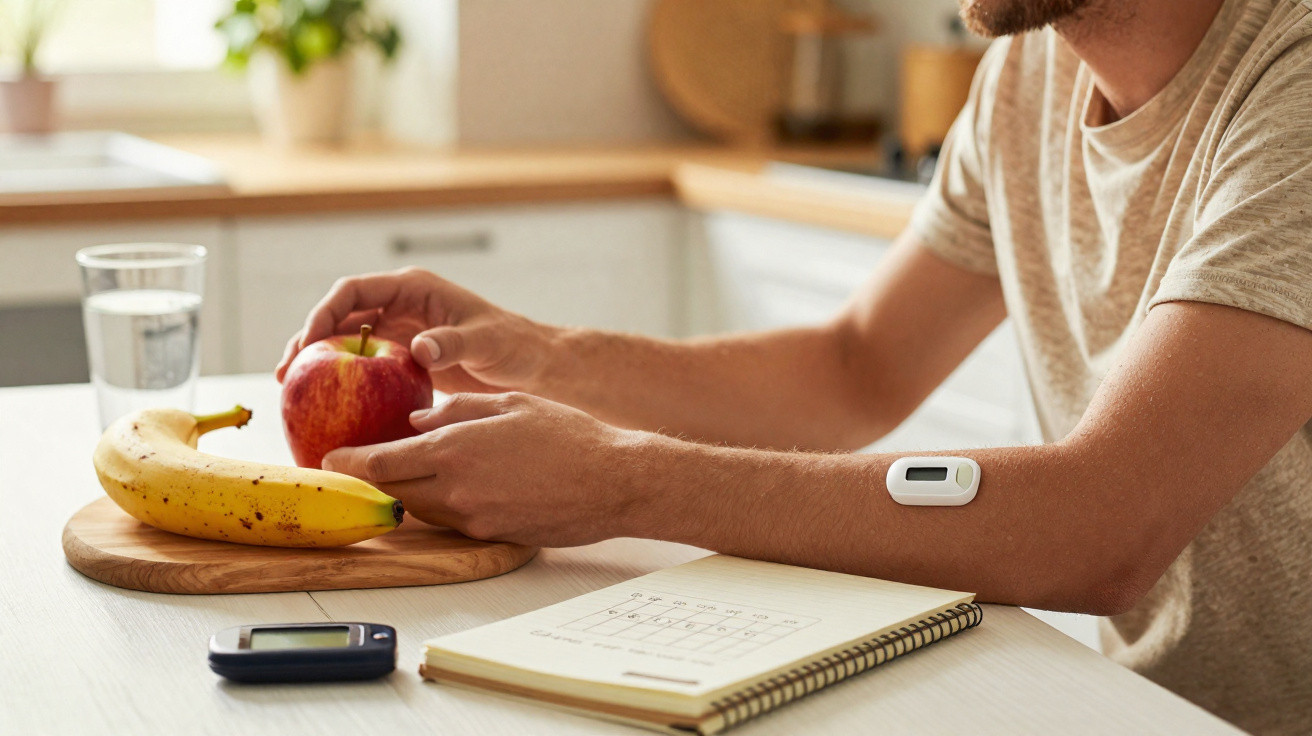
Both fruits may seem harmless in a fruit bowl, but they affect your bloodstream differently. For people with diabetes or prediabetes, or those hoping to prevent an energy dip after a snack, the choice between a red-skinned apple and a yellow banana can have a meaningful effect.
Glycaemic index: why apples and bananas don’t affect you equally
The first indication comes from the glycaemic index (GI), which scores foods according to the speed at which they increase blood sugar. Lower values indicate a more gradual, milder increase.
A typical apple has a GI of about 38. A banana is higher at approximately 52, a level nutritionists describe as moderate. Although the difference may appear modest, your body may notice it, particularly when the fruit is eaten on an empty stomach.
Apples tend to raise blood sugar more gradually than bananas, largely thanks to their higher content of soluble fibre such as pectin.
Soluble fibre creates a gel-like substance in the gut. This slows food movement, makes digestive enzymes work harder and extends the release of glucose over a longer time. With less fibre, sugar can enter your system more rapidly.
What’s actually inside: figures that alter the picture
From a nutritional perspective, apples and bananas both supply beneficial carbohydrates, vitamins and water. However, the finer details matter when you are monitoring blood sugar.
| Fruit (medium) | Total carbs | Sugars | Fibre | Typical GI |
|---|---|---|---|---|
| Apple (with skin) | ≈ 25 g | ≈ 19 g | ≈ 4 g | ≈ 38 |
| Banana (ripe) | ≈ 27 g | ≈ 14 g | ≈ 3 g | ≈ 52 |
The numbers appear similar on paper. Yet the apple’s slightly lower carbohydrate content, lower GI and marginally higher fibre content give it an advantage for keeping blood sugar more stable.
For a solo snack, many dietitians give apples a slight advantage over bananas for people trying to avoid rapid glycaemic spikes.
Bananas: how size and ripeness affect your blood sugar
Not every banana has the same effect. Both the size and colour of this curved yellow fruit influence its impact on your glucose curve.
Green, spotty, brown: the starch-to-sugar change
A slightly green banana contains more resistant starch. This starch acts somewhat like fibre: it is not fully broken down in the small intestine, meaning less is quickly converted into blood sugar.
During ripening, resistant starch is progressively changed into simple sugars, including glucose and fructose. The banana becomes sweeter, while its GI rises at the same time.
Greener bananas tend to raise blood sugar less than very ripe, brown-speckled ones, because more of their carbohydrates stay locked in resistant starch.
This does not make green bananas a miracle diet food. It does, however, mean a barely ripe banana is likely to affect your system more gently than a soft, heavily spotted banana suitable for banana bread.
Portion size: why “just one banana” is not always just one
Length and thickness are another detail that is easily missed. A large banana can provide considerably more carbohydrates than a small one. That distinction matters if you count carbohydrates or calculate insulin doses.
- Small banana: fewer carbs, lower glycaemic load
- Medium banana: average 27 g of carbs
- Large banana: noticeably more carbs and a faster rise in blood sugar
For those who are particularly sensitive to carbohydrates, opting for a small banana or half a banana can reduce the spike while retaining the flavour.
Apples: a slow release from fibre and chewing time
Apples have distinct characteristics that can help maintain steadier blood sugar levels.
The first is their fibre content. A medium apple with its skin contains roughly 4 grams, much of which is in the peel. The skin works as a natural slow-release layer around the fruit’s sugars.
Keeping the skin on an apple boosts fibre intake and usually flattens the post-snack blood sugar curve compared with eating peeled slices or apple purée.
Their texture also requires more chewing. As a result, you eat at a slower pace and allow more time for your brain to recognise fullness. Many people stop at one apple, while a glass of apple juice or a bowl of sweetened apple purée can be consumed in moments and cause blood sugar to rise sharply.
For many people with prediabetes, dietitians commonly recommend an apple as an everyday fruit, especially if it is eaten with a small amount of protein or fat.
Apple or banana: which is “better” for blood sugar?
When considering only the immediate blood sugar response from eating fruit alone, apples generally come out ahead. Their lower GI and greater fibre content shift the balance in their favour.
If your goal is the gentlest possible effect on blood sugar, an apple with its skin generally beats a ripe banana eaten alone.
That does not mean bananas are the bad option. Both fruits provide polyphenols and other plant compounds associated with a reduced long-term risk of type 2 diabetes. Per serving, bananas also contain more potassium, which helps support blood pressure and muscle function.
For most people, the more useful question is not “apple or banana forever?” but “how, when and with what do I eat them?”
How to eat apples and bananas without major blood sugar swings
How fruit is eaten alongside other foods can influence your glucose response just as much as the type of fruit you choose.
Avoid “naked carbs”
Some dietitians refer to carbohydrates consumed without accompanying protein or fat as “naked carbs”. An apple or banana eaten alone fits this description.
Pairing fruit with protein or healthy fats often blunts the blood sugar rise compared with eating the same fruit by itself.
Useful combinations include:
- Apple slices with a spoonful of peanut or almond butter
- Banana slices with a handful of nuts or seeds
- Either fruit with a serving of plain yoghurt or cottage cheese
- Apple pieces stirred into an oat-based breakfast instead of fruit juice
Protein and fat delay gastric emptying and carbohydrate digestion, spreading the release of glucose over a longer period.
Move a little after your snack
A brief walk can be an effective, simple approach. Research indicates that 10–15 minutes of light movement after eating helps muscles draw more glucose from the bloodstream, even without substantial amounts of insulin.
A gentle stroll after a fruit snack can noticeably flatten the post-meal glucose peak, especially in people with prediabetes or insulin resistance.
There is no need for gym equipment or an intense workout. A walk around the block, some housework or climbing several flights of stairs can often be sufficient to have an effect.
Everyday scenarios: making sensible choices without overthinking
Applying this science to everyday routines can make snacking feel less stressful. These examples illustrate how to make adjustments without excluding fruit entirely.
If you are heading into a long meeting
You need lasting energy rather than a brief surge followed by a slump. A whole apple with a handful of almonds or walnuts is usually a stronger option than a large ripe banana on its own. The fibre-and-fat combination slows digestion and can keep you feeling satisfied for longer.
If you plan to exercise soon
A quicker release of sugar may be useful before exercise. In that situation, a small or medium banana, perhaps paired with a spoonful of nut butter, can work well. The banana provides rapidly available carbohydrates, fat offers longer-lasting energy, and your muscles will soon use much of the glucose.
If you are managing type 2 diabetes
Many clinicians recommend choosing smaller, firmer bananas less often, particularly while blood sugar control is still becoming stable. Apples, berries and pears are frequently prioritised, ideally eaten with their skins where practical and combined with protein.
Even so, half a banana with Greek yoghurt or sprinkled over porridge can still suit many diabetes-friendly eating plans, especially where total carbohydrate intake is tracked.
Key concepts worth knowing: GI, glycaemic load and resistant starch
Three expressions regularly arise in discussions of fruit and blood sugar: glycaemic index, glycaemic load and resistant starch.
The glycaemic index measures how rapidly 50 grams of carbohydrate from a food raises blood sugar compared with pure glucose. It does not account for portion size.
Glycaemic load (GL) includes the amount you really eat. A food with a moderate GI may still have a low GL when the normal portion is small. For bananas, GI and GL both increase when the fruit is large and very ripe.
Resistant starch, which is present in greener bananas, falls somewhere between starch and fibre. It is not fully digested in the small intestine, so fewer of its calories quickly appear as glucose. A proportion reaches the colon, where gut bacteria ferment it and may create compounds associated with better metabolic health.
Beyond apples and bananas: how mixed meals alter everything
In everyday life, few people eat fruit in isolation. The response of blood sugar is influenced by the whole meal. An apple eaten after a meal containing lentils, vegetables and olive oil will usually create a smaller rise than that same apple eaten with black coffee in the middle of the afternoon.
Eating fruit with protein sources such as eggs, fish, beans or yoghurt, as well as fats from nuts, avocado or olive oil, often produces smoother glucose curves. Having fruit at intervals through the day, rather than consuming several pieces at once, also distributes the carbohydrate load.
For most people, the smartest strategy is not to ban bananas but to manage ripeness, portion size and pairings while letting apples take a slightly more regular role.
When used in this way, both fruits can fit comfortably into an eating pattern that supports blood sugar rather than undermining it.





Comments
No comments yet. Be the first to comment!
Leave a Comment