
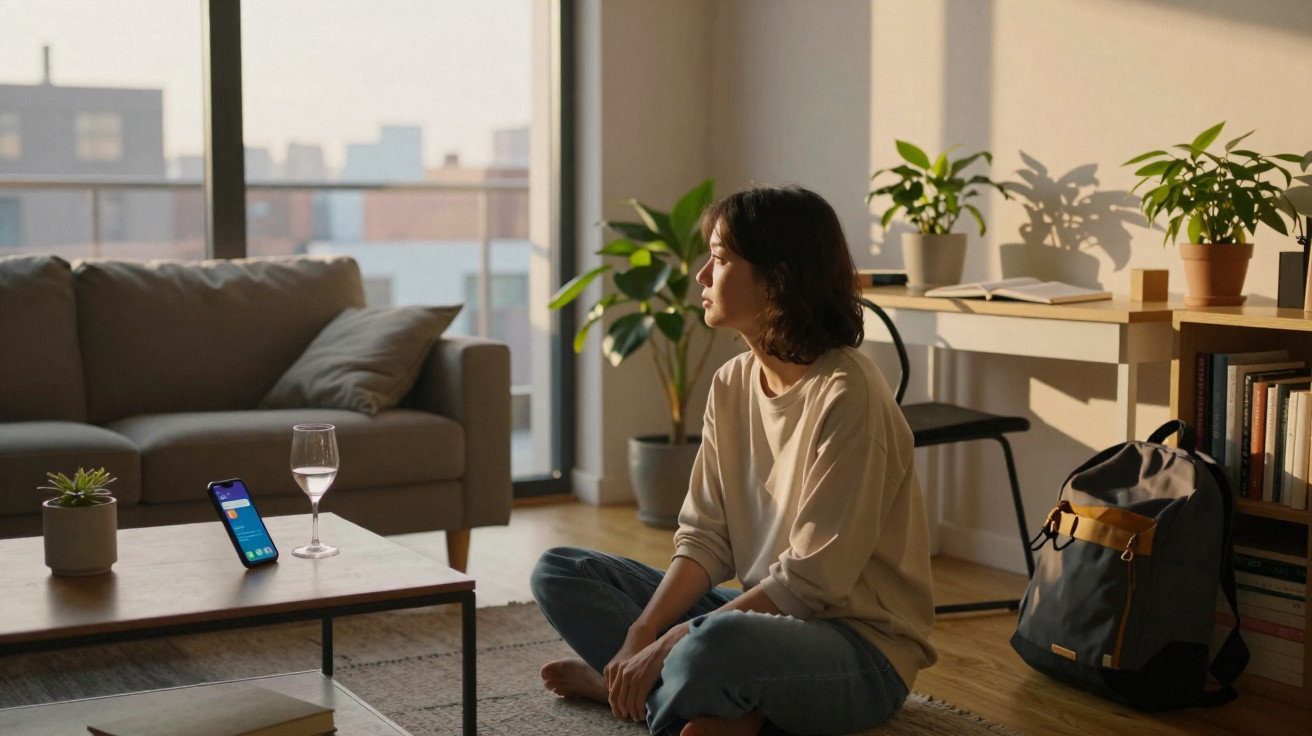
At about 8.30 pm on a Tuesday, a supermarket can make it surprisingly easy to pick out the single shoppers by how they navigate the aisles. One woman, headphones in, drops tofu and chocolate into her trolley with the energy of someone soundtracking her own life. A suited man lingers over sauces, studying ingredients as though his evening is entirely his own. Nobody is sending a message saying, “I’m on my way.” Nobody is negotiating which pasta shape to buy.
Look more carefully, though, and these people shopping alone do not all project the same feeling. Some seem unburdened, almost joyful. Others appear isolated despite being surrounded by people.
The difference has less to do with whether they have a partner and more to do with something subtle and largely unseen.
Why some single people feel deeply free - and others feel lost
A scroll through social media presents single life in two tired extremes: either a stream of bottomless brunches and self-care, or a succession of lonely evenings with a takeaway app and a lit-up phone. Everyday reality tends to fall somewhere in the untidy space between them.
Researchers have started to chart that middle territory, with one combination repeatedly standing out: autonomy and attachment style. In other words, the degree of control you believe you have over your life, alongside the security you feel in connecting with other people, can determine whether being single feels like confinement or freedom.
The identical label, “single”, may be experienced in dramatically different ways by two people.
Psychologists point to an expanding body of research supporting this idea. Studies by the University of Toronto and UC Santa Barbara, for instance, show that single adults with high autonomy - meaning they feel they choose their own activities, values and relationships - report life satisfaction that is close to, and sometimes above, that of many married adults.
Attachment is the complicating factor. Securely attached people, who are at ease with both intimacy and independence, often see single life as a period for discovery. Those with anxious attachment can remain on alert, looking for evidence of rejection. Avoidant people may strongly protect their single status, only to experience an unspoken emptiness later at night.
The dating apps, city and age group may all be identical. The emotional climate can still be entirely different.
Beneath this is a straightforward cycle. If you feel able to direct your own course - deciding where to live, whom to spend time with and what to accept - then single life feels like a life of your own rather than a place to wait. Autonomy becomes an internal point of stability.
Your attachment style influences the meaning you assign to every exchange. If you are secure, a delayed reply from someone you like may register as a small disappointment. With anxious attachment, it may seem like confirmation that you are unlovable. For an avoidant person, the same delayed response could bring relief and provide a reason to withdraw emotionally.
Happiness while single depends less on not having a partner than on the way you relate to yourself and others when a partner is absent.
How to build a “good single life” from the inside out
A fulfilling single life rarely appears fully formed. It is created gradually, almost one brick at a time. A useful first step is to establish one daily ritual that exists only for you, rather than being tailored to a future relationship. Not, “I go to the gym so I’ll look good on dates.” Instead: “I go to the gym because my knees feel better and my sleep is calmer.”
It could be an early walk with no podcast playing. It may mean having dinner alone and serving it properly simply because you deserve it. Or it might involve signing up for a slightly unexpected class - pottery, boxing or improv - because the prospect makes you feel more alive.
This small decision to choose something for yourself is where autonomy starts to take root.
Many people get stuck by viewing singlehood as a corridor between destinations. They put off making their home feel right because “one day I’ll move in with someone.” They agree to every vague, almost-relationship and then wonder why they feel drained. They live at 70% capacity, expecting a partner to supply the final 30.
In truth, no one manages this perfectly every day. There will be evenings when swiping through dating apps beats writing in a journal, and entire weeks when autonomy feels like nothing more than a TED Talk term. Perfection is not the aim. What matters is recognising when you have lowered your own volume, then carefully raising it again.
A good single life is not mainly about adding more to your schedule; it is about doing a small number of things for reasons that genuinely belong to you.
“Autonomy isn’t about being alone,” explains one relationship researcher I spoke to. “It’s about feeling that your choices match your values, whether you’re single, dating, or married. People who respect their own boundaries when they’re single tend to carry that strength into relationships, too.”
Identify your attachment style
Try a straightforward, science-based quiz from attachment theory researchers, not to assign yourself a permanent label but to find words for recurring patterns.Set one non-negotiable boundary
This could mean not messaging people who repeatedly cancel at the last minute, or refusing to check dating apps after midnight.Create a “single joy” list
Name three to five things you honestly prefer doing alone: cinema visits, slow Sunday breakfasts, late-night drives or trips to museums.Practise one secure behaviour
Send a direct message rather than dropping a vague hint. Tell a friend you miss them. Request reassurance once, then allow their response to settle.Track your energy, not just your feelings
Pay attention to the times when single life feels easy and those when it feels weighty. What did you do that day? Who did you spend time with? This is real-time information about your autonomy and attachment in action.
Rethinking what “a good single life” really means
Once films and TikToks are set aside, there is no single picture of a good single life. For one person, it might involve lively group holidays and a fresh crush every few months. For somebody else, it may be a rented studio, two close friends and peaceful Friday evenings with Thai food and a book.
What recent research quietly suggests is that people who feel most settled in their single life often have two things in common: they believe their choices belong to them, and they feel broadly secure in loving and being loved, even when timing does not work out. Autonomy provides their backbone. A more secure attachment gives them a softer outer layer.
Everyone knows the moment: the couple at the next table appears to possess something you lack. But the more meaningful question is not, “Why am I still single?” It is, “Am I the main character in my own life, or a supporting character waiting to be chosen?”
The answer is capable of changing.
| Key point | Detail | Value for the reader |
|---|---|---|
| Autonomy shapes single happiness | Feeling that you choose your own activities, priorities and relationships is linked to greater life satisfaction among single people | Encourages you to focus on what you can influence today, instead of when a partner arrives |
| Attachment style colours every interaction | Secure, anxious and avoidant patterns alter how you interpret messages, dates and silences | Provides language for understanding your responses rather than merely blaming yourself |
| Single life is a skill you can build | Small rituals, boundaries and “single joys” establish a steady foundation over time | Helps your current phase feel meaningful and makes you stronger for future relationships |
FAQ:
Is it really possible to be as happy single as in a relationship?
Yes, according to several large studies. Single people with strong autonomy, supportive friendships and secure attachment frequently report well-being equal to, or greater than, that of many coupled people, particularly those in conflict-filled relationships.How do I know my attachment style without therapy?
Begin with trustworthy online questionnaires rooted in attachment theory, ideally from universities or recognised psychologists. Read the profiles, note what feels familiar, and use the result as a provisional guide rather than a permanent judgement.What if I want a relationship but also want to enjoy being single?
The two goals can exist together. You can date actively while also developing a rich, independent life that you enjoy. That balance often draws healthier partners because you are not relying on someone to “save” you from your own life.Can my attachment style change over time?
Yes. Research indicates that repeated secure experiences, whether in friendships, therapy or stable relationships, can ease anxious and avoidant tendencies. Improving boundaries, communication and self-soothing can all move you towards more secure behaviour.Is choosing to stay single long-term a valid path?
Absolutely. Remaining single in the long term can be an intentional and satisfying choice, particularly when it rests on autonomy, meaningful connections and worthwhile projects. What matters is that it feels like your decision, not a sentence imposed by fear or social pressure.


Comments
No comments yet. Be the first to comment!
Leave a Comment