
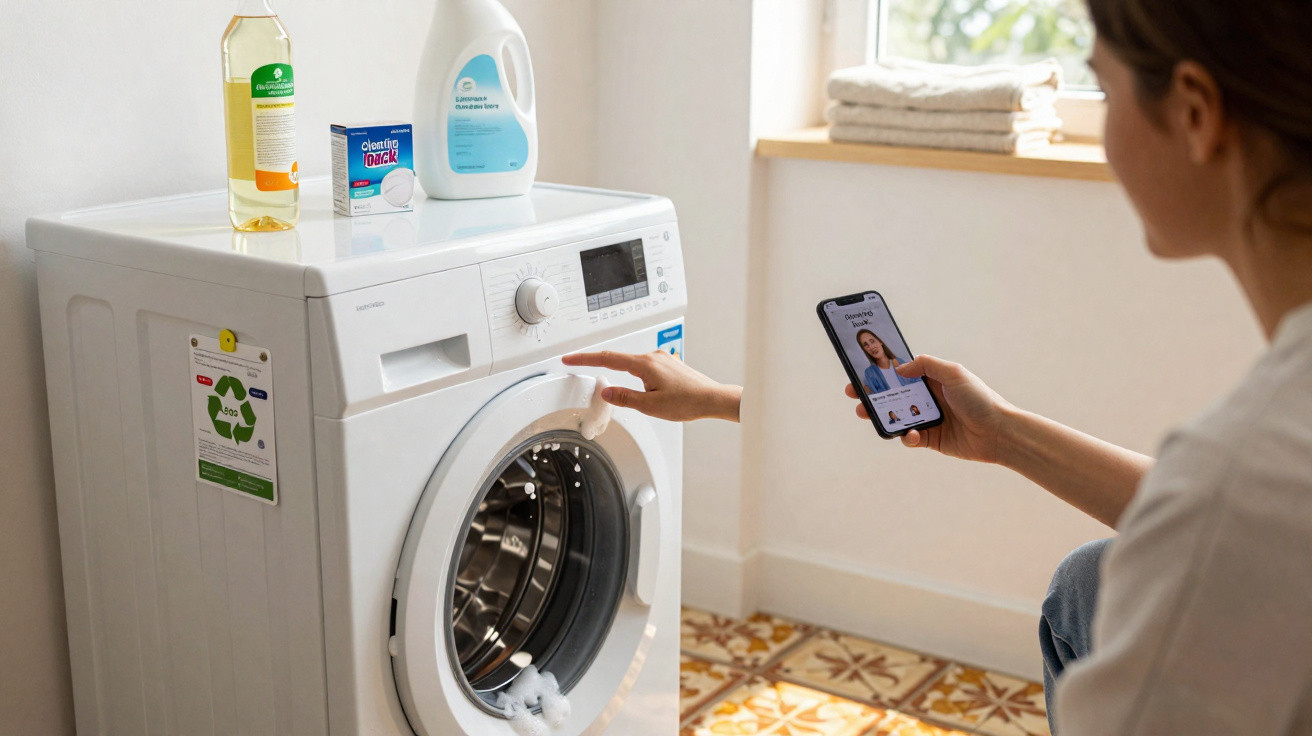
On TikTok, a creator claims that a “deep detox cycle” will leave your washing machine drum looking brand new. You watch brownish water circling around the screen, equally repulsed and intrigued. Two hours, one supposedly magical mixture and a “reset” for an overworked appliance. The comments fill up with “OMG look at that dirt!” and “Doing this TONIGHT.”
A week later, you are looking at your own washer. It is noisier than it was. The rubber seal appears misshapen. Your white clothes are coming out slightly grey. That detox trick shared by everyone now seems less like smart household advice and more like sabotage. You begin to ask yourself what that viral recipe actually did inside the machine.
And why does everyone keep sharing it?
The 2-hour “detox” cycle people love… until something fails
Spend ten minutes on cleaning TikTok or in a Facebook household group and you will see much the same formula. Someone pours boiling water into the drum, adds an enthusiastic amount of bicarbonate of soda, one or three cups of white vinegar, a lemon-scented tablet “for freshness”, then selects the hottest and longest programme the machine offers. After two hours, they open the door to reveal cloudy water and an impressively dirty filter. Apparently, this proves the washer was “toxic” and needed cleansing.
On video, it is deeply satisfying. A bit like using a blackhead strip on your home.
What those 30-second clips do not show is the pressure this cocktail puts on pumps, seals, sensors and hoses. Nobody records a split door gasket or a damaged heating element. That tends to happen quietly a few weeks later, without any dramatic soundtrack.
In a UK repair forum, one technician shared photographs of a three-year-old front-loading washing machine after a “detox challenge” had taken off in a local Facebook group. Its owner had used almost-boiling kettle water, a large scoop of soda crystals, dishwasher tablets and plenty of vinegar. The two-hour 90°C cycle ran overnight. By morning, the control panel no longer worked. Inside, the rubber door seal had become distorted and tacky, as though it had softened before cooling into the wrong shape. The heating element was already showing corrosion.
She was not an isolated case. Some manufacturers report an increase in repair requests that coincides rather suspiciously with peaks in social-media “washing machine detox” posts. In one small internal survey for a European appliance retailer, service teams estimated that around 1 in 5 drum or seal issues reported in 2024 had been “helped along” by harsh DIY cleaning methods. The sequence is straightforward: someone watches the sludge video, attempts to recreate it, then their machine begins to vibrate, leak or incorrectly detect water levels.
There is an unexciting but sound explanation for why this happens. Washing machines are engineered for particular detergents, water quantities, temperatures and levels of foam. Adding assorted chemicals, overfilling the drum or repeatedly using extreme temperatures means working against a system designed to operate only as intensively as necessary. Vinegar is acidic, and concentrated amounts can gradually damage rubber and certain metal components. Too much bicarbonate of soda or soda crystals may not dissolve fully in colder areas, leaving clumps in filters and pipework. Pouring very hot water directly into the drum can also shock plastic parts that were never intended to remain immersed at 90–95°C for hours.
The detox may feel like self-care for your home, but for the machine it is more like a stress test.
What works instead: gentler ways to “reset” your washing machine
If your washer smells damp or your towels have become rough, a viral concoction is not necessary. What you need is a maintenance habit rather than a miracle solution. The most useful measure is remarkably simple: run one empty hot cycle with the appropriate cleaner every month or every other month. Forget a five-ingredient cauldron. Use a branded washing machine cleaner or a modest amount of bleach, on the hottest service or cotton programme recommended in your appliance manual.
This one action clears detergent build-up, fabric-softener residue and bacterial biofilm from the drum and hoses without putting the system under unnecessary strain. Then there are the routine tasks nobody boasts about online: dry the rubber door seal, leave both the door and detergent drawer slightly open, and clean the filter every few months. It is not exciting. It will not go viral. Yet it is what appliance engineers quietly do in their own homes.
On a personal level, people usually reach for “detox” hacks because something already seems wrong. Perhaps the washer smells of wet dog. Maybe there are unexplained black marks on the door gasket. A favourite T-shirt emerges with strange streaks. The urge to tackle the issue with a vinegar-and-soda grenade is understandable. During a busy week, three small jobs are less appealing than one dramatic solution. And when brown grime swirls from someone else’s drain on screen, it can feel like proof that you are finally taking action.
Let’s be honest: nobody really does all that every day.
The problem is that intensive cleaning can turn into a form of punishment cycle: minor maintenance is neglected, a severe hack is used, the machine suffers slight damage, its performance declines, and that decline appears to “confirm” the need for another detox. A more measured routine interrupts that pattern. Rather than imagining toxins being purged, think of it as brushing your washing machine’s teeth from time to time.
A repair specialist from Lyon told me, half amused and half resigned:
“Every time a ‘2-hour washing machine detox’ trend starts, we know we’ll be busier a few weeks later. People mean well. They just don’t realise they’re following advice that ignores how the machine is built.”
He said that nearly all modern washing machines include an internal self-cleaning approach. Their high-temperature programmes are calibrated to release residue gradually, without softening seals or overwhelming sensors. Once you exceed those limits using kettle water, chlorine tablets not designed for plastic drums or industrial degreasers, you are effectively experimenting on your own appliance.
For a simpler approach, here is a calm and practical checklist with no social-media magic involved:
- Run an empty hot service cycle with a suitable cleaner every 4–8 weeks.
- Wipe the door seal and glass after the final load of the day.
- Leave the door and detergent drawer ajar so moisture can escape.
- Clean the filter and drainage area every three months, or after any unexplained noise.
- Use the detergent amount required for your actual water hardness, rather than simply filling the bottle cap.
Why we still share hacks that could damage our belongings
On a phone screen, the 2-hour detox hack is made for engagement. It offers an easy recipe, an obvious before-and-after, and the oddly satisfying reveal of dirty water. It feeds a low-level worry many people have: that their home is secretly unclean, and that appliances conceal dirt and bacteria we are “meant” to find. When a creator presents a two-hour ritual promising both cleanliness and control, it appeals to something deep-seated.
There is a social dimension that is seldom acknowledged, too. Sharing a detox video communicates that you care, that you are “on top of things”, and that your home is not merely functional but carefully looked after. Everyone has seen the friend posting freshly stripped towels or a sparkling drum captioned “how disgusting is this??” It is partly confession and partly performance. Compared with those instant social rewards, the possible harm to a rubber seal or heating element is invisible. Besides, nobody posts a selfie with their repair invoice.
So where does that leave you, in front of a humming machine that cost a month’s wages? Perhaps in a less clear-cut position than marketing language suggests. You do not need to maintain your washer perfectly, nor do you need to follow every hack that appears in your feed. You may decide that some limescale in a hose is acceptable, and that your money and time matter as well. You can also gently challenge someone in a WhatsApp group when they encourage everyone to “detox” their machines with a chemical mixture.
Some readers who get this far will probably still try a milder version of the viral detox, because curiosity is powerful and the desire to “see what comes out” is genuine. Others will quietly adjust one small habit, such as leaving the door open or cleaning the filter at the weekend. Both responses honestly reflect the divide between what we understand in principle and what we really do at 10 p.m. on a Sunday, when the laundry pile is taking over.
At a deeper level, the washing machine detox story is not really about vinegar and bicarbonate of soda. It is about how we assess advice on a loud, visual internet. You are shown a few seconds of footage, rather than the repair-shop appointments that can follow. You see murky water in a clear drum, not the gradual deterioration of materials never designed for repeated chemical experiments. Between the fear of unseen dirt and the longing for an instant answer lies a quieter truth: most washing machines last longer with small, unglamorous habits and far fewer “miracle” cycles.
| Key point | Detail | Why it matters to the reader |
|---|---|---|
| Extreme “detox” methods put strain on the machine | Excessive heat and acidic or alkaline mixtures can damage seals, heating elements and sensors. | Understand why a widely shared hack may shorten an appliance’s lifespan. |
| A simple routine is enough | Use an empty hot cycle with a suitable cleaner, leave the door ajar, wipe seals and clean the filter. | Adopt realistic day-to-day habits without spending hours on them. |
| Separate viral content from dependable advice | Videos show the dramatic results, not the long-term effects on the appliance. | Build the habit of questioning a hack before trying it on an expensive machine. |
FAQ:
- Is vinegar safe for my washing machine? In small, occasional doses it is generally tolerated, but frequent large quantities can damage rubber components and certain metals. There is a reason manufacturers seldom recommend it.
- How often should I clean my washer “properly”? For most homes, an empty hot maintenance cycle every 4–8 weeks, alongside straightforward habits such as airing the drum and wiping the seal, is sufficient.
- Can a 2-hour detox cycle void my warranty? If you use products or methods that the manual specifically advises against, a manufacturer may reject a claim when related parts fail. Always consult the manufacturer’s care guidance.
- My washer smells bad. Do I need a full detox? Usually, no. Begin with a hot maintenance cycle, clean the filter, remove mould from the seal and use less fabric softener. Ongoing odours may point to a drainage problem.
- Are commercial “washing machine cleaners” better than home hacks? They are formulated to dissolve residue at particular temperatures without excessive foaming or harming sensitive components, making them generally safer than aggressive DIY mixtures.




Comments
No comments yet. Be the first to comment!
Leave a Comment