
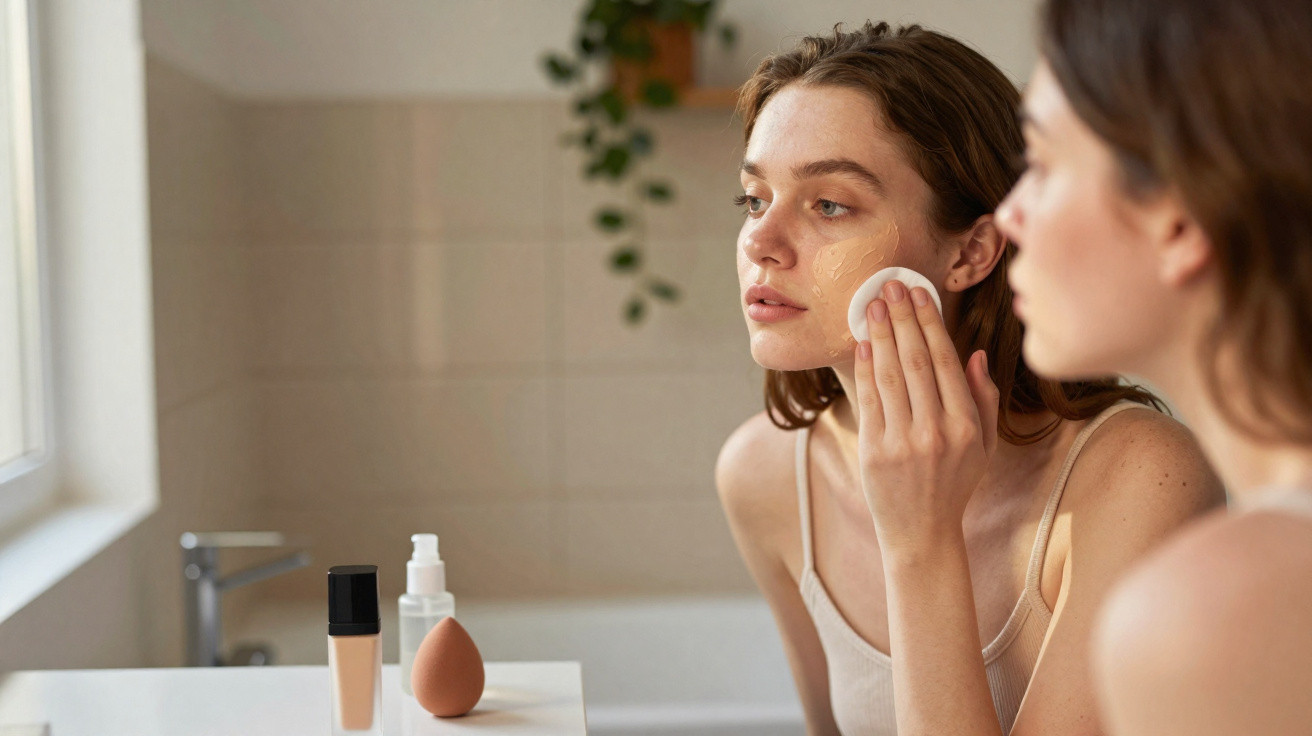
Foundation, concealer and powder are as much a part of many people’s morning routine as brushing their teeth. They can make the complexion look more even, the eyes appear brighter and the overall look feel “ready for the day”. Yet dermatologists see the other side of this habit in their consulting rooms: irritated, congested and overwhelmed skin that can barely restore its own balance.
Why wearing make-up every day is more than an aesthetic choice
Our skin is not a passive surface that can simply be painted over at will. It is an active organ working around the clock. It produces sebum, renews itself, shields us from germs and environmental stressors, and maintains a delicate moisture film. Every layer of make-up affects this system – particularly when it is applied daily with hardly any breaks.
Many current products offer very high coverage and exceptional staying power. This is precisely where the issue starts: what is promoted as a benefit can become an ongoing strain for the skin.
The denser and longer-lasting the make-up, the greater the risk that the skin underneath can no longer “breathe” and regulate itself properly.
Occlusive film: when foundation sits on the skin like cling film
One central issue is known as an occlusive effect. The formula of many foundations and concealers creates a thin layer over the skin. It is almost invisible to the naked eye, but acts as a barrier.
Possible day-to-day consequences include:
- Sebum cannot drain as easily and accumulates in the pores.
- Bacteria find ideal conditions in this warm, damp environment.
- The skin’s surface can gradually look more uneven and patchy.
Dermatologists repeatedly describe similar patterns: people who previously had very few spots increasingly develop blackheads, inflamed bumps and an overall “unsettled” complexion over time. Many take this as a sign that they “need to cover up more” – unknowingly making the wrong adjustment.
Gradual irritation caused by ingredients
There is also a second issue that is frequently overlooked: some ingredients can irritate the skin without immediately causing redness or itching. Fragrances, preservatives and certain pigments may fuel persistent, low-level inflammation over the longer term.
Common signs of this gradual irritation include:
- frequent redness, especially after removing make-up
- a tight, burning or “stressed” feeling in the skin
- suddenly reacting sensitively to products that were previously well tolerated
Anyone who uses ever-thicker layers of make-up because of blemishes often worsens the very issue they are trying to conceal.
Removing make-up: an underestimated way to protect the skin
Evening cleansing is another crucial point. After a long day, many people lack the energy for a thorough routine. A quick wipe with a cleansing wipe and nothing more – and this is where a long-term problem can begin.
When foundation residue, dirt particles and oxidised sebum remain on the skin overnight, they interfere with its recovery. The skin renews itself primarily while we sleep. If the surface is coated and clogged, these processes happen more slowly and less effectively.
Potential effects of consistently inadequate make-up removal include:
- increased blemishes and blocked pores
- a grey, tired-looking complexion despite getting enough sleep
- early fine lines caused by chronic irritation and dryness
Double cleansing – for example, using an oil-based cleanser or balm first, followed by a gentle gel – can remove make-up, sunscreen and sebum far more effectively than a quick wash. The key is to work gently rather than scrub, so the skin barrier remains intact.
How often wearing make-up is genuinely sensible
From a dermatological perspective, the message is not that you should never wear make-up again. What matters is using it mindfully, without pushing the skin to its limits every day. Anyone who reaches for high-coverage products daily should at least schedule regular “days off”.
Skin that is left completely make-up-free on some days often looks clearer and less red after just a few weeks.
Useful approaches to a more skin-friendly relationship with make-up include:
- Introduce make-up-free days: For instance, wear only skincare and sunscreen at weekends or when working from home.
- Choose lightweight textures: Opt for tinted moisturisers, light fluids or BB creams instead of extremely high-coverage foundation.
- Prioritise non-comedogenic products: These formulas are specifically designed to be less likely to block pores.
- Apply make-up selectively rather than all over: Cover only the areas of concern instead of layering product repeatedly across the whole face.
Hygiene: brushes and sponges can become bacterial traps
Something many people underestimate is that the product is not the only factor – the tools matter too. Make-up brushes and sponges come into contact with sebum, sweat and bacteria every day. If they are cleaned infrequently, they become an ideal collection point for germs that are then transferred back onto the skin.
Recommendations from dermatology practices include:
- Wash liquid-foundation brushes at least once a week using a mild shampoo or specialist cleanser.
- Replace sponges regularly, especially if they show visible discolouration or develop an odour.
- Do not take products from jars with your fingers; use clean spatulas or pump dispensers instead.
The emotional side: how make-up shapes our self-image
Many people feel “unfinished”, exposed or less capable without make-up. From a dermatological viewpoint, it becomes problematic when someone only considers their own face “acceptable” once several layers of product have been applied. At that stage, it is no longer solely about appearance, but also about self-worth.
Skin is not a filtered image. It is alive, it reacts, it sometimes shows more texture and sometimes less – and that is exactly what belongs to a normal face.
One mindful step may be to gradually become more comfortable with a natural appearance in everyday life: perhaps start by leaving out foundation, then later leave the house entirely without make-up on certain days. Many people report feeling freer and more independent after a short adjustment period.
Strengthening the skin so it “needs” less make-up
For many dermatologists, the long-term aim is clear: support the skin so well that the desire for heavy coverage naturally decreases. The more stable the skin barrier and the more even the complexion, the less sense it makes to apply daily layers over it.
Helpful measures for more resilient skin include:
- Consistent sun protection: Daily use of a suitable SPF helps protect against pigmentation marks and premature wrinkles.
- Gentle cleansing: Harsh cleansers and excessively hot water weaken the protective barrier.
- Active skincare ingredients: For example, niacinamide for redness, mild retinoids for a smoother texture, and hydrating ingredients such as hyaluronic acid.
- Steady routines rather than product chaos: A small number of products that work well together often achieve more than weekly experiments with changing products.
What terms such as “non-comedogenic” really mean
Many product packages feature appealing claims. “Non-comedogenic”, for example, means that a formula has been designed to block pores as little as possible. However, it is not a protected term subject to strict controls. Each brand largely assesses its own products.
Another common phrase is “breathable texture”. Skin does not have lungs, but the term does clearly convey how strongly a product seals the surface. Lighter, more fluid formulas with lower coverage are generally less occlusive than very thick or extremely long-wearing options.
Those who look more closely can more quickly tell which products merely sound good and which genuinely give the skin room to recover. In the end, treating skin gently almost always pays off: a face that looks healthy, calm and balanced without make-up needs a “rescue” from the make-up bag far less often.






Comments
No comments yet. Be the first to comment!
Leave a Comment