
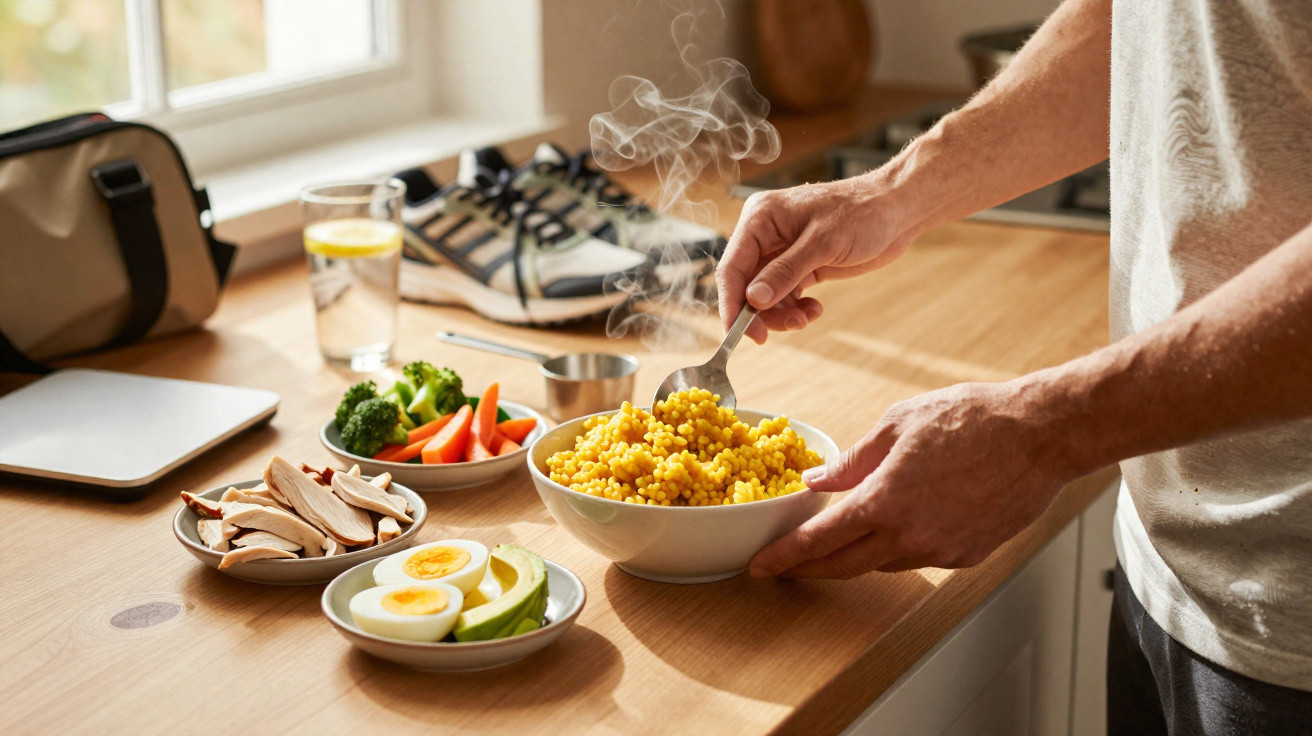
Brazilian corn couscous can fit into a balanced diet when it is treated as more than a basic side dish and paired with more substantial ingredients. Made from maize flakes and steamed, it provides energy, convenience and flexibility for different times of the day.
Why can Brazilian corn couscous be part of a diet?
Brazilian corn couscous is a traditional maize-based dish, widely eaten at breakfast as well as with main meals. As it supplies easily digested carbohydrates, it is useful for creating quick dishes, particularly when paired with proteins, fibre and vegetables.
Its adaptability is another advantage. The same couscous can be used as the foundation for a salad, served as a warm accompaniment, used as a filling or eaten as a light meal before exercise. The ingredients added alongside it determine whether the dish is more nutritious or more heavy.
Some pairings make couscous more balanced:
- With eggs: raises the protein content and helps increase fullness.
- With shredded chicken: makes it a more complete savoury meal.
- With vegetables: brings fibre, colour and bulk to the plate.
- With fresh herbs: boosts flavour without relying on high-calorie sauces.
- With nuts: provides crunch and healthy fats in a small amount.
How can Brazilian corn couscous be used as a base for healthy dishes?
One practical option is to use couscous as the base for warm or cold salads. Carrot, courgette, tomato, cucumber, spinach and leafy greens can increase the fibre, vitamins and minerals, making the meal more colourful and complete.
For those who favour savoury dishes, couscous can be topped with chicken, tuna, hard-boiled eggs or chickpeas. These choices improve the nutritional balance by pairing carbohydrate with protein, making the meal less likely to be merely energy-giving and insufficiently sustaining.
Which ingredients make Brazilian corn couscous more nutritious?
Fresh herbs and spices are valuable additions. Parsley, coriander, mint, basil, turmeric, black pepper and saffron add fragrance without requiring too much salt or fat. This straightforward change enhances the flavour and makes the dish more interesting.
Nuts can also be included, provided the quantity is small. Walnuts, Brazil nuts and almonds contribute a crisp texture, magnesium, vitamin E and unsaturated fats, but they should be used sparingly so that a light portion does not become an overly calorie-dense and substantial meal.
To create variety without overdoing it, try these additions:
- Tomato, cucumber and leafy greens for a cold version.
- Courgette, carrot and spinach for a sautéed version.
- Chicken, egg or tuna to increase protein.
- Chickpeas for a more substantial vegetarian alternative.
- Chopped nuts in a small quantity for crunch.
When does Brazilian corn couscous work as a light pre-workout meal?
Because it is a source of easily digested carbohydrates, couscous can be a suitable choice before physical activity, especially when eaten in a moderate portion. The aim is to provide energy without making the stomach feel heavy, maintaining comfort and readiness.
For this purpose, simpler combinations tend to work best. A small serving with egg, banana or a drizzle of olive oil may be enough, depending on a person's routine and exercise time. Very fatty preparations can hinder digestion and performance.
How can portions be controlled without removing Brazilian corn couscous from the routine?
Anyone wishing to include couscous in a healthy diet should pay attention to the serving size and accompaniments. A balanced portion generally works best with protein, vegetables and little fat, while avoiding excess sauces, cheese and processed meats.
Couscous does not need to be removed from the menu for eating habits to become healthier. The key is to vary the recipes, manage the extras and build meals with more fibre and protein, keeping food simple, tasty and suited to everyday life in a balanced way.





Comments
No comments yet. Be the first to comment!
Leave a Comment