
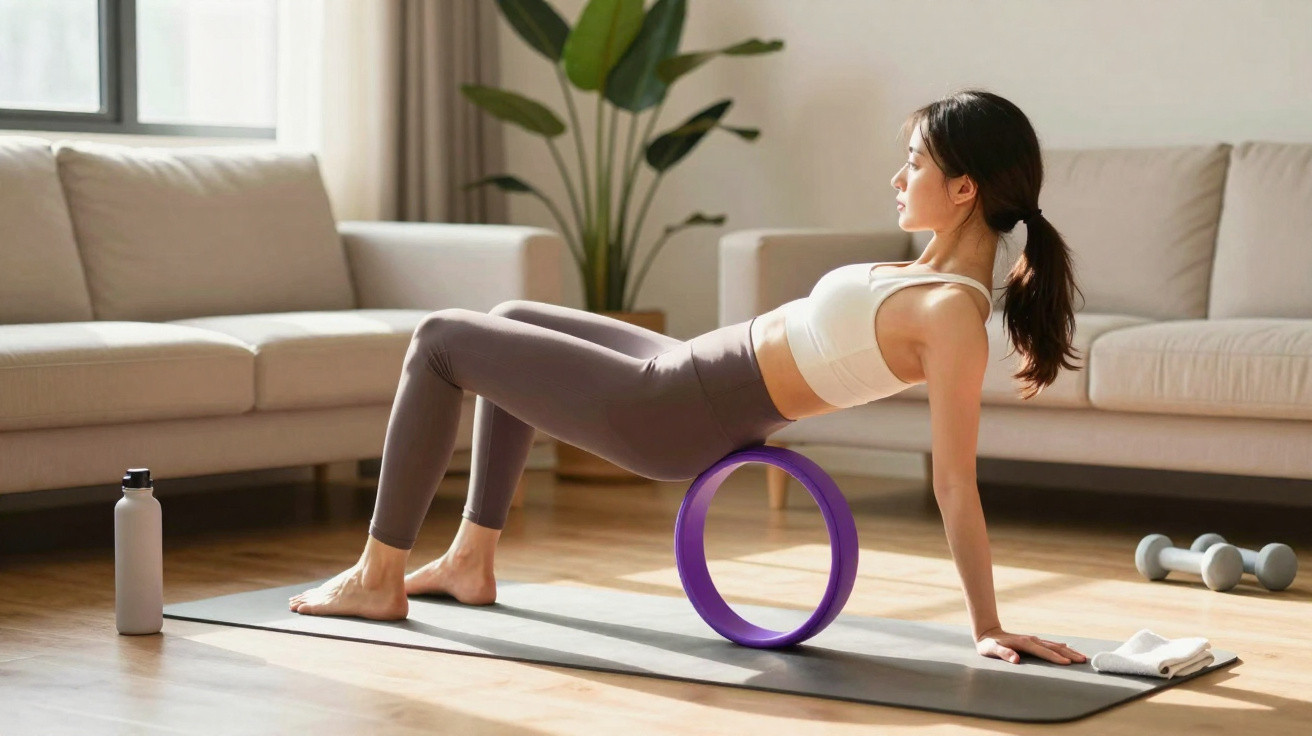
A modest-looking ring from the budget end of the market is currently getting people talking: a Pilates ring costing around €4 at Action is being celebrated on social media and fitness forums as a compact aid for firmer abs, legs and glutes. The claims sound tempting, but what can it actually do, and who is it worth buying for?
What is behind the buzz around the affordable Pilates ring
Visually, there is little remarkable about the ring: it is a flexible plastic or fibreglass circle, usually fitted with two padded grips. There is no advanced technology, app or display. Even so, it is currently finding its way into plenty of shopping baskets, particularly among people who want to work out at home.
The reason is that, within the Pilates method, the ring is used to activate the so-called deep muscles in a targeted way. These are the muscles that are neither visible nor easy to reach, yet they are crucial for posture, stability and body tension. They chiefly include the deep abdominal muscles, the pelvic floor and muscles surrounding the spine.
“The ring creates resistance and forces the core to stay stable. That is precisely what makes the workout so effective for the abs and posture.”
Using it looks straightforward: squeeze the ring with your hands, thighs or arms. Pressing it together creates tension, while releasing it requires continued control. This combination engages several areas at once:
- Abdominal muscles, particularly the deep layer
- Inner and outer thighs
- Chest and shoulder muscles
- Back extensors and muscles around the spine
That versatility is exactly what makes the ring appealing: one lightweight piece of equipment can be used to work almost the whole body.
A flatter stomach: what the ring can and cannot do
Put simply, no ring, belt or “miracle shorts” can make fat disappear specifically from your stomach. Fat loss always happens across the whole body and is primarily influenced by calorie balance, everyday movement and hormones. Anyone claiming otherwise is selling an illusion.
Even so, a Pilates ring can alter how the stomach looks, though it does so differently: through muscular tension and posture.
Why deep abdominal muscles make such a difference
The focus is on the transverse abdominal muscle, or transversus. It acts like an internal corset, drawing the abdomen inwards and stabilising the torso. Training this muscle regularly can lead to the following:
- The stomach appears more upright and less protruding when standing or sitting.
- The waist becomes more defined, even if little changes on the scales.
- The back is placed under less strain because the core provides better support.
With many traditional exercises, such as rushed crunches, it is mainly the superficial muscles that work. The deeply positioned transversus often remains fairly inactive. Ring training, by contrast, makes the body stabilise its centre; otherwise, you will tip over or lose control of the movement.
“Regular, controlled exercises with the ring subtly tone the core, without a hardcore workout or hours-long sessions.”
Why the Action ring is ideal for people who dislike exercise
The ring’s appeal is not only down to its price. It also fits neatly into an everyday life that may be comfortable but is realistic. For many people, motivation itself is not the problem; exercise simply becomes too complicated, with journeys to the gym, packed classes and expensive memberships.
The affordable Pilates ring scores on several fronts:
- Simplicity: No settings, assembly or technical questions.
- Compact size: The ring can be tucked into a cupboard, under the bed or beside the sofa.
- Short sessions: Five to ten minutes are enough, provided you actually do them.
- Easy to fit into daily life: Exercises can be done while watching a series, during a home-working break or first thing in the morning.
This low barrier to entry makes it more appealing to many people than an ambitious exercise plan that is gathering dust in the calendar after three days.
What a mini workout with the Pilates ring can look like
Anyone starting with the ring should take it slowly and stay focused. Here is one possible short routine for beginners:
Upper-body tension while seated
Sit upright on a chair, hold the ring in front of your chest and place your hands on the grips. Squeeze it slowly, hold for three seconds, then release, while actively drawing your stomach inwards. Do 10–15 repetitions.Activate the thighs and pelvic floor
While seated, place the ring between your thighs, just above the knees. Squeeze it slowly, hold, then release. Keep your stomach gently engaged and your back upright. Do 10–15 repetitions.Side abdominal muscles while lying down
Lie on your back with your knees bent and the ring between them. As you exhale, squeeze the ring and tilt your pelvis very slightly, as if gently pressing your lower back into the floor. Do 8–12 repetitions.
“Less is more here: precise technique, calm breathing and regular repetition achieve more than wild, rapid movements.”
Who the affordable ring is for – and its limitations
The Pilates ring is particularly suitable for people who:
- want to tone their stomach and improve their posture;
- would like a gentle start to exercise;
- have limited space and budget for fitness equipment;
- are looking for something to complement walking, yoga or light strength training.
Anyone with significant excess weight, acute back problems or pelvic-floor issues should speak to a doctor or physiotherapist first. Especially where lower-back pain is involved, incorrect training can do more harm than good.
For highly ambitious strength-training enthusiasts, the ring is not a replacement for intensive barbell or kettlebell workouts either. It is an additional tool, not an all-round solution.
A small tool with a big everyday impact
Perhaps the Pilates ring’s greatest strength is that it lowers the threshold for doing anything at all. Rather than committing to an hour of exercise three times a week, just a few minutes a day are enough at the start. People who stick to these brief sessions consistently often notice after a few weeks that:
- Their trousers feel a little more comfortable.
- Their stomach feels firmer, including in everyday life.
- Back pain from prolonged sitting eases.
Because the equipment costs only around €4, the choice is easier too: there is no need for a major investment to find out whether this type of training suits your own life.
How to combine the ring with other habits
To enhance the effect, the ring can be paired with simple everyday strategies:
- taking more steps each day, such as going for walks or using the stairs instead of the lift;
- eating slightly less sugar and fewer ready-made snacks;
- drinking one or two extra glasses of water;
- sitting consciously and upright at your desk.
Over time, this creates an overall approach of gentle movement, somewhat improved nutrition and targeted abdominal and posture training, without radical diet plans or professional-level workouts.
Anyone who has wanted a firmer stomach for some time but struggles with complicated fitness routines may find a practical starting point in this affordable Pilates ring from Action: it is not a magic wand against stomach fat, but it is a small tool that can make the body feel noticeably more stable step by step.
Comments
No comments yet. Be the first to comment!
Leave a Comment