
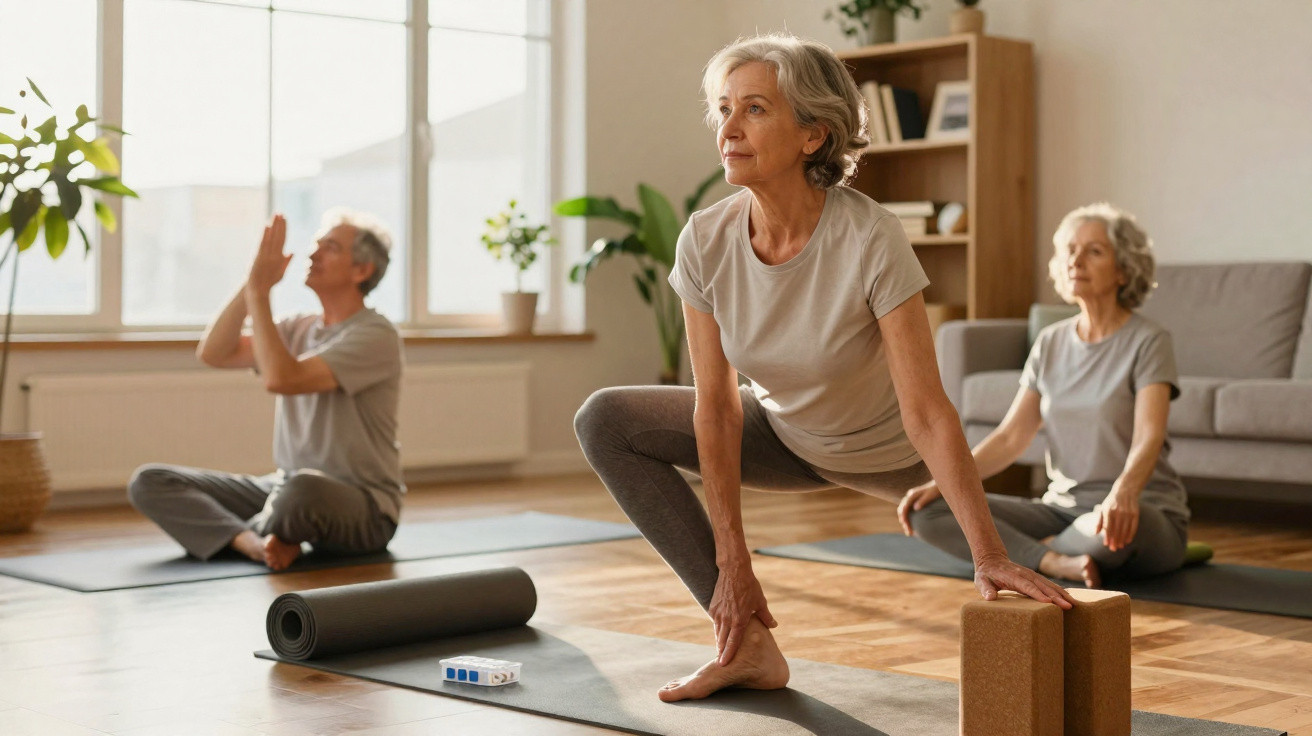
For many people past 60, remaining active can become more difficult. Yet one gentle practice at home can steadily support both physical and mental wellbeing.
Older adults often associate fitness with fast-paced walks or busy swimming pools. However, a more peaceful alternative is increasingly recognised as a genuine game-changer for health.
Ageing bodies and changing routines
People are living longer than earlier generations, frequently far beyond their 60s. But longevity seldom comes without challenges. Joint discomfort, disrupted sleep, memory slips and a smaller social network can all become more common. Retirement may also leave long periods without structure, which can feel tiring rather than restorative.
As muscle mass declines and balance becomes less reliable, ordinary activities can start to feel demanding. Rising from a chair, going upstairs or carrying shopping may bring worries about falling. In turn, that concern often leads people to reduce their movement, accelerating the very decline they fear.
Health bodies repeatedly highlight the same group of age-related concerns:
- cognitive decline and memory difficulties
- insomnia and broken sleep
- low mood, anxiety and social isolation
- type 2 diabetes and high blood pressure
- chronic lung disease and shortness of breath
- osteoarthritis and ongoing back pain
- vision problems that reduce confidence and mobility
When several of these issues occur at once, independence may be lost rapidly. Families can then be faced with hard decisions about assistance and residential care. In this context, manageable activities that maintain strength, balance and mood become much more than a pastime. They can serve as daily protection for independence.
Ageing well does not hinge on running marathons. It often depends on small, regular movements that keep the whole system responsive.
Why yoga stands out over walking and swimming
Walking and swimming are frequently recommended for seniors, and both offer obvious advantages. However, poor weather, packed venues, transport difficulties and painful joints that do not tolerate long steps or cold water can make them hard to sustain. Yoga provides another option.
In contrast to brisk walking or swimming lengths, yoga does not depend on demanding cardiovascular exercise. It can be practised slowly, quietly and with extensive modifications. Research nevertheless continues to indicate wide-ranging benefits for adults over 60 that extend well beyond simple stretching.
Yoga for seniors is built around three main components:
- gentle postures that improve flexibility and strength
- breathing methods that soothe the nervous system
- brief intervals of concentration or relaxation
With just a mat, a chair and a bit of patience, yoga turns the living room into a small laboratory for balance, strength and calm.
What research shows about yoga after 60
Reduced pain and less reliance on pills
Studies involving older adults indicate that practising yoga regularly may relieve persistent pain, particularly in the lower back, knees and neck. A study published in Pain Medicine, for example, reported that planned yoga programmes eased long-term pain and, in certain cases, reduced the need for some pain medicines.
Gentle postures encourage circulation in tight areas and activate deep stabilising muscles that are scarcely used during standard walking. Gradually, joints can move with greater ease, making everyday activities less exhausting. Many people say they are more comfortable when sitting, standing and sleeping, with positive effects on their mood as well.
Stronger balance and fewer falls
Falls are among the greatest risks to independence in later life. Reduced ankle strength, slower responses and spinal stiffness can all play a part. Yoga addresses these factors at the same time. Standing poses done beside a chair or wall test balance in a safe, controlled setting. Rather than becoming rigid, the brain learns to respond more quickly to minor sways.
Regular yoga practice strengthens the quiet, stabilising muscles that protect older adults from slips, trips and sudden loss of balance.
Greater awareness of the body is also valuable. When seniors can feel how their weight is positioned through their feet, they can correct themselves before a small error becomes a fall.
Blood pressure, breathing and heart health
Gentle yoga is associated with lower blood pressure and a reduced resting heart rate. Breathing slowly through the nose helps move the body away from a constant “fight or flight” response. This more settled state reduces pressure on the arteries, an important consideration for people with hypertension or diabetes.
For people living with chronic lung conditions, supported poses that open the chest and breathing practices may improve the sensation of having enough air. They are not a substitute for medical care, but they can often lessen the anxiety linked with breathlessness.
Mood, memory and sleep
People who practise regularly commonly describe improved concentration and a more even mood. Brief mindfulness exercises, including observing the breath for a minute or checking the body for tension, gently develop attention. This may aid cognitive function and interrupt patterns of nighttime rumination.
By slowing the breath and anchoring attention, yoga gives many older adults their first real tool for quieting the mind at bedtime.
Better sleep can then contribute to improved blood sugar management, reduced inflammation and greater energy for daytime movement. This cycle is significant when seeking to postpone or lessen the effects of age-related health conditions.
Starting yoga safely after 60
Adjusting yoga for real bodies
Yoga after 60 does not require pretzel-like flexibility. Indeed, pushing too hard in later life can quickly result in injury. Chair yoga, poses supported by a wall and short, regular practices are often more beneficial for seniors than long, ambitious sessions.
Typical adaptations include:
- using a chair for seated twists, forward bends and side stretches
- holding a worktop or wall during balancing postures
- putting cushions beneath the knees or wrists to limit pressure
- keeping practices to between 10 and 30 minutes, including rest breaks
Doctors commonly recommend seeking advice before starting where there is severe osteoporosis, uncontrolled blood pressure, recent surgery or serious eye conditions. A personalised programme can still be appropriate in many instances, but the range of movement and intensity need to be adapted.
A straightforward weekly yoga plan
| Day | Session idea | Approx. time |
|---|---|---|
| Monday | Chair yoga for spine and shoulders | 15–20 min |
| Wednesday | Standing balance work with wall support | 10–15 min |
| Friday | Gentle floor stretches plus breathing practice | 20–25 min |
| Sunday | Short relaxation and guided body scan | 10 min |
Even this simple routine amounts to around an hour each week of focused, joint-friendly movement with a substantial mental element.
How yoga works alongside other habits
Yoga need not take the place of walking, cycling or swimming. For many older adults, it is most useful as the element that helps make other pursuits safer. Better core strength and balance can help the body cope with uneven pavements, bus steps and gardening with less effort.
Pairing yoga with brief daily walks, light resistance training using bands or bottles, and social pursuits such as dance classes or walking groups creates a wide safety net against decline. Every component supports different areas: the heart, muscles, coordination and social contact.
Some people use yoga as a planned pause before eating or taking medication. Five unhurried minutes on the mat may curb stress-related eating, reduce blood sugar fluctuations and make medication schedules feel less hurried. Others choose an evening practice to signal the transition from daytime responsibilities to rest, supporting sleep and, indirectly, immune function.
For seniors who are reluctant to use gyms or join team sports, yoga brings together privacy, affordability and established physical and mental health benefits. When practised sensibly and consistently, it can make ageing feel less like a steady decline and more like a sequence of modest changes that preserve a remarkably active life.
Comments
No comments yet. Be the first to comment!
Leave a Comment