

Japanese scientists have identified the “seed” that sets Alzheimer’s disease in motion in the brain. This landmark breakthrough could pave the way for future treatments that stop the disease at its origin.
In people with Alzheimer’s disease, protein fragments known as beta-amyloids gradually build up in the brain. As they cluster together, they create toxic plaques that suffocate neurons and destroy memory. Although this process was already understood, one key question remained: what causes these proteins to begin clumping together in the first place?
Researchers at Tokyo’s National Center of Neurology and Psychiatry have now pinpointed the trigger. Their study, published in the journal Brain Communications, highlights the role of a specific molecule that had previously received little attention. It is a highly particular assembly of large soluble proteins, which they have named Peak 1. In the brain, it acts as a true “seed” or spark: its presence alone is enough to start the chain reaction that produces destructive plaques.
Every experiment pointed to the same finding
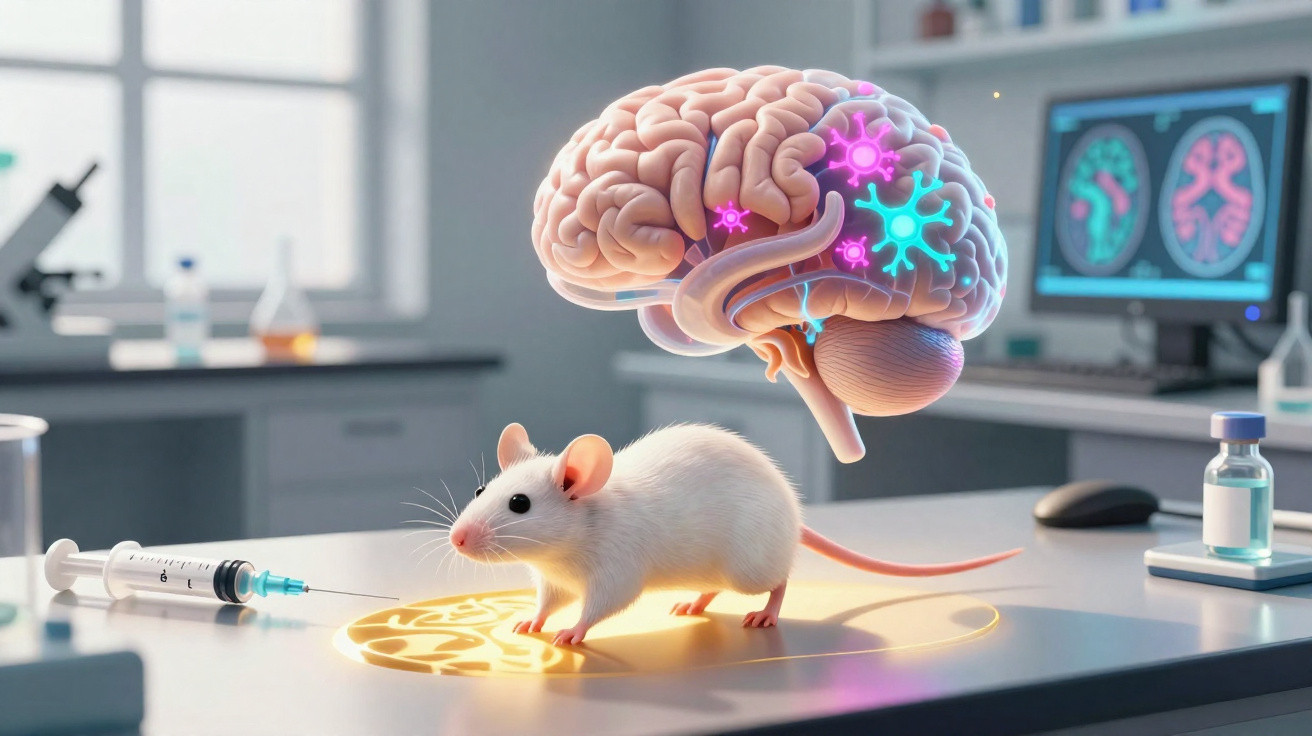
To obtain these promising results, the research team separated beta-amyloid proteins found in the brain according to their size. This produced three distinct groups. In tests, only the fraction containing the largest assemblies, Peak 1, triggered the formation of new plaques four months after being injected into the brains of young mice. The two smaller categories had no effect.
The scientists also found the same Peak 1 molecules in brain samples from people who had died with Alzheimer’s disease. When these were injected into rodents, they caused the same build-up process. Finally, to test their hypothesis, the researchers deactivated Peak 1: without this molecule, the plaque-forming process stopped immediately. This could radically alter the approach to treating the disease.
Alzheimer’s disease in figures
The leading cause of dementia in older people, Alzheimer’s disease is a neurodegenerative condition that progressively impairs memory and cognitive functions. In France, an estimated 1.4 million people are affected, with almost 225,000 new cases diagnosed each year.
A treatment aimed specifically at this “seed”
At present, the latest-generation medicines remove plaques once they have already formed in the brain. Targeting Peak 1 directly could instead halt the problem at its source, since Alzheimer’s is a disease that develops slowly.
“As our study suggests that the identified Peak 1 may function as a ‘seed’ that initiates plaque formation, it should become a promising target for new treatments intended to suppress plaque formation itself,” the researchers explain. At the same time, they are working on technologies that could detect this protein at an early stage, using a simple blood test or imaging examinations.
Better still, the team has already begun developing a molecule capable of neutralising Peak 1. Patience will still be required: between selecting compounds, testing their effectiveness and conducting clinical trials, the scientists expect it to take around ten years before a medicine emerges.





Comments
No comments yet. Be the first to comment!
Leave a Comment