
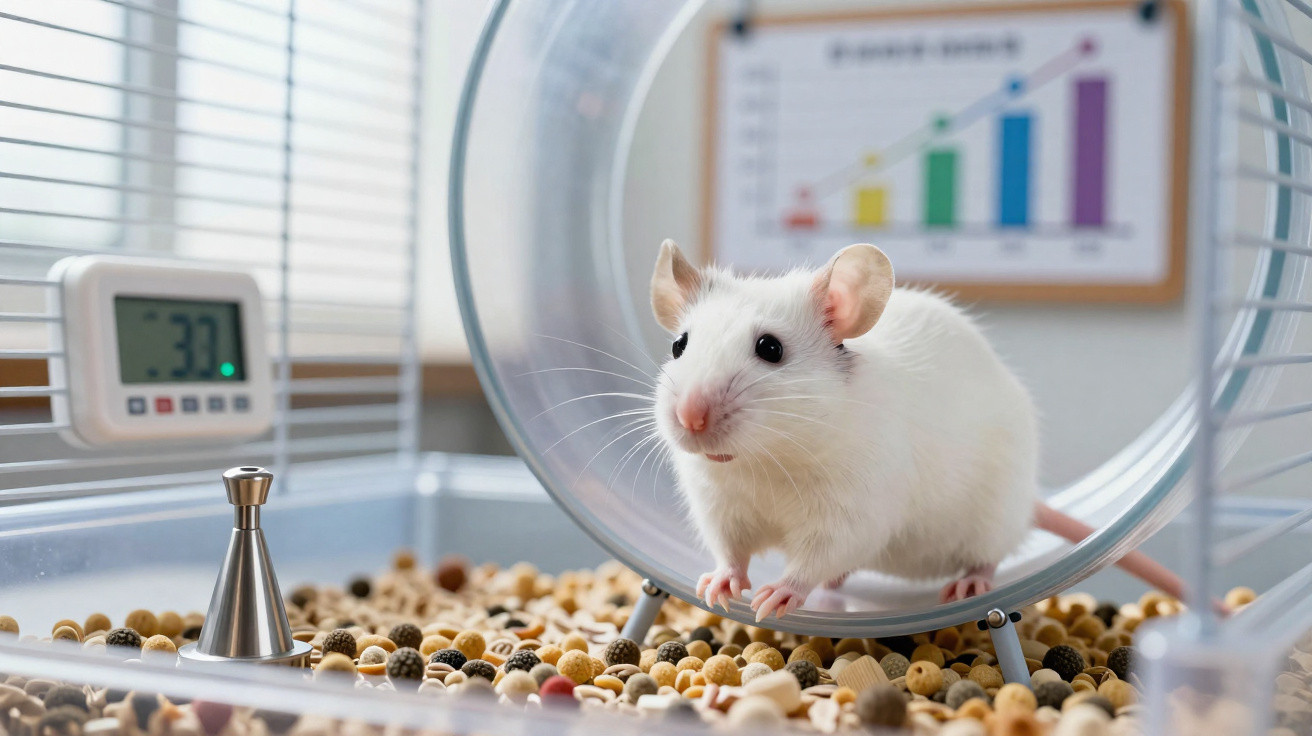
For more than a century, scientists have known that mice and rats tend to live longer when given less food. However, a new study suggests that the key may be the gap between energy consumed and energy burned, rather than simply lower energy or protein intake.
Energy balance and mouse longevity
Scientists in the US and UK examined groups of mice receiving the same diets and found that animals housed in cooler conditions lived longer, healthier lives. The crucial difference was that these mice needed to expend more energy to remain warm.
The findings indicate that looking at energy intake alone will not be sufficient to explain how diet shapes health and ageing, according to the team, led by nutrition scientist Daniel Smith at the University of Alabama at Birmingham and biological scientist Sharon Mitchell at the University of Aberdeen in Scotland.
The discovery could eventually enable people to gain similar longevity advantages without following highly restrictive diets.
"It's not simply the caloric intake or the macronutrient or protein intake or any one component," Smith told Carolyn Beans for a PNAS Journal Club news story covering the research.
"It is the interaction of those relative to the energy balance overall."
There is still no agreement on precisely why calorie reduction improves rodents' health and lifespan.
One explanation proposes that the benefits result simply from eating less food, or less of one particular macronutrient. Some studies do suggest that lower consumption of certain proteins may play a role. Another possibility is that the temporary energy imbalance produced by calorie restriction generates lasting health benefits.
Cooler conditions tested with identical diets
The researchers reasoned that if lower calorie and protein consumption alone explained the benefits, health indicators should not differ among mouse groups eating the same food. Yet, if the benefits arise because the requirement to stay warm leaves less energy available, mice kept in colder conditions should show better health and longer lifespans when their food consumption matches that of a warmer group.
For the experiment, groups of mice in warmer settings could eat as much as they wanted for 12 hours each day. Mice housed in cooler environments were ‘pair-fed’ diets matched to those of their warmer counterparts, ensuring every group received the same amounts of calories, protein and other nutrients.
A short-term trial monitored mice maintained at 10 °C, 21 °C or 30 °C for 11 weeks. Biomarker assessments found that the animals in the cooler settings gained hormonal, metabolic and physiological advantages. They also lost weight relatively quickly and maintained that loss.
Health and lifespan effects in cooler cages
In a longer study, mice were followed from the age of 12 weeks until the end of their lives. Animals kept at 22 °C lived roughly 20 percent longer than mice fed identically but kept at 27 °C. The mice in cooler cages also remained healthier as they grew older, while balance, coordination and neurological function deteriorated more rapidly in the warmer group.
"Thus, energy balance (energy intake minus energy expenditure) was the primary contributor to the benefits observed," the team writes.
Cooler temperatures created the energy imbalance in this research without potential effects from medication or exercise, although cold itself might exert its own influence. Naturally, most people would not consider exposure to cold a practical way to create an energy imbalance, and it is unknown whether doing so would be beneficial for humans.
The researchers are considering whether other influences, including certain medicines, might improve health by disrupting the body's energy balance. Whether widely used GLP-1 analogue medicines such as Ozempic can deliver comparable long-term health gains also remains uncertain.
"These results provide strong evidence that dietary energy intake alone is unnecessary for predicting the health and longevity benefits of sustained dietary interventions," the authors conclude.
The research was published in the journal GeroScience.






Comments
No comments yet. Be the first to comment!
Leave a Comment