
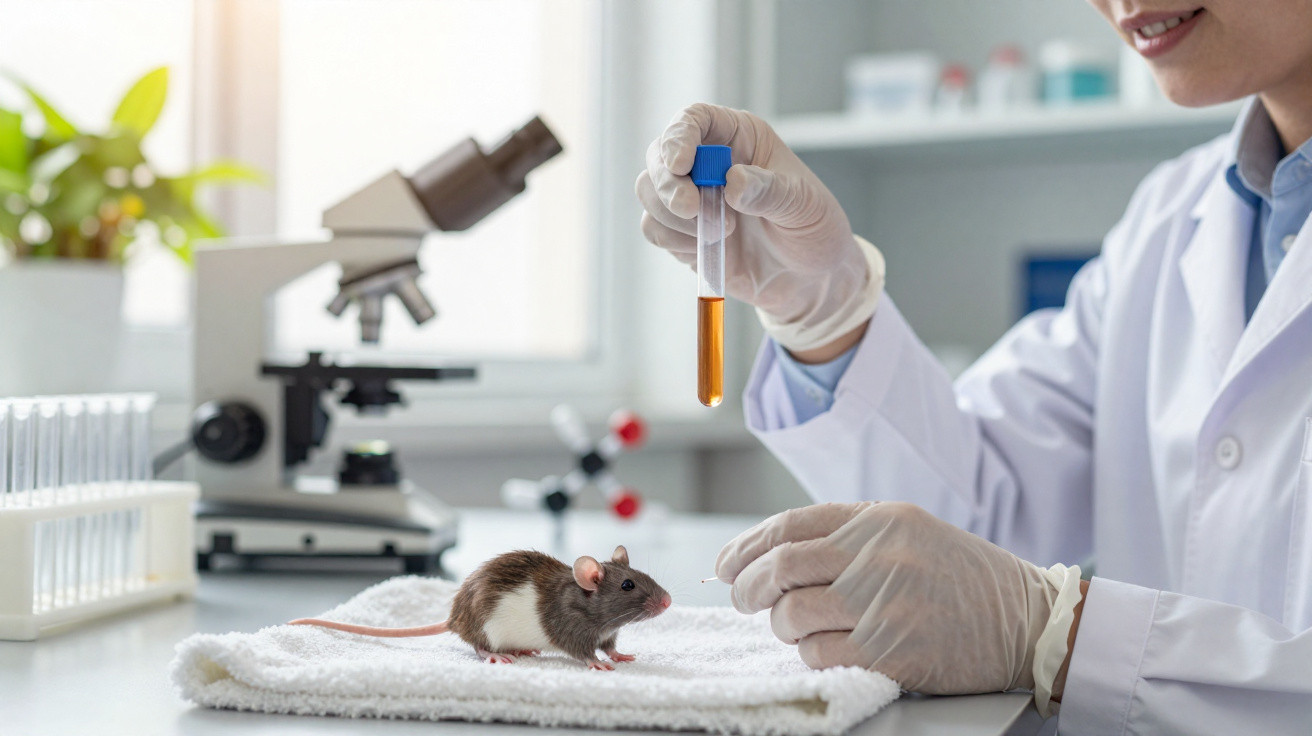
Mice genetically engineered to develop Alzheimer’s disease have seen their symptoms disappear following an experimental treatment. Could this mark the first glimmer of hope for the millions of people living with this serious condition?
Since Alzheimer’s disease was named in 1901, the medical dogma has been that it follows a one-way course: once a patient develops the condition, progressive cognitive decline is considered inevitable. Although major advances have been made in detecting the disease, we still do not know how to restore the cognitive functions of affected people.
Yet a small miracle may just have occurred. Researchers at Case Western Reserve University in the United States have announced that they successfully “cured” mice with advanced Alzheimer’s disease. Published in the journal Cell Reports Medicine on 22 December, the study indicates that, in certain circumstances, a brain damaged by the disease could repair itself and resume normal function. Never before has this field of research come so close to the possibility that the condition may one day be reversible.
NAD+: the neurons’ electrical battery as a possible cure
For two decades, researchers have struggled to clear the brain’s “rubbish bins”: amyloid protein plaques that build up in people with the disease. These toxic protein clusters accumulate between neurons, eventually choking them and disrupting communication in the brain. The assumption was that memory would return once this debris had been removed, but eliminating it has never made it possible to rebuild synaptic connections that have already been lost.
Although this therapeutic strategy was the best option available, it targeted symptoms rather than the cause. The team behind this breakthrough therefore reversed the logic: if waste is accumulating, perhaps it is because neurons no longer have enough energy to do the clearing. Instead of focusing on the plaques, they turned to the cells’ “power station”: a molecule known as NAD+.
NAD+ is the universal fuel of our cells, a coenzyme essential to every vital reaction. In people with Alzheimer’s disease, this energy reserve falls dramatically. Deprived of this crucial engine, neurons run out of power and can no longer maintain their circuits, fight inflammation or remove their own toxins. It is this energy blackout that gradually kills brain cells.
P7C3-A20 restores NAD+ in Alzheimer’s disease mice
By injecting the mice with a compound called P7C3-A20, a neuroprotective agent that promotes neurogenesis, the researchers managed to “fill up” NAD+ levels in their brains, even though the animals were already severely affected by the disease. Despite substantial damage in some cases, their neurons revived and the mice regained all of their cognitive abilities. Quite remarkable.
Human treatment in sight?
While the results in rodents were complete, one pressing question remains: could this miracle be reproduced in humans? According to the researchers, there will probably not be one pill that works for everyone. Because the disease can be triggered by very different causes, any future treatments are likely to be tailored to the individual. Each patient could receive a specifically dosed combination of medicines designed to repair their own brain.
The promise raised by injected NAD+ is strong enough that experts are even stepping beyond their usual caution. Professor Tara Spires-Jones of the University of Edinburgh believes that treatments capable of giving patients a “normal life” within five to ten years may become available.
What makes scientists so confident is that P7C3-A20 protected two types of neurons damaged by entirely different assaults. It saved cells suffocated by amyloid plaques, in the amyloid form of Alzheimer’s disease, while also repairing cells whose internal fibres had been broken by tau protein, another central pathological pathway in the disease. Whatever mechanism was destroying the mice’s neurons, restoring their NAD+ levels gave them the strength to survive and function again.
However, caution is essential: the human brain remains far more complex than that of a rodent, and there is no guarantee that the treatment will be as powerful when administered to patients. The researchers themselves stress that these findings do not predict the outcome of any future human trials, which will need to assess not only effectiveness but also the safety of prolonged P7C3-A20 administration. The authors do not claim to have identified a universal treatment, but for the first time it is possible to view this disease as something other than an irreversible process. In medical history, that is unprecedented and, according to the authors, justifies the launch of rigorously supervised clinical trials in humans.






Comments
No comments yet. Be the first to comment!
Leave a Comment