
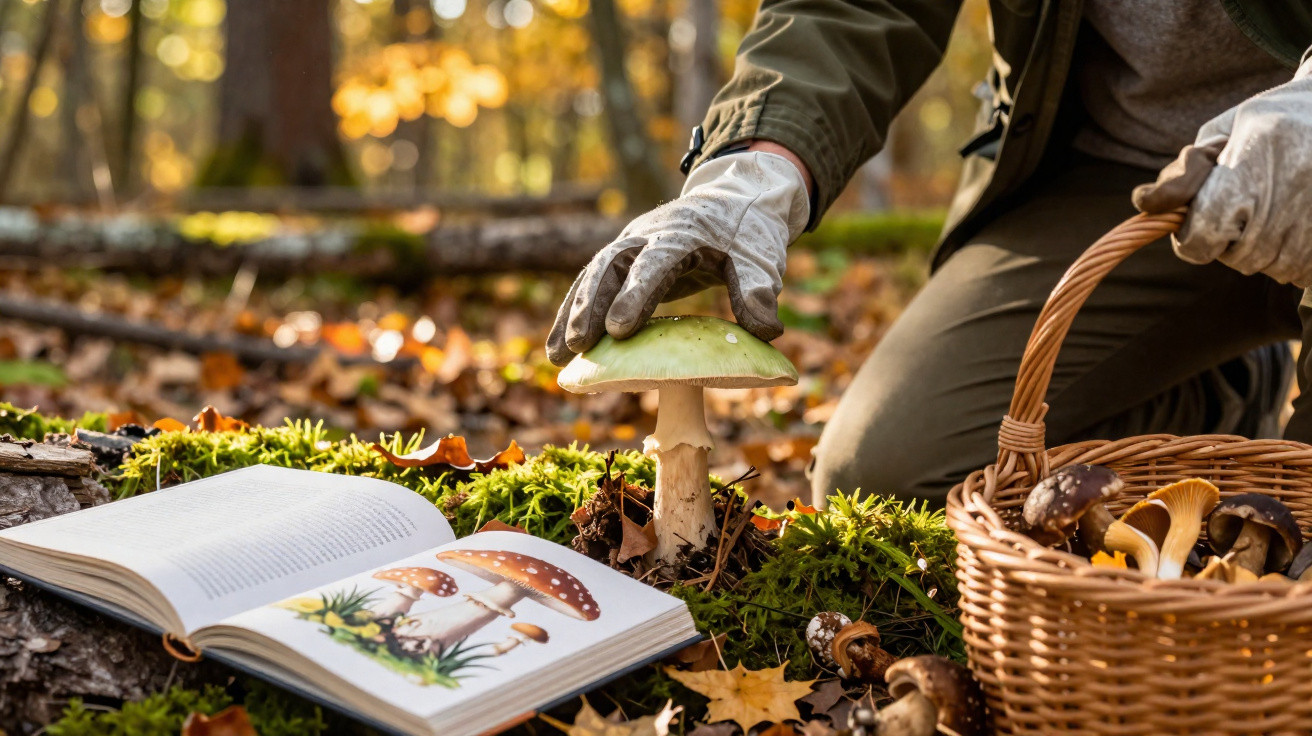
Scientists now recognise that the death cap is far from static. On different continents, it is altering its chemistry, mating behaviour and choice of host trees. This capacity to adapt carries serious implications for foragers, clinicians and anyone planting imported woodland.
From ancient intrigues to modern kitchens
The death cap, Amanita phalloides, has long been associated with human history. Roman records recount that Emperor Claudius died following a suspicious mushroom meal. Similar rumours later surrounded the death of Pope Clement VII. The fungus may well have been involved, although people at the time had no means of identifying it by name.
It continues to be eaten accidentally today. In Australia, a home-cooked meal containing misidentified death caps killed three members of one family. In British Columbia, Canada, doctors have documented severe poisonings caused by confusion with edible mushrooms familiar in parts of Asia. Such incidents recur because the death cap can resemble safe species at first glance and often grows beside footpaths, in parks and beneath suburban trees.
Its danger comes from a lethal mix of camouflage, patience and chemistry that strikes after a false calm.
How the death cap keeps spreading
Native to Europe, this fungus has become established throughout North America, Australia, East Asia and South Africa. It travelled with nursery stock and timber before taking hold in soils where those trees were planted. After establishment, it functions as a resident species rather than an outsider.
Partners in the soil
Death caps create ectomycorrhizas, close associations with tree roots. Through this arrangement, they exchange minerals for sugars and connect directly with the forest’s underground economy. In Europe, they associate with oak, beech and chestnut. Outside their original range, they have adapted to additional hosts, including pines and, in some Southern Hemisphere locations, eucalyptus. This adaptability enables the fungus to accompany international trade and establish itself in fresh woodlands and parks.
A shortcut to reproduction
Research in California uncovered a further adaptation. In certain populations, the fungus can produce fruiting bodies and spores without the conventional two-parent mating process. Scientists identified homokaryotic mushrooms - effectively functioning with one nucleus - that generated viable spores. For an invasive species with few available mates, this ability to reproduce independently offers an early advantage.
One mushroom, one nucleus, and still a fresh cloud of spores: a simple recipe for rapid footholds far from home.
Inside the toxin’s playbook
Alpha-amanitin, the death cap’s defining toxin, stops RNA polymerase II inside human cells. Protein production then ceases. Liver cells are affected first because they filter the toxin and recycle it through bile, extending exposure through enterohepatic circulation. The progression of illness is misleading: vomiting and diarrhoea usually start within 6–24 hours, followed by an apparently reassuring pause. While the toxin continues cycling through the liver, acute liver and kidney failure can occur between days two and four.
Medical teams respond intensively with fluids, silibinin where it is available, and sometimes N-acetylcysteine. Some treatment protocols still include penicillin G. If injury is sufficiently severe, transplant teams may be required. No broadly approved antidote currently exists, so prevention remains paramount.
- If ingestion is suspected, call emergency services at once and retain the mushroom for identification.
- Do not wait for pain to subside; the “quiet phase” is part of the danger.
- Contact a regional poisons centre, as available treatments differ between countries and depend on timing.
Genes on the move
The death cap does not possess one unchanging formula for toxicity. Its genome contains groups of toxin genes, including the amatoxin cluster, which differ among populations. Pressures at individual sites vary: soil microbes, fungus-eating insects and competing fungi all influence toxin profiles. This variation helps account for changes in potency and toxin composition between regions, and even from one season to another.
Scientists following North American introductions have connected genetic lineages with particular tree hosts and climate zones. They have also identified local adaptation over only a few decades, an unusually rapid pace for a long-lived forest symbiont. The implication is straightforward: as circumstances shift, this mushroom revises its approach.
Different woods, different neighbours, different poisons: the death cap behaves less like a static species and more like an agile chemical factory.
Why scientists see risk, and opportunity
Although amatoxins alarm clinicians, they also interest chemistry researchers. Alpha-amanitin can be attached to targeted antibodies to form antibody–drug conjugates designed to reach tumour cells. Early-stage oncology studies are assessing versions that deliver the toxin accurately while limiting damage to healthy tissue. Safety is still a major challenge, but the mechanism’s precision makes it appealing for hard-to-treat cancers.
Beyond clinical research, genomics teams use the death cap as a live model of adaptation. How rapidly can gene clusters grow under selection pressure? At what point do invasive fungi begin reproducing alone? These questions have consequences for forestry biosecurity and for anticipating future fungal introductions associated with trade and warming climates.
Look-alikes that mislead even careful foragers
The death cap’s pale green cap, white gills and bag-like volva at its base can easily go unnoticed beneath fallen leaves. Edible species make identification still more difficult, particularly for those relying on guides intended for other regions.
| Feature | Death cap (Amanita phalloides) | Common look-alikes |
|---|---|---|
| Cap colour | Olive to yellow-green, sometimes tan | Giant puffball: white; paddy straw mushroom: brownish cap |
| Gills | White, free to slightly attached | Paddy straw mushroom: pink to brown gills as it matures |
| Base | Bulb with a white sac (volva) | Puffball has no gills or volva when edible; slice to check white interior |
| Spore print | White | Volvariella often leaves a pinkish spore print |
What this means for the UK right now
The death cap is widespread in Britain, particularly beneath oak and beech, and it occurs in urban green spaces as well. A mild, wet autumn can encourage more fruiting bodies. As recreational foraging becomes more popular, encounters are more likely, including among people using overseas guides that do not correspond to local species.
Gardeners and local councils create another limited yet genuine route of spread. Imported young trees can carry ectomycorrhizal fungi in their root balls. Quarantine requirements offer some protection, but they were developed chiefly for plant pests rather than symbiotic fungi. This creates a policy gap as climate zones move northwards and British planting schemes introduce new mixes of trees.
Key points for a safer autumn
- Never consume a wild “puffball” without cutting it neatly in half; stop immediately if there is any sign of a forming cap or gills.
- Reveal the base to look for a volva, as death caps frequently conceal their clearest identifying feature below the soil.
- Treat white gills and a white spore print as signs requiring expert confirmation.
- Teach children and pets not to touch or eat mushrooms; even a small mouthful may cause harm.
The bigger picture: adaptation in plain sight
One species can reveal how organisms respond to pressure. Within a human lifetime, the death cap has demonstrated flexibility in its partners, reproduction and toxins. Such speed suggests that other soil fungi, including species affecting forests or crops, may undergo comparable changes. Monitoring schemes that pair DNA barcoding with tree-planting records could identify fresh introductions sooner and chart regional differences in toxins.
For those interested in practical learning, mycology groups offer supervised walks that keep identification safely observational rather than edible. Take photographs of the cap, gills and base, record the nearby tree, and consult several field guides. Checking the base and making a spore print are useful habits for many species, not solely the death cap.
From a clinical perspective, it helps to think in terms of a timeline. Picture hour zero as ingestion, six to twelve hours as the gastrointestinal attack, then a calm interval that can falsely reassure, followed by a second deterioration as the liver receives the full dose. This framework can encourage families to get help promptly even after symptoms ease. It can also support emergency teams in triaging cases during busy autumn periods.
There is an ultimate irony: the molecule capable of destroying a liver may, packaged differently, someday reduce a tumour. Until then, the safest approach to this mushroom remains simple: look, do not touch, and seek urgent help whenever there is doubt.





Comments
No comments yet. Be the first to comment!
Leave a Comment