
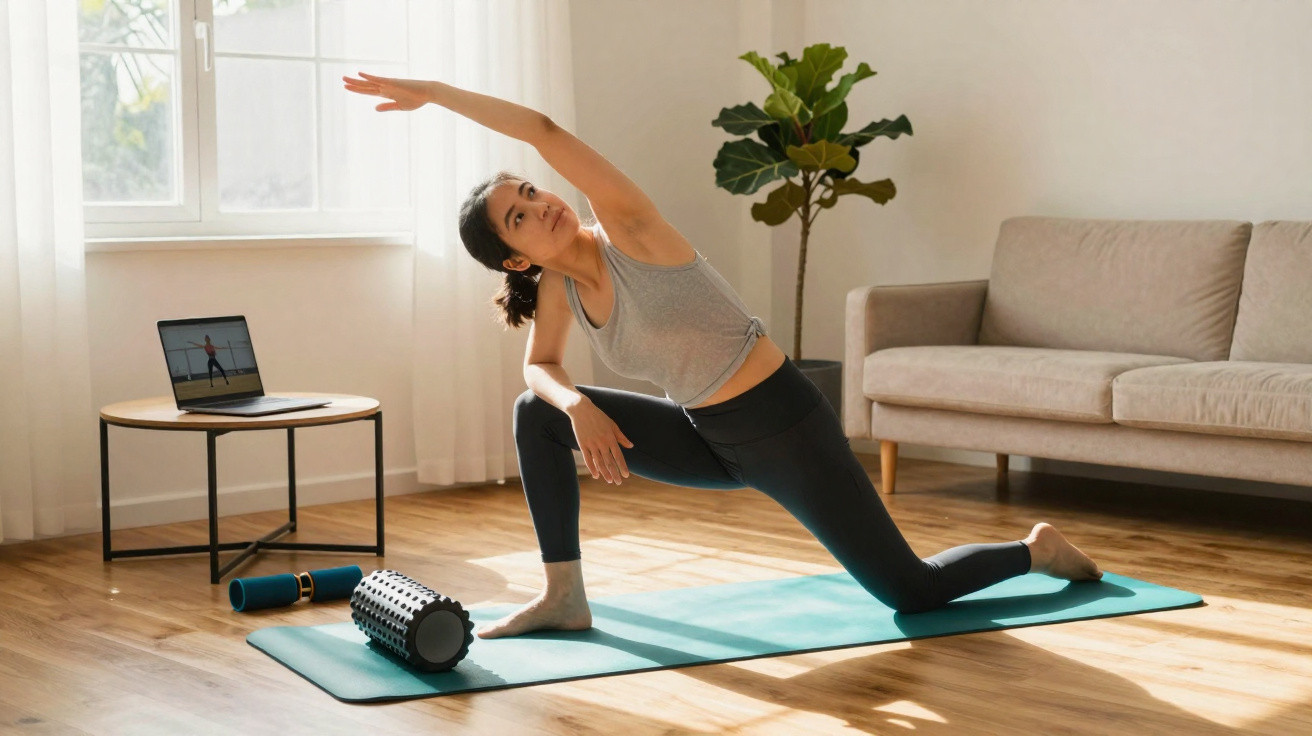
Mobility exercises are among the most effective ways to keep the body agile, ease joint stiffness and maintain good-quality movement over the years. While many people focus solely on strength and endurance, being able to move joints freely is just as important for walking, squatting, climbing stairs and managing everyday tasks without discomfort. Just a few minutes of daily practice can increase range of motion and leave the body feeling lighter and more capable.
Why is mobility so important for the body?
Mobility enables joints to move safely and efficiently. As it declines, the body begins to compensate during movement, raising the likelihood of pain, discomfort and restrictions in straightforward daily activities.
It also supports better-balanced posture, improved coordination, balance and movement execution. As a result, it can help people stay active and comfortable at any age.
What are the best mobility exercises to do at home?
Several straightforward movements can be performed without equipment and target different areas of the body. To demonstrate how to put them into practice, physiotherapist @DrRodrigoLopes created a video guide featuring 6 essential exercises designed to release and restore mobility in the hip area:
How do mobility exercises benefit the joints?
Each exercise works directly on particular joints, encouraging their natural ability to move. With consistent practice, the body can manage day-to-day tasks more efficiently and with less effort.
The exercises below mainly target the lower body, which is vital for stability and locomotion:
- Assisted deep squat: improves mobility in the hips, knees and ankles.
- Quadruped hip mobility: increases the range of motion in the hip joint.
- Wall ankle flexion: promotes more efficient movement when walking and squatting.
When these joints function more effectively, activities such as walking, getting up from a chair and climbing stairs become more comfortable and natural.
How can you include mobility in your daily routine?
Many people think they need to spend long periods exercising to see benefits. In reality, short sessions of five to ten minutes can already produce meaningful results when carried out consistently.
A useful approach is to practise the movements first thing in the morning or after spending extended periods seated. Regularity matters most. Over time, improved mobility supports smoother movement, less muscle stiffness and a greater sense of wellbeing. Combined with healthy habits and regular physical activity, it can help preserve independence and quality of life for many years.



Comments
No comments yet. Be the first to comment!
Leave a Comment