
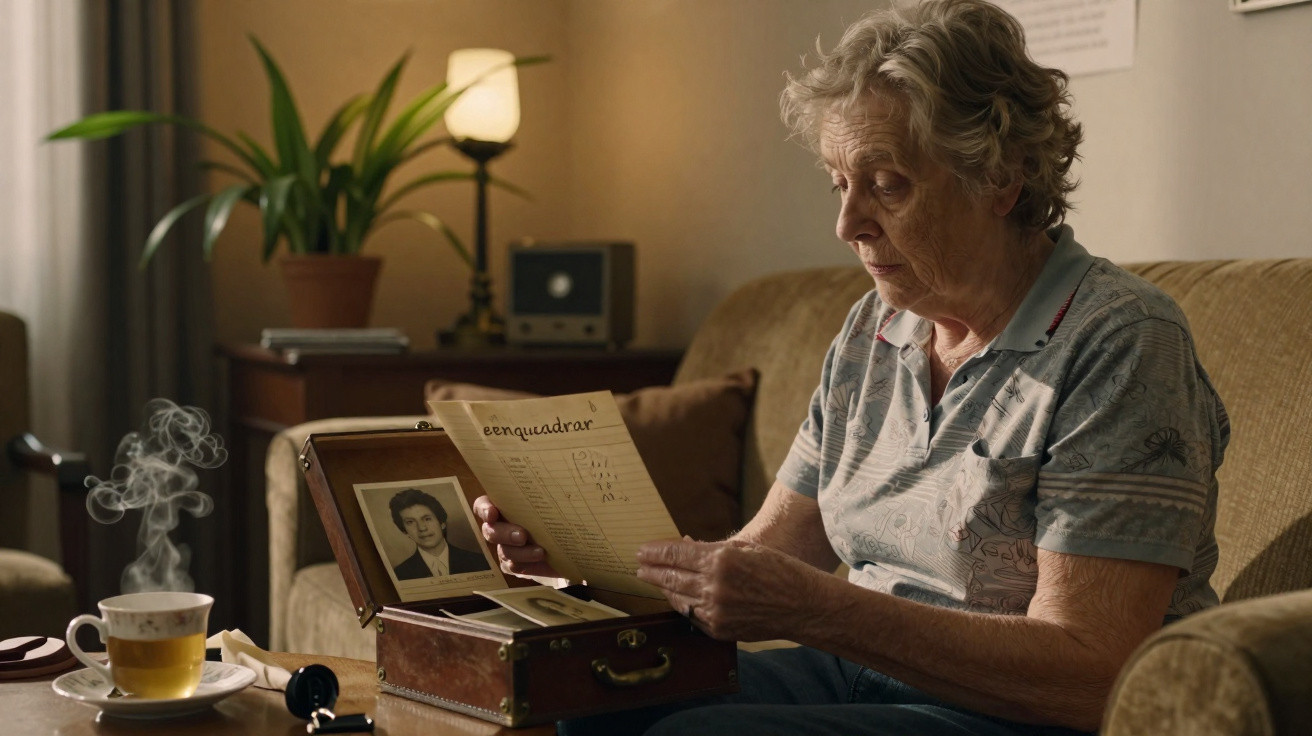
At a family barbecue, three generations sit around the same plastic table while inhabiting entirely different realities. Grandparents who grew up in the 1960s and 1970s laugh while recalling travelling in cars without seat belts, being left alone all day at eight, and being slapped “for their own good”. Their grown-up children respond with a mix of amusement and clenched jaws. The teenagers can only stare in disbelief. To them, these accounts sound less like childhood memories and more like a survival documentary.
No one voices it, yet the strain is unmistakable: what older generations called “toughening up” is now often given another name – trauma.
Somewhere between these two perspectives lies an uncomfortable truth.
The seven “strengths” that were actually survival strategies
Those raised during the 1960s and 1970s were often admired for their “resilience”. They made their own way to school, held back their tears and learnt early not to trouble adults with “nonsense”. To younger people, that generation can appear almost superhuman. They carried on through illness, remained in unhappy jobs and kept secrets that would overwhelm many therapists’ consulting rooms today.
But beneath that much-praised resilience sat seven mental strengths that were, in reality, survival strategies. They enabled children to adjust to a world in which emotions were given very little room. The price of that adjustment was never properly recognised.
Consider emotional numbness. A man born in 1965 tells his therapist that he “never really feels much”, believing this had always shown emotional balance. Whenever he cried as a child, his father would say, “Stop or I’ll give you something to cry about.” So he stopped crying. At school, teachers ridiculed sensitivity. On television, heroes were stoic men who smoked away their feelings.
He came to see calmness as his special strength. Yet his relationships slowly fell apart. His partner said speaking to him was like speaking to a wall. His children stopped confiding in him. Eventually, he realised that he could manage a workplace crisis but could not cope with his daughter’s tears.
When the brain learns that expressing feelings is unsafe, it closes the door on them. From the outside, that closed door can resemble strength. Internally, it produces detachment, burnout and anxiety that cannot find language. The same applies to other supposed virtues of the time: radical independence, self-sacrifice, perfectionism, loyalty at any price, silence and enduring everything. Each may once have protected a child in an adult world. In adulthood, however, these patterns can turn against them, like armour welded to the skin.
From old-school toughness to mindful reparenting
For people brought up in the 1960s and 1970s, one of the most powerful steps is to examine their “strengths” with compassion. The aim is not to discard them, but to understand their origins. One straightforward approach used by some therapists is the “Then vs. Now” question.
When an automatic response appears – withdrawing, trying to please everyone or never requesting help – they pause and ask: “Was this strength born out of choice… or out of fear back then?” They then ask a second question: “Does this still protect me today, or is it quietly hurting me?”
The contrast can be striking. A woman born in 1972 takes pride in never needing anyone. She repairs her own car, does not ring friends when she feels sad and once recovered from surgery alone because she “didn’t want to bother anyone”. During therapy, she remembers sitting on the stairs at eight years old, listening to her parents argue and telling herself, “I’ll never need anyone. I’ll always take care of myself.”
What she had proudly understood as independence was actually a childhood promise of self-protection. Once she recognised this, she began with small experiments: asking a neighbour to help carry the shopping and saying “I’m tired” rather than reflexively replying, “I’m fine.” They may sound like minor details, but they are new wiring.
This is where the move from “toughing it out” towards reparenting begins. People who grew up then often learnt to minimise every feeling they had. They are now learning to offer themselves what no one offered them: permission to rest, room to speak and the right to say no. Honestly, nobody manages this every day. That is not the point. What matters is no longer treating exhaustion as a badge of honour. These small actions do not remove the past. They quietly alter the rules governing the present.
Making peace with your past without erasing who you became
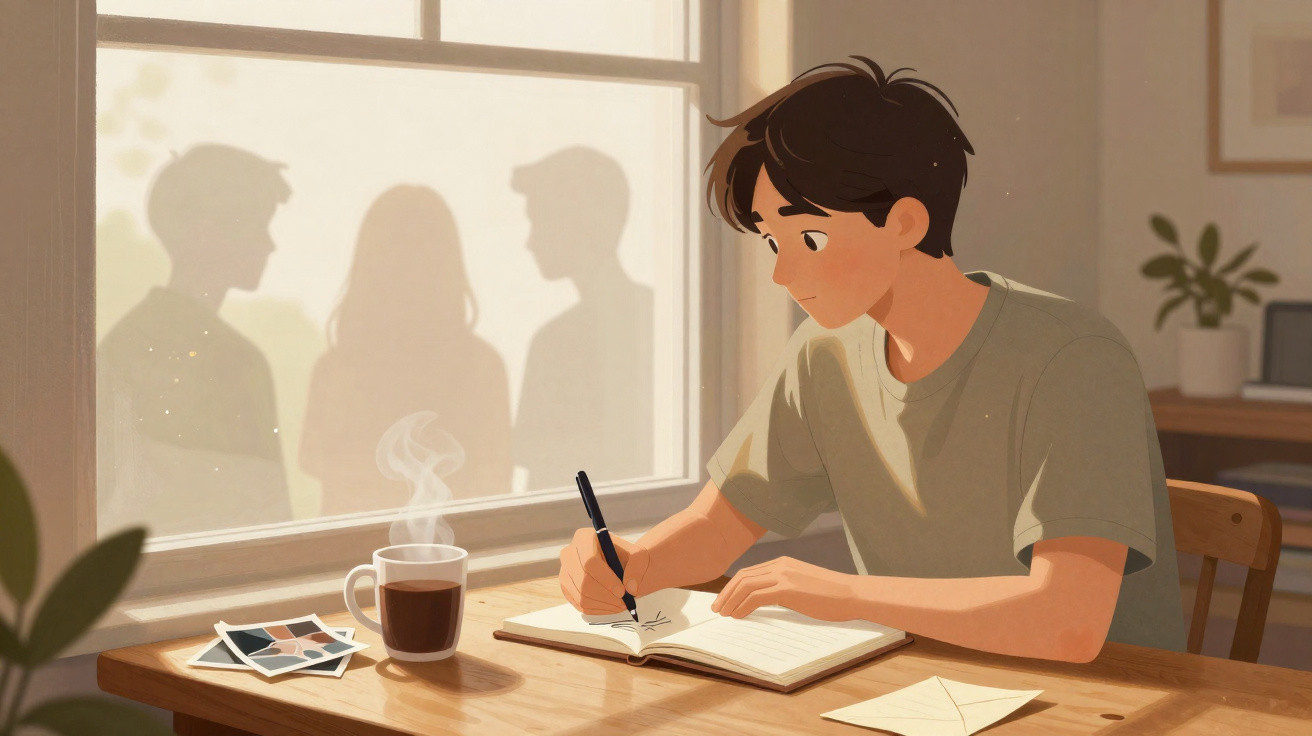
One surprisingly helpful practice is to write a short, private “letter across time” from your present-day self to your younger self. It need only be two or three paragraphs, with no need for anything elaborate. Imagine yourself at eight or twelve in one particular memory: walking home alone after school, hiding in your bedroom or being told that you were “too sensitive”.
Then write the words no adult offered at the time: “You weren’t weak. You were alone. You weren’t dramatic. You were overwhelmed.” This is not magic. It is a way of updating the story the brain has repeated for 40 or 50 years.
Many people from this generation feel guilty about their anger towards their parents while also knowing that “they did what they could”. That internal conflict often causes them to minimise their own hurt. A compassionate response is to let two truths exist together. You can acknowledge that your parents had fewer tools, less information and perhaps less support. You can also accept that some of their actions hurt you.
A frequent mistake is to leap immediately to explanations: “They had it worse,” or “Everyone was raised like that.” Doing so repeats what was done to you by passing over your feelings. A gentler approach is to say: “Yes, context matters. And yes, my body still remembers.” Both statements deserve to occupy the same space.
“People born in the 1960s and 1970s often come to therapy saying they’re ‘too sensitive now.’ In reality, they were extremely sensitive back then and had to bury it to survive. What looks like new fragility is usually old strength finally dropping the armor.” - Dr. Elise Grant, clinical psychologist
- Mental strength #1: Emotional numbness – It once shielded you from punishment for crying; now it prevents intimacy and joy.
- Mental strength #2: Radical independence – It once protected you in chaotic homes; now seeking help can feel like failure.
- Mental strength #3: Endurance at any cost – It once enabled you to “get through anything”; now it can keep you in exhausting jobs and relationships.
- Mental strength #4: People-pleasing – It once reduced conflict with adults; now it erases your own needs.
- Mental strength #5: Perfectionism – It once won love and approval; now it drives chronic anxiety and burnout.
- Mental strength #6: Silence and secrecy – It once guarded you from shame; now it prevents you from seeking support.
- Mental strength #7: Hyper-responsibility – It once helped you “be the adult in the room”; now it can leave you unable to relax.
A generation caught between pride and pain
There is something poignant about people who were children in the 60s and 70s encountering today’s discussions of mental health. They scroll through posts about boundaries, gentle parenting and therapy language, and one part of them rolls its eyes. Another part aches quietly. They picture how their own lives might have been with even a small amount of this vocabulary.
Many are divided between pride in having survived so much and confusion at being told that those same survival habits may actually be scars.
This is where the story becomes more interesting. Those seven “mental strengths” are not false. They did support entire families. They paid mortgages, cared for ill relatives and held the world together. The error was not calling them strengths; it was never asking what they had cost.
Psychology today does not tell people to reject the toughness with which they were raised. Instead, it asks them to renegotiate it: retain the courage while releasing self-erasure; keep the loyalty while letting go of silence. Strength is not the enemy. The enemy is the old rule that “you must suffer alone to be strong”.
We have all known the moment when we are tempted to say, “Others had it worse, I should just be grateful.” But what if that is the final line of an old script rather than the truth? The new script is different: “What I lived through made me strong. Some of that strength was built on pain. I’m allowed to heal without losing who I am.” Many people raised in the 60s and 70s are doing precisely this now, often in private.
The more openly they discuss it, the less their toughness will be viewed as either simple heroism or simple trauma. It becomes what it has always been: a complex, human response to a harsh world. That is where genuine resilience begins.
| Key point | Detail | Value for the reader |
|---|---|---|
| Childhood “strengths” as survival | Qualities such as numbness, independence and endurance were adaptive responses to emotional neglect. | Helps you stop blaming yourself and understand your patterns in context. |
| Reframing, not erasing | Psychology encourages you to retain your courage while releasing self-sacrifice and silence. | Shows that you can heal without wholly rejecting your past or your family. |
| Practical healing steps | “Then vs. Now” questions, letters to your younger self and small acts of asking for help. | Provides concrete ways to soften old armour while remaining grounded. |
FAQ:
- Question 1 How do I know if my “toughness” is actually a trauma response?
- Answer 1
- Question 2 Can I appreciate my parents and still name what hurt me?
- Answer 2
- Question 3 Is it too late to heal if I grew up in the 60s or 70s and I’m over 50 now?
- Answer 3
- Question 4 What’s one small step I can take this week to start loosening my old armour?
- Answer 4
- Question 5 Why do younger generations seem less “tough,” and is that really a bad thing?
- Answer 5




Comments
No comments yet. Be the first to comment!
Leave a Comment